
Curtain Up on Semester Two: Best Practices for Teachers Heading Back in January

January isn’t just “getting back into it.” It’s Act Two and unlike August, you already know your cast, your pacing, and where the plot needs tightening.
Here’s how to relaunch the school year with purpose, energy, and sustainability without burning yourself out.
Treat January Like a Soft Re-Opening
Students need:
Clear expectations
Emotional recalibration
A reminder of why the classroom works
Instead of repeating August verbatim:
Review routines through reflection
Ask what worked and what didn’t
Invite students into the reset
Classroom Activity

“What Should Stay / What Should Change” Chart
Routines
Group work norms
Homework expectations
Transitions
This builds buy-in and accountability
Reignite Engagement with Novelty
January is ideal for:
New formats
Choice-based learning
Cross-curricular connections
Teachertainment Strategies:
Turn review into a game show
Use pop culture examples for ELA concepts
Add movement and performance to content review
Activity Ideas:
Write the review: turn winter break into a writing showcase
(Yes, even the movie marathons count as learning.)
Winter break is full of stories. Movies watched on the couch. Shows binged with siblings. Trips taken. Games played. Books read. Moments lived. Instead of asking students to write “What I did over break” for the thousandth time flip the script: Invite them to become critics
Students choose one thing they experienced over break and write a review of it.
They can review:
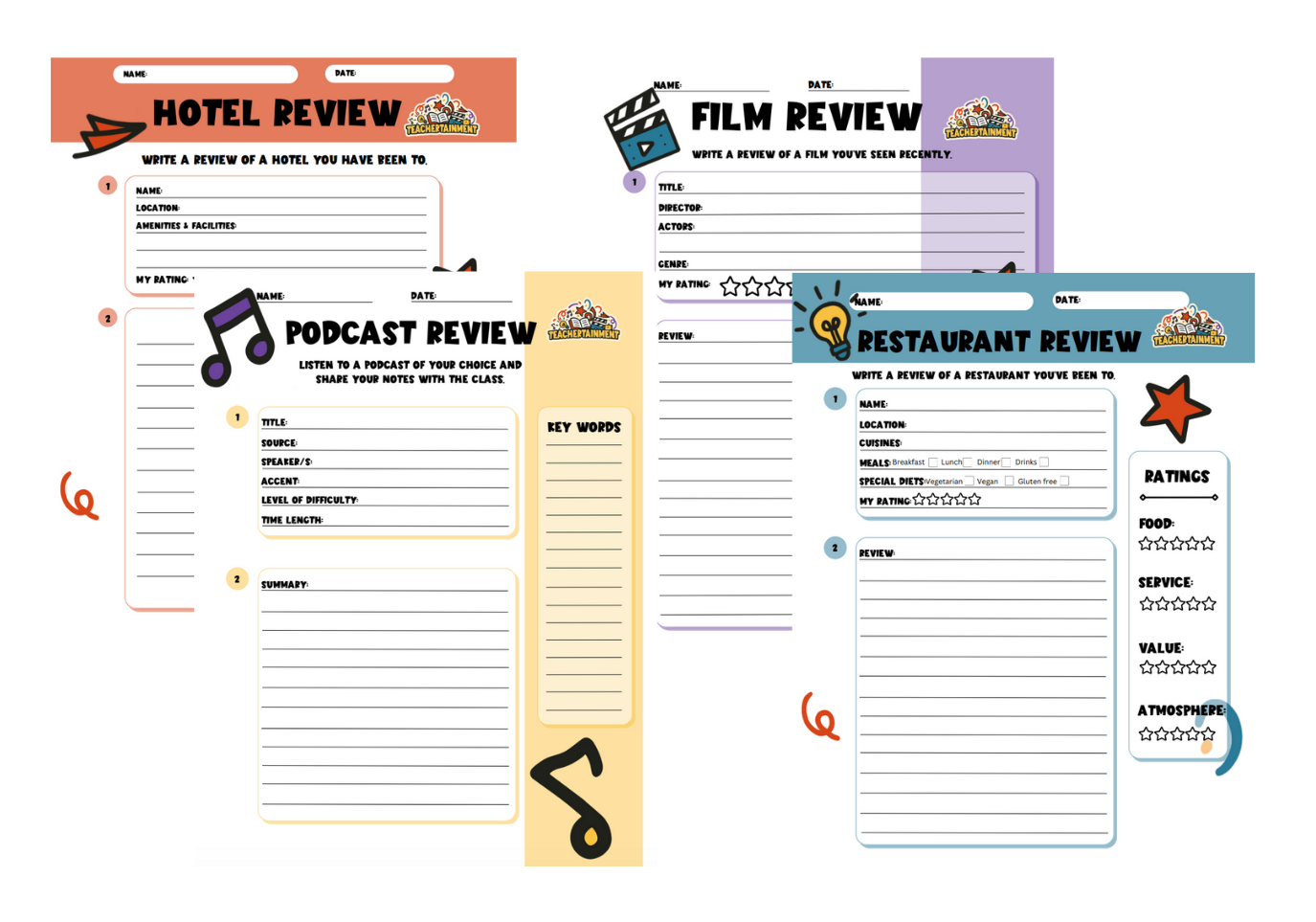
A movie or TV show
A book or video game
A place they visited
An activity they tried
A family tradition or event
This instantly:
Raises engagement
Gives reluctant writers something concrete to say
Mirrors real-world writing kids actually recognize
What Students Write About
Guide students to think like reviewers, not reporters.
Key elements of a strong review:
A brief overview (no spoilers!)
What they liked
What they didn’t like
Who would enjoy it
A final rating or recommendation
Standards Alignment (Without killing the vibe)
This activity naturally hits:
Opinion writing
Supporting claims with reasons
Clear organization
Descriptive language
Speaking & listening (if shared aloud)
Bonus: It’s incredibly accessible for English learners and students with IEPs because everyone is an expert on their own experience.
Sharing Makes it Stick

Build in a low-pressure share:
Partner read-alouds
Small-group discussions
Gallery walks
“Two-minute review” oral presentations
Students Practice
Speaking clearly
Listening actively
Responding respectfully
All without it feeling like a formal presentation.
Why this works in January
Students ease back into writing with something familiar
Teachers get authentic writing samples early in the semester
Classrooms build community through shared interests
Writing feels relevant, modern, and joyful
Recenter SEL Without Losing Academic Time
Students return carrying:
Big emotions
Holiday highs and lows
Social recalibration needs
SEL doesn’t require a full lesson block.
Quick SEL integrations:
Daily mood check-ins
Partner talk prompts
Reflection journaling
“Win of the Week” share-outs
Streamline, Don’t Add
January is about refining, not piling on.
Ask yourself:
What can be simplified?
What routines are costing more energy than they give?
Where can students take more ownership?
Remember: You’re Not Starting Over
You’re building forward.
Your classroom already has:
Relationships
Trust
Systems
Momentum
January is your chance to tighten the story arc, spotlight growth, and set up a
strong finale.
Happy New Year!

Jake Perlman is the founder of Teachertainment, blending education, entertainment, and pop culture to turn learning into an unforgettable experience.
