
My Struggling Readers Refuse to Pick Up a Book But Will Read Anything About Their Favorite Game. Should I Let Them?
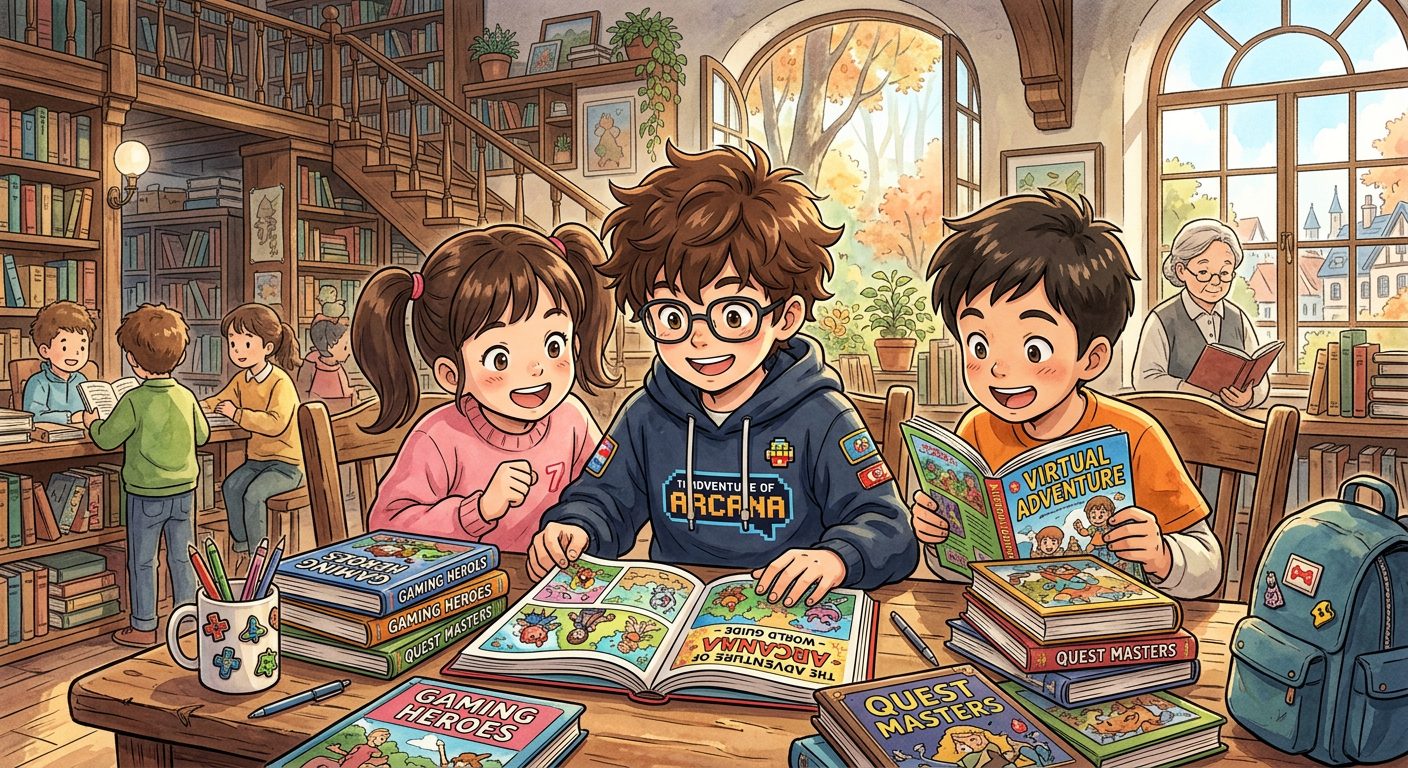
Yes. And it is a more rigorous reading than it looks like from across the room.
Anyone who has looked closely at a video game strategy guide or a detailed online walkthrough knows they are not simple reading. They are often dense, technical, and sequential and demand real comprehension: conditional logic, cause and effect, precise vocabulary, and the ability to track multiple variables across long passages. A student who reads this material voluntarily and retains it accurately is demonstrating a real reading skill, even if the content looks nothing like what is on your classroom shelf.
When a reluctant reader refuses a novel but devours anything related to their favorite game, the instinct is often to see this as a distraction from real reading. It is worth reconsidering that framing. The skill being demonstrated, sustained attention, technical comprehension, and sequential tracking, is genuinely transferable. The question is not whether to allow it. It is how to use it as a bridge toward the reading you actually need the student to do.
Why This Material Works When Assigned Reading Does Not

Motivation research consistently shows that reading volume, the sheer amount a student reads voluntarily, is one of the strongest predictors of overall reading skill development, regardless of the specific content. A student who reads game guides for an hour a week is accumulating reading practice that a student who reads nothing is not, even if neither is opening an assigned novel.
The engagement also removes a barrier that assigned reading often cannot: genuine motivation to understand every detail. A student parsing a strategy guide is highly motivated to comprehend precisely because getting it wrong has an immediate, meaningful consequence within the game. That level of motivated precision is difficult to replicate with material a student has no personal investment in.
How to Use It as a Bridge Rather Than a Dead End

Validate the Skill Explicitly
Tell the student directly that what they are doing with that material is real reading, and name the specific skills involved: following multi-step instructions, tracking cause and effect, using context to figure out unfamiliar terms. Many reluctant readers have internalized a narrative that they are bad readers, and explicitly naming this as evidence otherwise can shift that narrative meaningfully.
Build an Explicit Bridge to a New Text
Once the skill is named, connect it directly to a new reading task with similar cognitive demands. A student who tracks conditional branching in a game guide can apply that same tracking skill to a choose-your-own-adventure narrative or a text with a nonlinear structure. A student who follows technical strategy writing can apply that same precision to nonfiction text in a subject they are curious about.
Let Game-Adjacent Writing Be a Legitimate Entry Point
Fan-created guides, walkthroughs, and even fan fiction connected to games students love are genuine texts with genuine reading demands. Treating them as a legitimate stepping stone, rather than something to be tolerated and then quickly abandoned for real reading, keeps the bridge intact rather than signaling that the material the student is actually motivated to engage with does not count. Teachertainment's free resources include reading bridge activities built around exactly this kind of student-driven interest.
We have used this bridging approach with students from third grade through eighth grade who had been previously labeled as reluctant or struggling readers. The pattern holds consistently: the barrier was rarely reading ability itself. It was motivation to engage with material that felt disconnected from anything the student cared about.
Where to Draw Reasonable Limits
Jake Perlman's background in classroom teaching at Canfield Avenue Elementary, Brawerman Elementary, Crete Academy, and St. Timothy School shaped an approach that treats student interest as a legitimate starting point, not an unlimited substitute for the full range of reading experiences a student needs. Game-related material is an entry point and a bridge. It works best when it is explicitly connected to expanding reading range over time, not treated as a permanent replacement for other kinds of texts.
We also want to be honest about the limit here: not every reluctant reader's barrier is motivational. If a student's difficulty with assigned reading reflects an underlying decoding gap or a comprehension challenge distinct from motivation, this bridging approach helps with engagement but does not replace direct, targeted instruction in the specific skill gap.
Frequently Asked Questions
Is reading video game guides and walkthroughs actually good reading practice?
Yes, in the sense that matters most for skill development: it involves genuine comprehension, sequential tracking, technical vocabulary, and sustained attention, and it accumulates real reading volume. It is not a substitute for the full range of reading experiences a student needs over time, but as a source of voluntary reading practice, it counts.
How do I convince a parent that letting their child read game guides instead of novels is a good idea?
Frame it as a bridge rather than a replacement. Explain the specific comprehension skills being practiced, and share the plan for connecting that engagement to a wider range of texts over time. Most parents respond well to a concrete plan rather than an open-ended permission to only read game-related material indefinitely.
What if a student only ever wants to read about one specific game and nothing else?
This is common initially and tends to loosen over time once the student's reading confidence builds. Introducing adjacent material, texts connected to the same themes, genres, or interests the game itself contains, tends to be more effective than pushing directly toward unrelated assigned reading too quickly.
Can this approach help a student who is significantly behind grade level in reading?
It can help with engagement and volume, which support overall skill development, but a significant grade-level gap likely needs targeted intervention alongside this approach, not instead of it. Teachertainment's private K-12 tutoring combines this kind of interest-driven engagement with direct instruction on specific skill gaps.
Are there ready-made bridging activities that connect game-related interests to classroom reading?
Yes. Teachertainment's free resources and Printables Store include activities designed to bridge student interests, including gaming, toward broader reading and literacy skills.
Should this approach replace assigned classroom reading entirely?
No. The goal is to use genuine student motivation as a bridge toward a wider range of reading experiences, not to replace assigned reading permanently. A student's reading diet should expand over time to include a range of texts, genres, and purposes, with game-related material serving as one legitimate entry point among several rather than the only one.
That Strategy Guide Is Doing More Work Than It Looks Like

A student who reads dense material about something they love is demonstrating a real reading skill, not avoiding one. If you want help building a bridge from that engagement toward a wider reading practice, explore our free resources or email jake@teachertainment.com and tell us what your reluctant reader actually reads voluntarily. That is usually where the real starting point is.
