
My Teenager Has Completely Shut Down Academically. Where Do I Even Start?
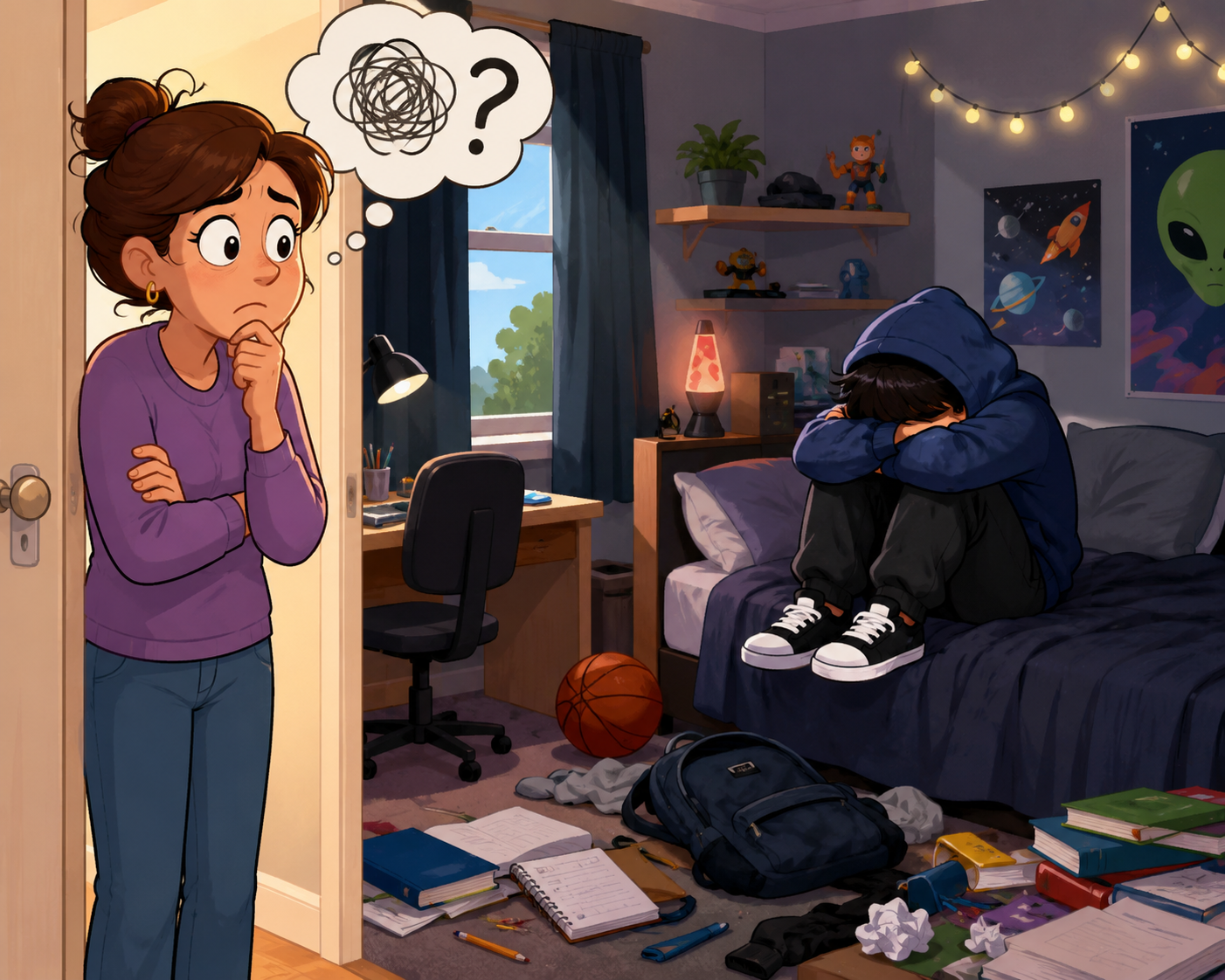
When a teenager goes quiet about school, the quiet is saying something. It is worth learning to listen to it.
Euphoria does not shy away from showing what a teenager in crisis actually looks like. Not dramatic scenes of defiance, though those happen too, but the quieter moments. The withdrawal. The thousand-yard stare. The sense that the person in front of you has stopped being present. Parents watching their teenager shut down academically often describe something that feels exactly like this: a child who was once engaged, curious, even enthusiastic about learning, who has simply gone somewhere else.
Academic shutdown in teenagers is one of the most difficult situations a parent can navigate because it so often feels simultaneously urgent and unapproachable. You know something is wrong. You do not know whether to push, pull back, insist, or wait. And every approach seems to make it worse. This post is written for you.
What Academic Shutdown Actually Is

Academic shutdown is not the same as a student who is lazy or unmotivated in a general sense. It is a specific pattern: a student who has disconnected from academic engagement across the board, who has stopped doing work, stopped attending to instruction, and who may have stopped believing that their academic effort has any meaningful connection to any outcome they care about.
Psychologists call this learned helplessness, a concept developed by Martin Seligman. When a person repeatedly experiences that their actions do not produce the outcomes they expect or want, they stop trying. Not because they are incapable. Because they have learned, through experience, that trying does not work. For teenagers, this learned helplessness often develops over years of academic struggle, social difficulty, or repeated experiences of failure that no one addressed at the root.
Understanding this is the starting point for everything that follows. A teenager who has shut down is not choosing to try. They have concluded, based on evidence accumulated over time, that trying is not worth the risk of failing again.
What Not to Do First

The instinctive parental response to academic shutdown is usually some combination of increased pressure, consequences for grades, and expressions of concern about the future. These responses are understandable. They almost never work, and they frequently make the situation worse.
Increased pressure activates the protective shutdown rather than lifting it. A student who is already convinced that effort does not produce results will respond to more pressure by withdrawing further.
Consequences tied to grades assume that the student has the capacity to produce better grades if they simply choose to. A student in a genuine academic shutdown often does not have that capacity in their current state. Punishing the symptom rather than treating the cause produces resentment without results.
Expressing worry about the future is well-intentioned and usually lands as additional evidence that the student is a disappointment. Teenagers in shutdown are already carrying a significant weight of self-judgment. Adding parental judgment, even expressed as concern, increases that weight.
Where to Actually Start
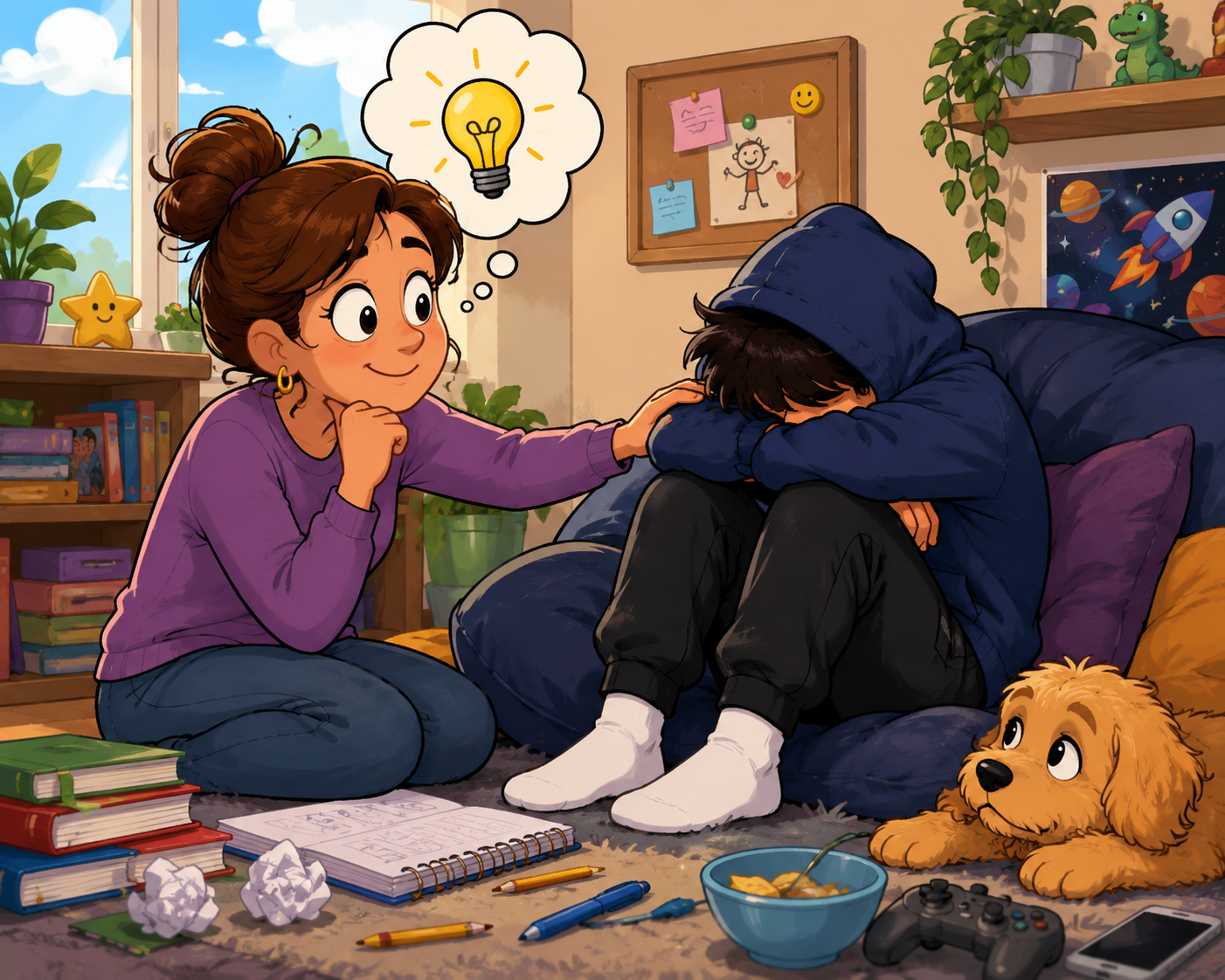
Start With the Relationship, Not the Grades
The first conversation with a teenager who has shut down academically should not be about school. It should be about them. What are they interested in? What has felt good lately? What has felt hard? A parent who can demonstrate genuine curiosity about the teenager as a person, rather than as an academic project, creates the only environment in which a real conversation about school becomes possible.
Find the Story Behind the Shutdown
Academic shutdown always has a history. Something happened, or a series of things happened, that made continued engagement feel not worth the risk. That history is worth finding. Not to assign blame, but to understand what you are actually working with. The history tells you where the intervention needs to begin.
Get the Right Support in Place
Jake Perlman's approach at Teachertainment, shaped by his M.Ed. from Pepperdine University and his years of classroom experience at Canfield Avenue Elementary, Brawerman Elementary, Crete Academy, and St. Timothy School, begins with a foundational principle: before we can teach a teenager who has shut down, we have to give them a reason to believe that this experience will be different from the ones that produced the shutdown.
That requires a tutor who does not look or feel like an extension of the school experience that failed the student. It requires sessions built around the student's actual interests and strengths rather than their deficits. It requires patience to let the relationship develop before the academic work begins.
This is also a situation where Teachertainment's family consultation service is particularly valuable. Academic shutdown in a teenager rarely has a single cause, and addressing it effectively usually requires a plan that involves the whole family, not just additional tutoring hours.
What Recovery Actually Looks Like
Recovery from academic shutdown is not linear. It does not look like a student who flips a switch and re-engages completely. It looks like a student who, over weeks and sometimes months, begins to take small risks again. Who completes one assignment and notices that nothing terrible happened. Who asks one question in a session and discovers that they actually know more than they thought?
The most important early indicators of recovery are not grades. They are behavioral. A student who begins to show up to sessions without maximum resistance. A student who occasionally mentions something they found interesting. A student who makes a joke. These are the signs that the shutdown is beginning to lift, and they almost always precede academic recovery by several weeks.
We also want to be very honest: some teenagers who have shut down academically are dealing with mental health challenges that go beyond what tutoring and family conversation can address. Depression, anxiety, and other conditions can produce or contribute to academic shutdown. If you are seeing signs of significant emotional distress alongside the academic shutdown, please seek mental health support alongside any academic intervention.
Frequently Asked Questions
How do I know if my teenager has genuinely shut down or is just going through a phase?
The difference between a difficult phase and a genuine academic shutdown is primarily duration and breadth. A phase typically affects one area, lasts a few weeks, and responds to changes in the environment. A genuine shutdown affects multiple areas, persists for months, and does not respond to standard interventions like consequences or encouragement. If the pattern has been consistent for more than two to three months across multiple subjects and settings, it is worth treating as a shutdown rather than a phase.
Should I force my teenager to get a tutor even if they refuse?
No. Forced tutoring for a teenager who has shut down almost always produces the opposite of the intended effect. The goal is to give the teenager a reason to want to try, not to compel compliance. Start with a family conversation and genuine curiosity about what they are experiencing. Our post on what to do when your child refuses tutoring has specific strategies for navigating this.
Can a tutor help rebuild motivation as well as academic skills?
Yes, when the tutor understands that motivation is the prerequisite, not the byproduct. A student who is working with a tutor who connects with their interests, who creates genuine small wins in early sessions, and who does not treat them primarily as a deficient academic subject begins to rebuild the belief that effort can produce results. That belief is the foundation of sustainable motivation.
What role should parents play in the recovery process?
The most effective parental role during recovery is supportive and low-pressure. Celebrate small wins without over-inflating them. Maintain structure around the basics, sleep, meals, and a relatively consistent schedule, without adding academic pressure on top. Keep the conversation open without making every conversation about school. Let the tutor and any other supports carry the academic weight while you focus on the relationship.
Is the academic shutdown related to mental health?
It can be. Depression, anxiety, and other mental health challenges frequently manifest in academic disengagement. Academic shutdown can also cause or deepen mental health challenges when a student's sense of self-worth is closely tied to their academic performance. If you are seeing signs of significant emotional distress, withdrawal from activities the student previously enjoyed, changes in sleep or eating patterns, or expressions of hopelessness, please consult a mental health professional alongside any academic support.
How does Teachertainment approach teenagers who have shut down?
Teachertainment begins with the student's world before it begins with the curriculum. Jake Perlman's background in both education and entertainment, including his work at Paramount Pictures, Showtime Networks, and Entertainment Weekly alongside his M.Ed. from Pepperdine University, shapes an approach where the first sessions are designed to create a genuinely different experience from what the student expects. For teenagers in shutdown, the first goal is not academic improvement. It is proving that this is different. Our family consultation is the right starting point for these situations.
Your Teenager Has Not Given Up. They Have Just Stopped Believing It Is Worth Trying. Let Us Change That

Teenagers in academic shutdown do not need more pressure. They need something that proves effort is worth the risk again. If your teenager has gone quiet about school and you are not sure where to start, start with a conversation. Email jake@teachertainment.com and tell us what you are seeing. We will help you figure out what is underneath it and what kind of support makes sense, given where your teenager actually is right now. A family consultation is usually the right first step. It gives everyone in the family a clearer picture of what is happening and what to do next.
