
Football Is Back! Turn the NFL Season Into a Classroom Lesson

Turn the NFL Season Into a Classroom Lesson
The jerseys are on. The scoreboards are lit. The snacks are ready.
Football season is underway, which means touchdowns, statistics, team rivalries and dramatic fourth quarters are everywhere again. But for teachers, all that football can be more than something happening outside the classroom. Football is a lesson plan waiting for kickoff.
The sport is packed with numbers, geography, statistics, storytelling, teamwork, history, and problem-solving. And thanks to decades of football movies, it can also provide an entertaining doorway into ELA, social studies, and SEL. So whether your students can explain every penalty before the referee does or think a quarterback is something you get back from a vending machine, there is plenty to learn from football.
Start With the Scoreboard
Football is practically a moving math problem.
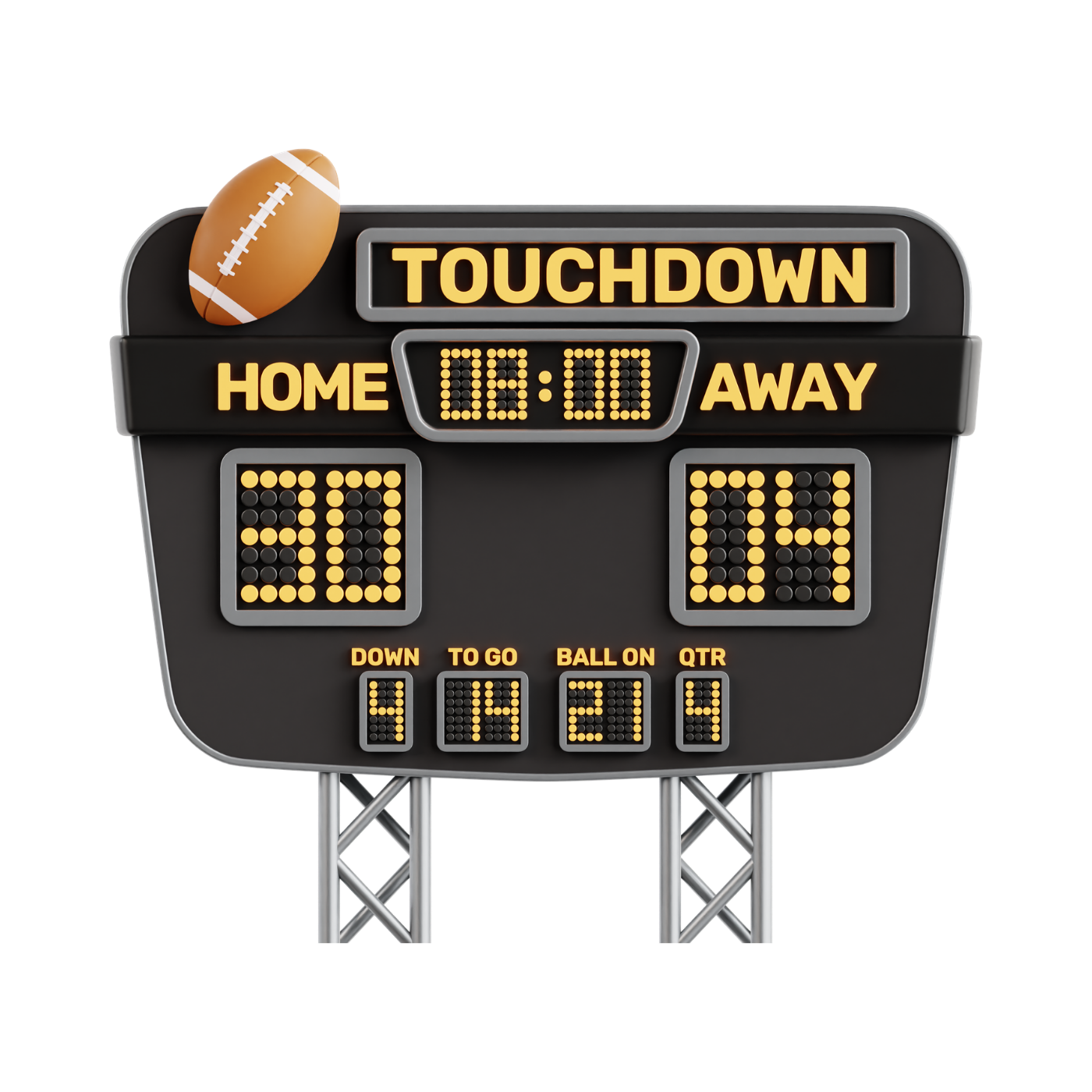
Every game gives students numbers they can count, add, subtract, compare, and graph.
Start with the basic scoring system:
Touchdown = 6 points
Extra point = 1 point
Two-point conversion = 2 points
Field goal = 3 points
Safety = 2 points
Then turn the scoreboard into a math challenge.
Touchdown + extra point:
6 + 1 = 7Touchdown + field goal:
6 + 3 = 9Two touchdowns:
6 + 6 = 12
For younger students, turn those scoring plays into cards students can physically manipulate.
Then announce a target: Can You Build a Score of 10?
One solution is:
6 + 3 + 1 = 10
Can students find another way?
Now they aren't simply practicing addition. They're composing numbers, testing possibilities and explaining their mathematical thinking.
Let Football Supply the Data

Football season also provides a constantly changing collection of numbers. Students can compare scores, calculate differences, graph wins and losses, make predictions or track points scored over several games.
Younger students can answer questions such as:
Which team scored more?
Which team scored fewer?
How many more points did one team score?
Older students can investigate averages, percentages, player statistics or trends over a season.
You can even have students predict the score of a game on Friday, record the actual score on Monday and calculate the difference between prediction and reality. Nobody needs to have predicted correctly. That's what makes it data instead of fortune-telling.
Now Take Football to the Movies
Math isn't the only subject hiding inside football.
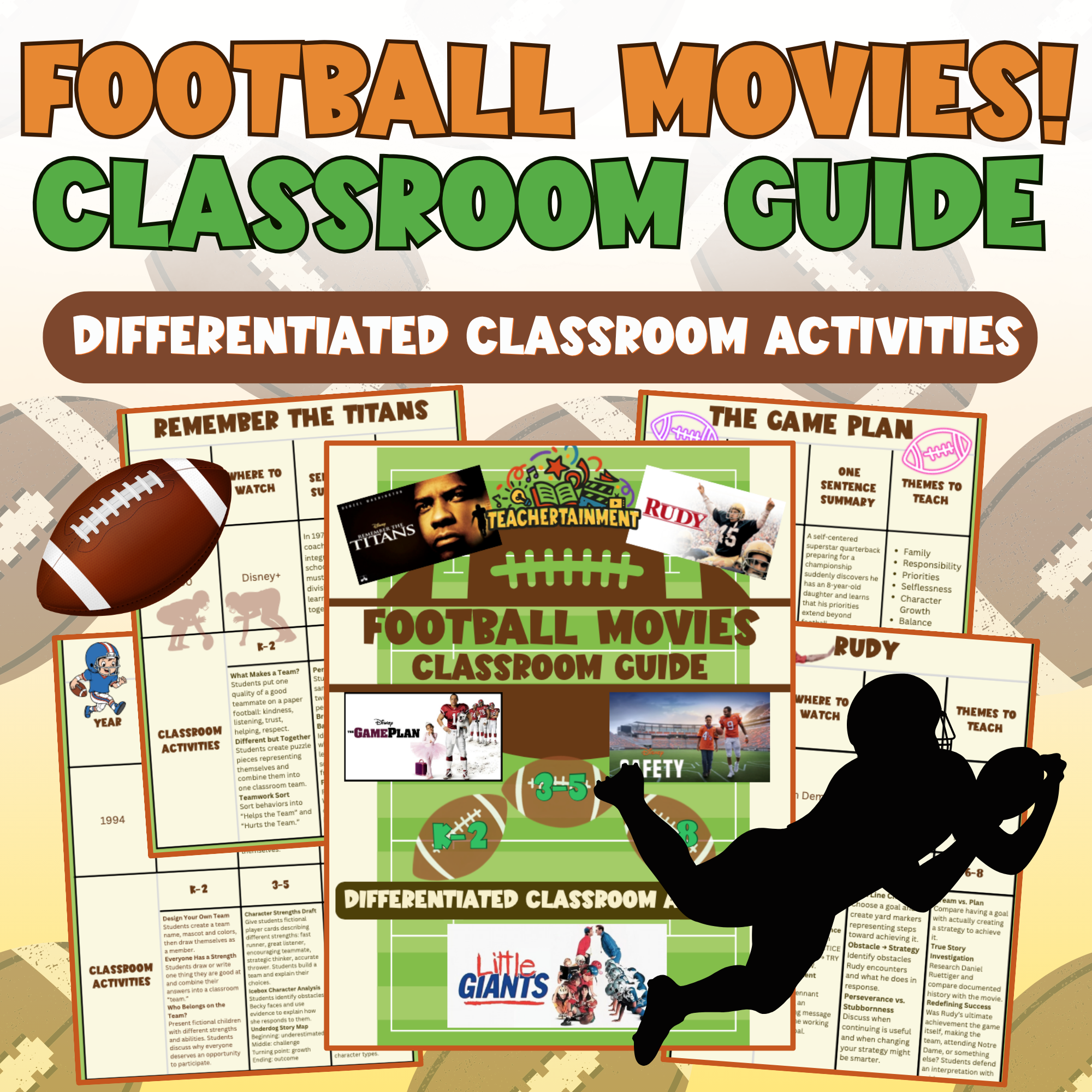
Football movies have spent decades telling stories about underdogs, families, communities, history and what happens when different people have to become a team.
That makes them particularly useful for teaching:
ELA: Theme, character, conflict, perspective and writing
SEL: Teamwork, resilience, responsibility and belonging
Social Studies: History, equality, community and fact vs. film
Media Literacy: Adaptation, historical accuracy and storytelling choices
And teachers don't necessarily need to show an entire movie. A trailer can introduce prediction. A poster can teach inference. A synopsis can become a main-idea activity. A carefully selected scene can provide evidence for character analysis. A movie based on real events can launch an entire Fact vs. Film investigation.
That's the idea behind Teachertainment's Football Movies Classroom Guide, a differentiated collection of activities for grades K–2, 3–5 and 6–8 inspired by five football movies:
Little Giants
The Game Plan
Remember the Titans
Rudy
Safety
Each movie becomes a different classroom doorway, from character and theme to history, goal setting, teamwork and media literacy.
Create Your Own Football Movie

After studying how other movies tell football stories, turn the students into Hollywood producers.
Their assignment:
CREATE A NEW FOOTBALL MOVIE
K–2 students can illustrate a beginning, middle and end.
Grades 3–5 can write a movie synopsis.
Grades 6–8 can create a pitch explaining the plot, conflict, theme and intended audience.
Then design the movie poster and put the finished designs around the classroom for a Football Film Festival. Now football has wandered into narrative writing, visual design, media literacy and public speaking.
Don't Forget Geography

Football can travel beyond math and movies, too.
Give students a blank map of the United States and locate professional football teams.
Which teams are closest to your school?
Which are farthest apart?
Which states have more than one team?
Which regions have the most teams?
Students can sort teams by state, region or time zone.
For an international extension, investigate where American football is played outside the United States and locate those places on a world map. Suddenly the scoreboard has become geography.
Ready to Bring Football Into the Classroom?

Teachertainment's football resources are designed to turn football season into something teachers can actually use.
Because the best classroom connections don't always have to begin with:
“Open your textbook.”
Sometimes they begin with:
“Did anybody watch the game?”
That's education that entertains, and entertainment that educates.
Jake Perlman is the founder of Teachertainment, blending education, entertainment, and pop culture to turn learning into an unforgettable experience.
