
From the Ballroom to the Classroom: Turn Dancing with the Stars Into a Weekly Math Lesson
The sequins are sparkling. The paddles are up. Someone is attempting a cha-cha after approximately six days of training. And somewhere, a teacher should be looking at that judges’ scoreboard and thinking: Wait. That’s a math warm-up.
For more than 20 years, Dancing with the Stars has paired celebrities with professional dancers and asked them to learn new styles, perform live, receive feedback and do it all over again the following week. That means underneath all the fringe and rhinestones is something surprisingly useful: Data. Lots of data.
There are scores to add, averages to calculate, trends to graph and predictions to test. And because the numbers change every week, the show can become a recurring classroom warm-up without feeling like the same worksheet in a different outfit.
Paddles up. Let’s do the math.
Mathing with the Stars
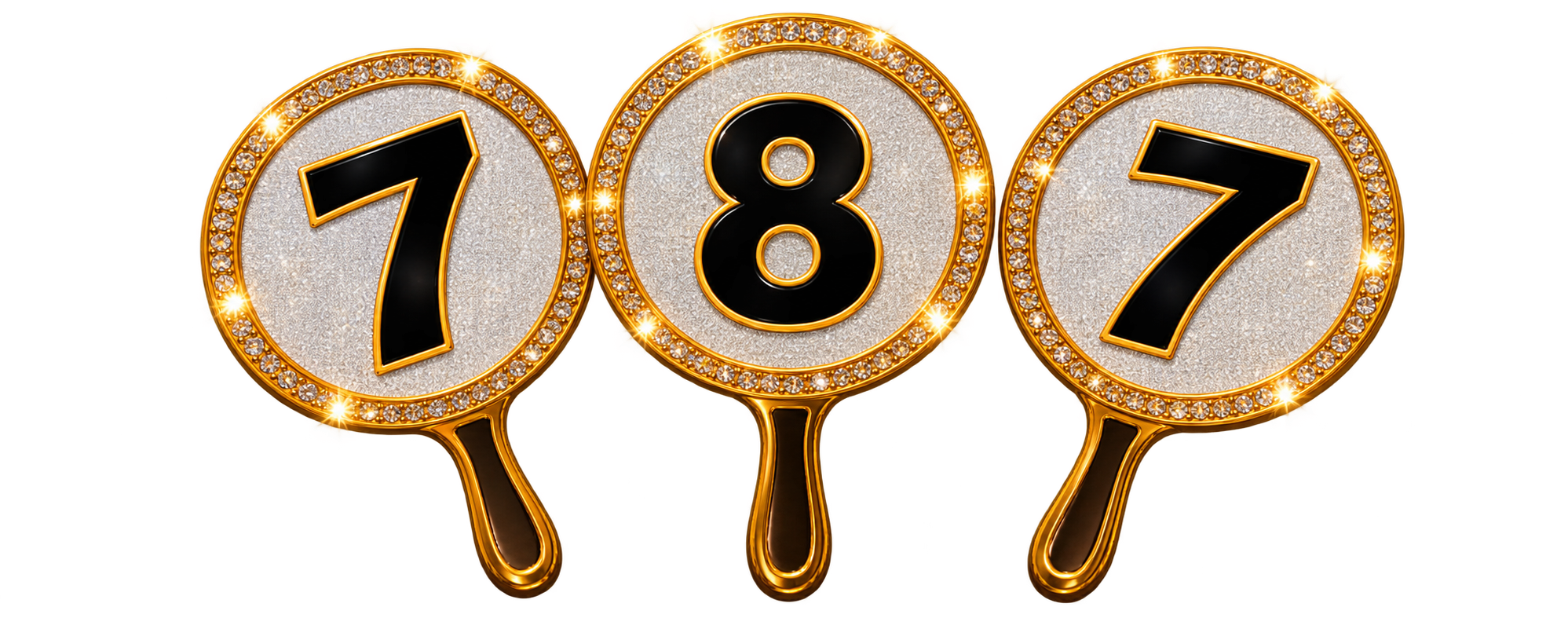
Start with three fictional judges’ scores:
7 + 8 + 7
For younger students:What is the total?
How many more points would make 25?
Which score is greatest?
For older students:
What is the mean?
What is the range?
What fraction of the maximum possible score did the contestant earn?
What percentage is that?
The same three paddles can become an addition problem in one classroom and a percentage problem in another.
Differentiated instruction, but make it sparkly.
You don’t even need to follow the current season to borrow the scoring system.
Give students three judges’ paddles, each numbered 1–10, and challenge them to build the score.
Can you make 21?
Can you make 24 in two different ways?
Can you make 27 without using a 9?
Then turn the glitter dial:
How many different ways can you make 20?
What is the greatest possible score?
What is the lowest possible score if every judge must give at least a 5?
If two judges give 8s, what must the third judge give to make 25?
Now students are composing numbers, finding missing addends, testing combinations and working within mathematical constraints.
The Mirrorball Trophy has officially become a math manipulative.
Turn Tuesday Night Into Wednesday Morning Math
If you are following the current season, congratulations. Your television viewing just became lesson prep. Choose three or four couples from the latest episode and put their scores on the board.
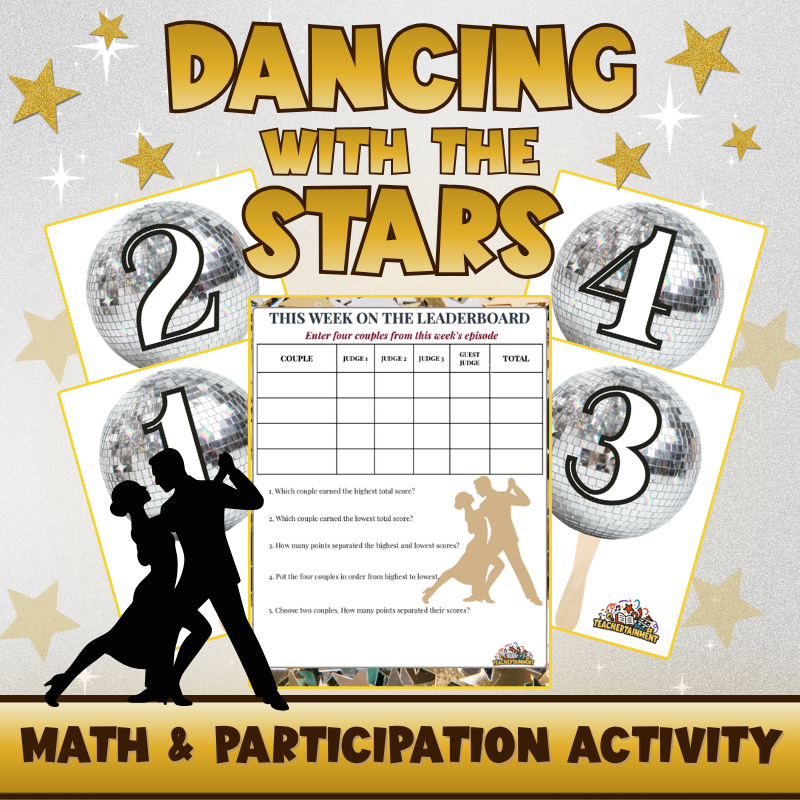
Ask:
Who scored highest?
Who scored lowest?
What is the difference?
Put the scores in order.
Find the mean, median and range.
Who improved the most from the previous week?
Five minutes. Done.
Want to go further? Have students choose one contestant and track their scores throughout the season. Each week, add another point to a line graph. By the finale, students can calculate the contestant’s average, identify their highest and lowest scores and analyze whether the data shows improvement.
You watched reality television. Your students conducted a longitudinal data study.
Everybody wins.
Don’t Forget the Dancing Part
The scores aren’t the only data hiding in the ballroom.
Keep a class tally of the dance styles performed throughout the season:
Cha-Cha • Tango • Quickstep • Salsa • Jive • Foxtrot • Viennese Waltz
Then ask:
Which appeared most often?
Which appeared least often?
What fraction of the dances were tangos?
What percentage belonged to a certain category?
Students can turn the results into bar graphs, pictographs or pie charts.
Then cross over into music:
What’s the tempo?
How are the beats organized?
What patterns repeat?
How does movement fit a musical count?
Math was already on the dance floor. Music just cut in.
The Lesson Beyond the Scoreboard
Of course, there’s something else worth watching on Dancing with the Stars that can’t be calculated on a score paddle. These are accomplished adults who agree to become beginners again. They walk into a rehearsal room, try something unfamiliar and eventually perform it in front of millions of people.

Sometimes it goes beautifully. Sometimes it very much does not.
That’s vulnerability with a spray tan.
But it’s also a pretty accurate picture of learning. Your first multiplication problem might be wrong. Your first paragraph might be clunky. Your first attempt at playing an instrument might make everyone in the house reconsider the purchase. You try anyway.
And DWTS makes that process unusually visible:
TRY → GET FEEDBACK → PRACTICE → ADJUST → TRY AGAIN
A contestant can have a fantastic week followed by a difficult one. They can struggle with one dance and thrive with another. They can work hard without receiving the highest score.
Progress isn’t always a straight line.
That opens the door to questions that have nothing to do with who tops the leaderboard:
Who tried something new?
Who used feedback to improve?
Who kept going after a difficult performance?
What changed between one attempt and the next?
What can we learn from doing something we aren’t already good at?
Those are useful questions whether you’re learning a tango, long division or how to write a five-paragraph essay.
Take DWTS Across the Curriculum
Once you start looking, the ballroom can travel surprisingly far.
ELA: Make a claim about a contestant’s growth and support it with evidence.
SCIENCE: Explore balance, force, momentum, rotation and center of gravity.
MUSIC: Investigate rhythm, tempo, beats, measures and time signatures.
SOCIAL STUDIES: Research the history and cultural origins of different dance styles.
ART: Design a costume using symmetry, geometric patterns and a fixed budget. Rhinestones, tragically, are not free.
SEL: Discuss feedback, perseverance, risk-taking and what it means to be a beginner.
And that last one might be the biggest lesson of all.

Dancing with the Stars isn’t really a show about people demonstrating something they already know how to do. It’s a show about people learning in public.
So whether students are adding judges’ scores, graphing progress or attempting something new themselves, the ballroom offers a pretty useful reminder: You don’t need a perfect score to show progress. Sometimes you just need to learn the next step.
And that’s education that entertains, and entertainment that educates.
Jake Perlman is the founder of Teachertainment, blending education, entertainment, and pop culture to turn learning into an unforgettable experience.
