
Some stories never get old. Others get visited by three ghosts and discover they have some growing up to do.
More than 180 years after Charles Dickens introduced the world to Ebenezer Scrooge, Hollywood is preparing to unwrap yet another version of A Christmas Carol. This time, Johnny Depp steps into Scrooge's famously unfriendly shoes in Ebenezer, arriving in theaters November 13, 2026. Directed by Ti West, the new film also features Rupert Grint, Daisy Ridley, Ian McKellen, and an ensemble of familiar faces. And while the story may be familiar, this adaptation promises a darker, more supernatural take on Dickens's holiday classic. So before you start planning a classroom screening, there's an important distinction: Ebenezer is rated PG-13 in the United States for intense supernatural scares and violence. It isn't necessarily appropriate for elementary students. Fortunately, Dickens's story has been adapted so many times that teachers have an entire casting department of classroom-friendly alternatives. And behind the ghosts, grumbling, and Christmas cheer is a surprisingly rich collection of lessons about empathy, history, generosity, and the power to change.
The Ghost of Christmas Past: Meet Charles Dickens
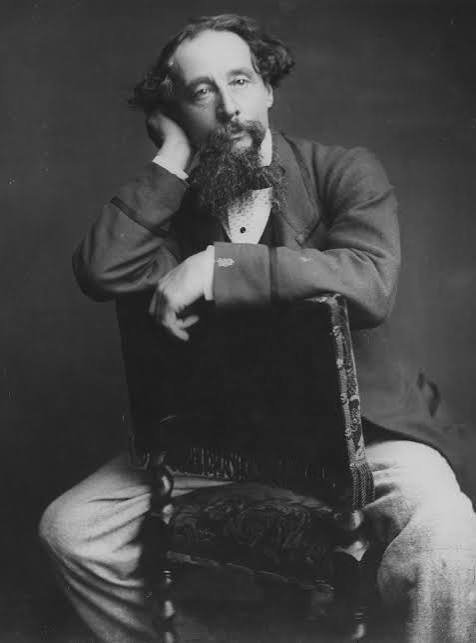
Before Scrooge became a holiday household name, he was the creation of Charles Dickens, an English novelist born in 1812. Dickens published A Christmas Carol on December 19, 1843. Its first printing of 6,000 copies sold out within days, an impressive opening weekend for a book released more than a century before movie theaters became a holiday tradition. Dickens wasn't simply trying to write a spooky Christmas story. He was deeply concerned about poverty and the treatment of children during Britain's Industrial Revolution. In 1843, reports about children working long hours in dangerous factories and mines helped inspire him to write a story that might change how readers thought about the less fortunate. Rather than delivering a lecture, he created unforgettable characters and wrapped his message in a ghost story.
Classroom connection: History meets literature
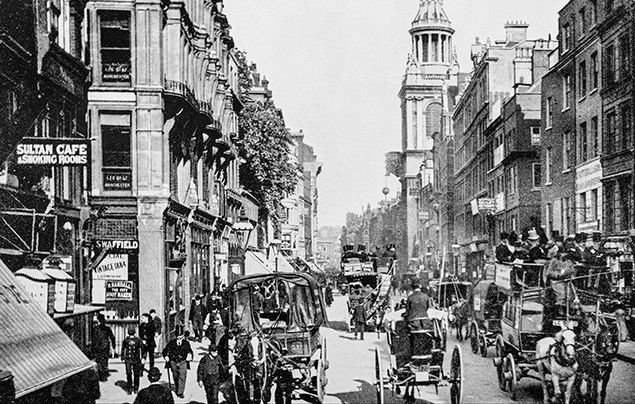
Ask students to imagine being children in Victorian England. How might their daily routines differ from their lives today? What opportunities might they have missed if they had to work instead of attending school? For younger students, compare illustrations of Victorian classrooms, factories, and homes. Older students can investigate child labor during the Industrial Revolution and discuss how stories can inspire social change.
And here's a little literary trivia: Dickens divided A Christmas Carol into five sections called staves, a musical term, rather than ordinary chapters. Even the book's structure is a nod to its title.
The Ghost of Christmas Present: Five Lessons Worth Teaching
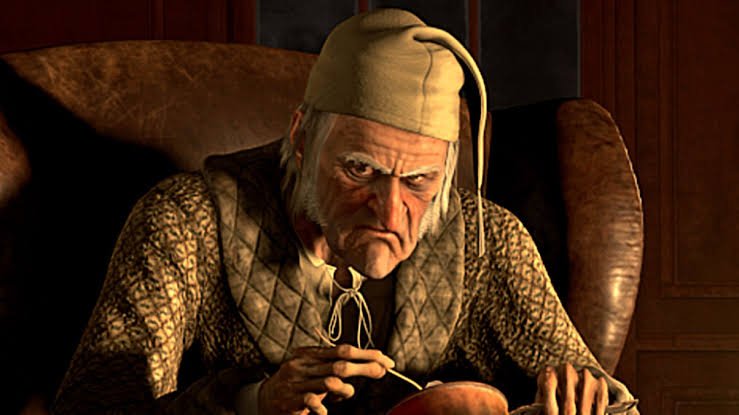
Scrooge may not seem like an ideal role model at the beginning of the story. He's selfish, impatient, and about as enthusiastic about Christmas as a snowman is about summer.
But that's precisely what makes his transformation so valuable in the classroom.
1. Empathy: Seeing the world through someone else's eyes
When Scrooge witnesses the Cratchit family's struggles, he begins to understand that other people's lives are very different from his own.
Try this: Give students a scenario involving two characters who disagree. Have them describe what each character might be thinking or feeling before suggesting a solution.
2. Growth mindset: It's never too late to change
Scrooge doesn't begin the story as a particularly kind person, but he learns from his mistakes and makes different choices.
Try this: Create a Before and After character chart. On one side, list Scrooge's early behaviors. On the other, describe his actions after his encounters with the spirits. What changed, and what caused that change?
3. Generosity: Giving isn't always about money
Although Scrooge's wealth plays an important role in the story, generosity also means offering time, kindness, attention, and support.
Try this: Challenge students to brainstorm ten acts of generosity that don't cost anything. Then invite them to choose one to practice during the week.
4. Cause and effect: Today's choices shape tomorrow
The Ghost of Christmas Yet to Come shows Scrooge a possible future influenced by his behavior. It's a powerful example of how choices can have consequences.
Try this: Students create a three-panel comic titled Past, Present, and Possible Future, showing how one positive decision can lead to a better outcome.
5. Gratitude: Appreciating what we already have
The Cratchits have far less money than Scrooge, yet their family celebrations reveal the importance of connection, appreciation, and community.
Try this: Ask students to write about something meaningful in their lives that cannot be purchased. Encourage specific examples rather than simply listing possessions.
These activities work beyond the holiday season, and their lessons can be explored without requiring students to celebrate Christmas themselves.
The Ghost of Christmas Adaptations: Same Story, Different Scrooges
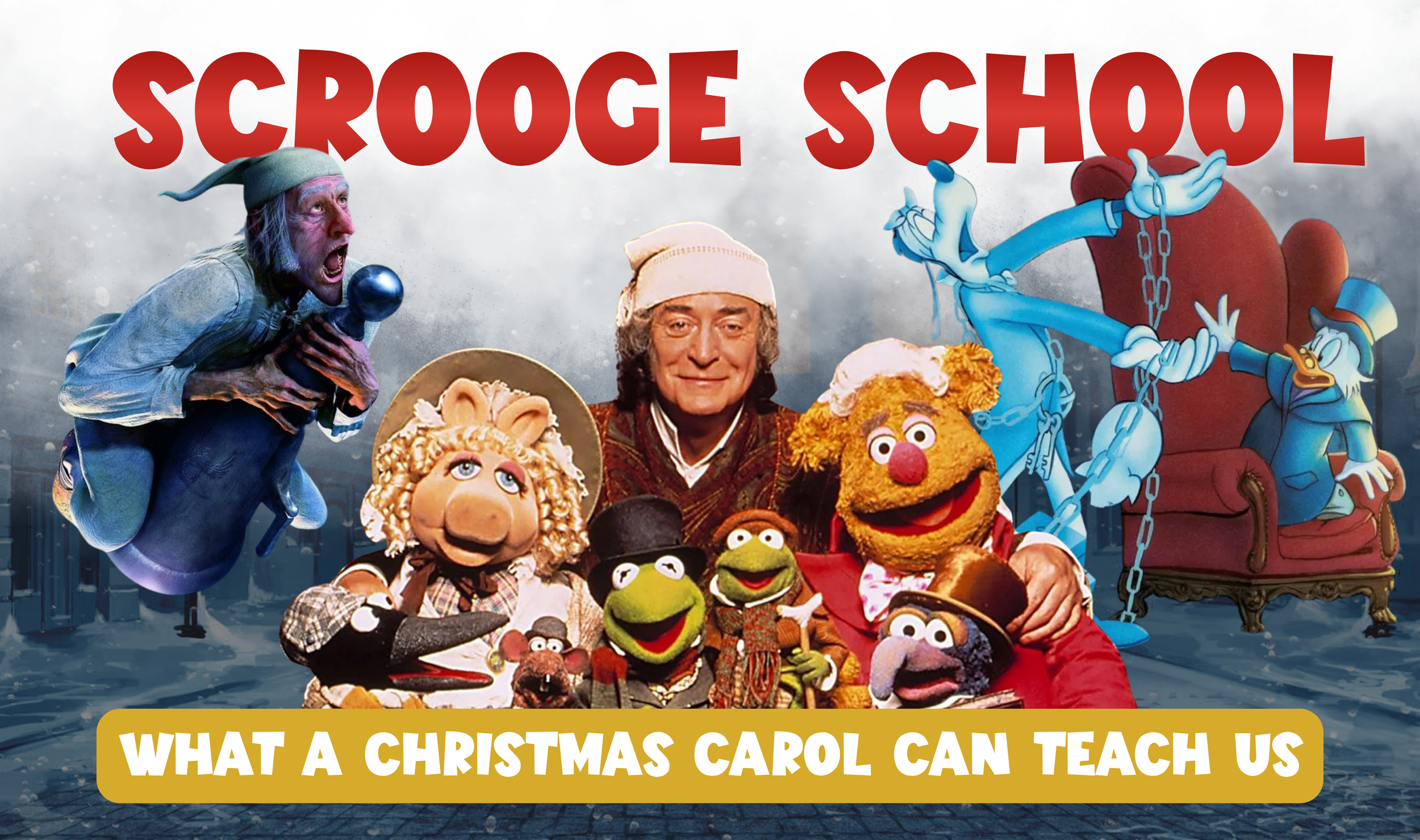
If there's one thing Hollywood loves almost as much as a sequel, it's a remake. And A Christmas Carol has been getting the remake treatment since before Hollywood was Hollywood. The story was adapted for the stage almost immediately after publication, and a silent-film version appeared in 1901. Since then, Scrooge has been played by everyone from respected dramatic actors to animated ducks.
For teachers, these different interpretations offer a fantastic opportunity to explore compare-and-contrast skills, character development, storytelling techniques, and point of view.
Here's a classroom-friendly casting breakdown:
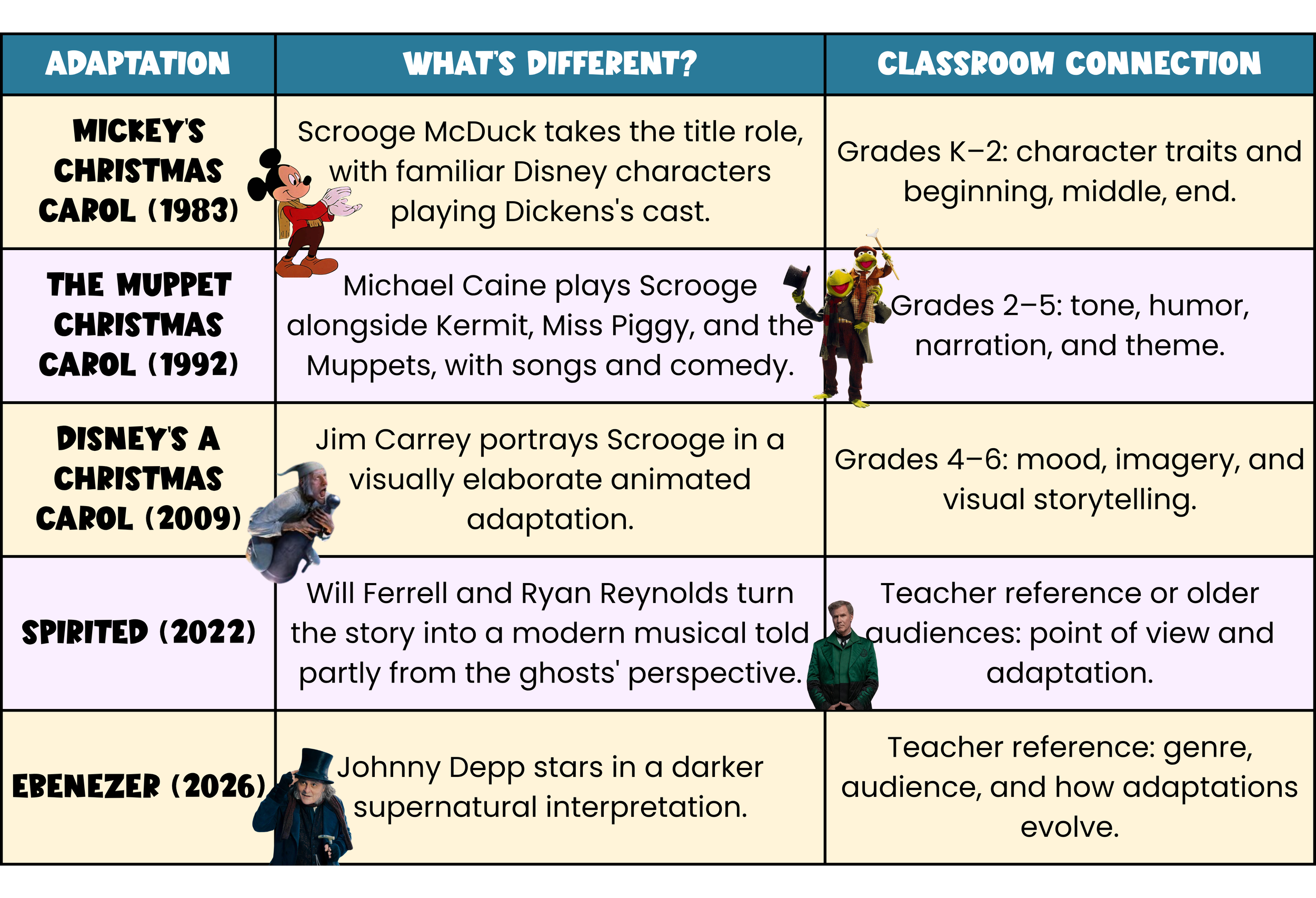
For elementary classrooms, Mickey's Christmas Carol and The Muppet Christmas Carol are particularly approachable starting points. Even so, teachers should preview scenes involving ghosts, death, or Tiny Tim's possible future, especially for younger or sensitive students. Spirited and Ebenezer are both PG-13, so I'd reserve them for teacher research rather than elementary screenings.
Classroom activity: A Christmas Carol Casting Call
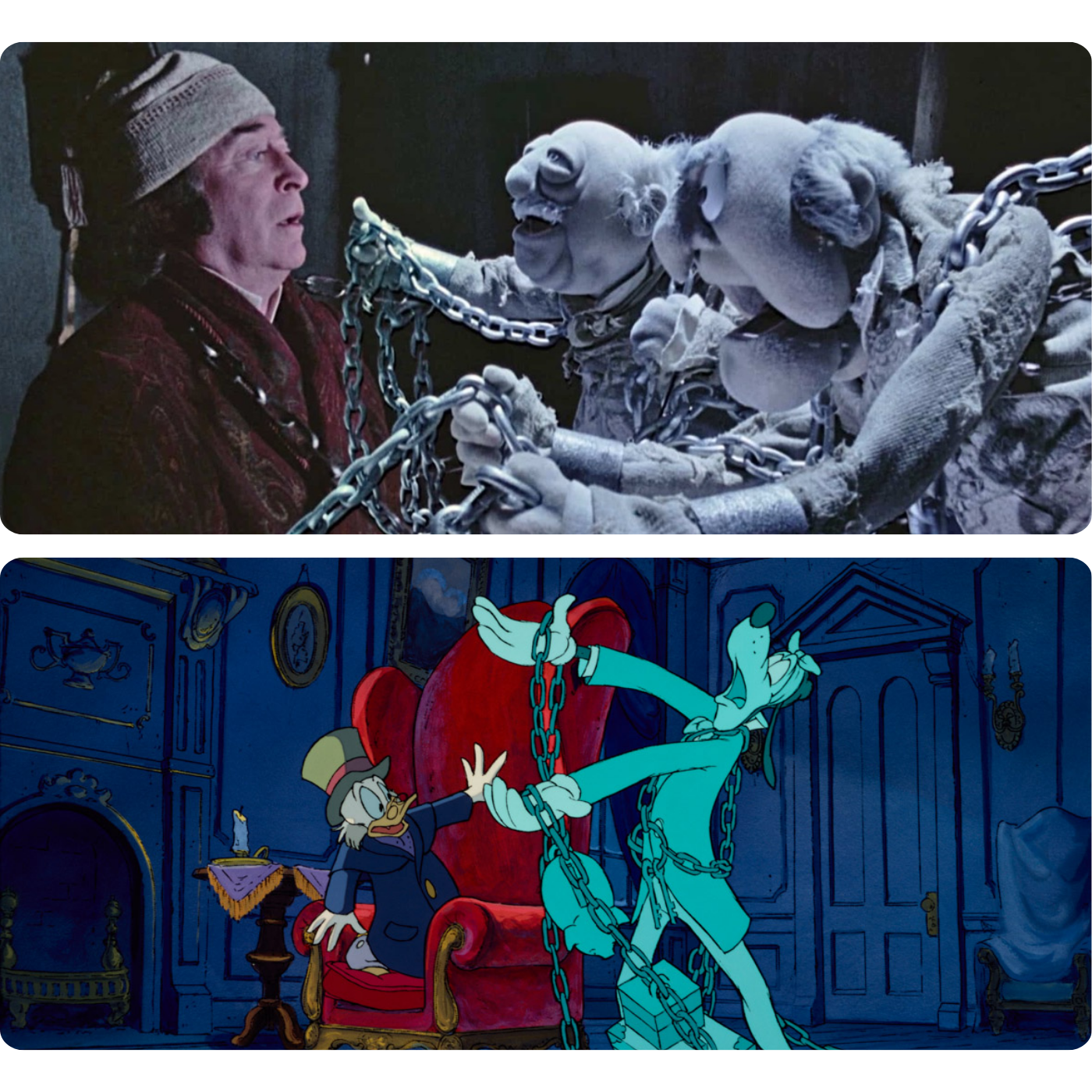
Show students two age-appropriate versions of the same scene, perhaps Scrooge's first encounter with a ghost or his realization that he must change.
Ask them to become film critics and investigate:
What stayed the same in both versions?
What changed in the dialogue, characters, music, or setting?
Which version was funnier, scarier, or more emotional? What specific details created that feeling?
Why might the filmmakers have made those choices?
For a creative extension, let students pitch their own adaptation. Would they set the story in a school, a sports stadium, a video game, or even a galaxy far, far away?
They must preserve three essentials: a character who needs to change, a journey that teaches them something, and an ending that demonstrates growth.
The rest? That's show business!
The Ghost of Christmas Yet to Come: What Would Scrooge Learn Today?
Dickens wrote about a society struggling with poverty, inequality, and the treatment of vulnerable children. Although the world has changed considerably since 1843, many of his questions remain relevant.
What responsibilities do we have toward other people? How do our decisions affect our communities? Can someone who has made poor choices become a better person?
One of the most interesting lessons is that Scrooge doesn't simply learn to feel differently. He learns to act differently.
That's an important distinction for students. Apologizing matters, but what happens afterward matters, too.
Classroom activity: Scrooge's Second Chance Challenge
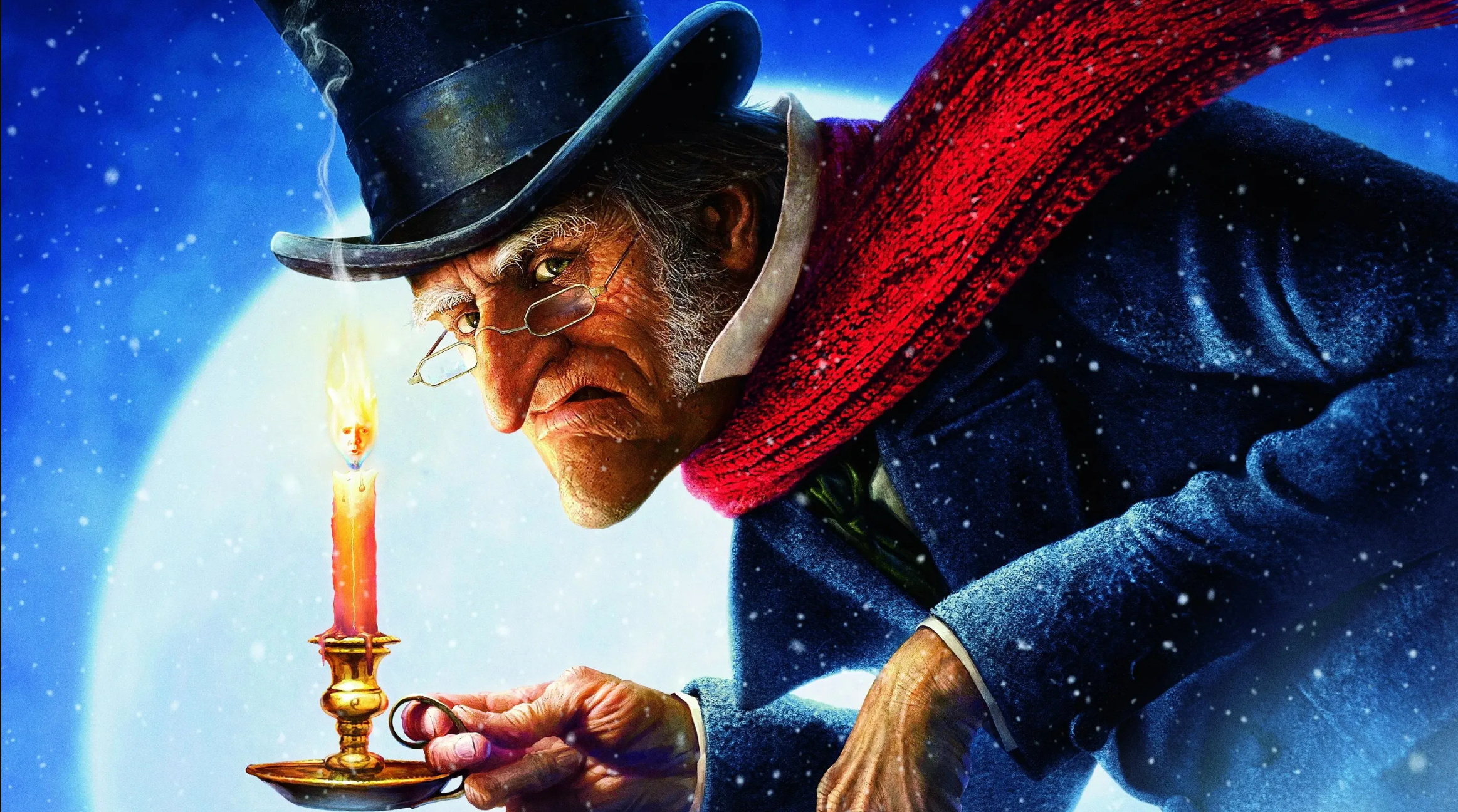
Invite students to imagine that Scrooge visits their classroom today. Instead of three ghosts, students become his team of life coaches.
Have them create a three-part plan:
Past: What mistake should Scrooge learn from?
Present: What kind action could he take today?
Future: How could that action make someone's life better?
Younger students can draw their answers, while older students can write a persuasive letter explaining why Scrooge should follow their advice.
The lesson isn't that one good deed erases every past mistake. It's that meaningful change begins with recognizing a problem and taking responsibility for what comes next.
A Few More Spirits for Your Lesson Plans
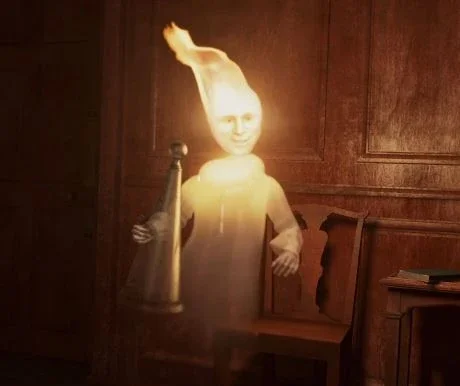
Want to keep the learning going? Here are three ways to extend A Christmas Carol across the curriculum.
ELA: Character Development Detective
Students collect evidence of Scrooge's behavior at the beginning, middle, and end of the story. Have them support their observations with dialogue, actions, or illustrations.Math: The Cost of Christmas
Create a fictional Victorian holiday shopping list with prices. Students calculate totals, compare budgets, and decide how to spend a limited amount of money. Older students can explore historical British currency, making sure to distinguish Victorian prices from modern values.Social Studies: Then and Now
Investigate how children lived in Victorian Britain, using age-appropriate historical sources. Compare schooling, work, family life, and holiday traditions with students' experiences today.
These activities can also lead to discussions about why writers use fictional stories to address real-world issues.
The Final Curtain: A Story That Keeps Giving

From Victorian London to Mickey Mouse, from the Muppets to Johnny Depp, A Christmas Carol has enjoyed a remarkably long run. And the secret to its success isn't just the ghosts, the Christmas decorations, or even Scrooge's famously terrible attitude.
It's the idea that people can learn, grow, and change. That's a lesson worth revisiting, whether your students encounter Dickens through a book, a movie, a musical, or a classroom activity. So this holiday season, consider inviting a few ghosts into your lesson plans. They might just help students discover a little more empathy, generosity, and understanding along the way. And if you can squeeze in a little reading comprehension, historical thinking, and compare-and-contrast practice?
Well, God bless us, every subject!
Jake Perlman is the founder of Teachertainment, blending education, entertainment, and pop culture to turn learning into an unforgettable experience.
