
My Child Understands the Lesson, but Blanks Out on Tests. Is This Normal?
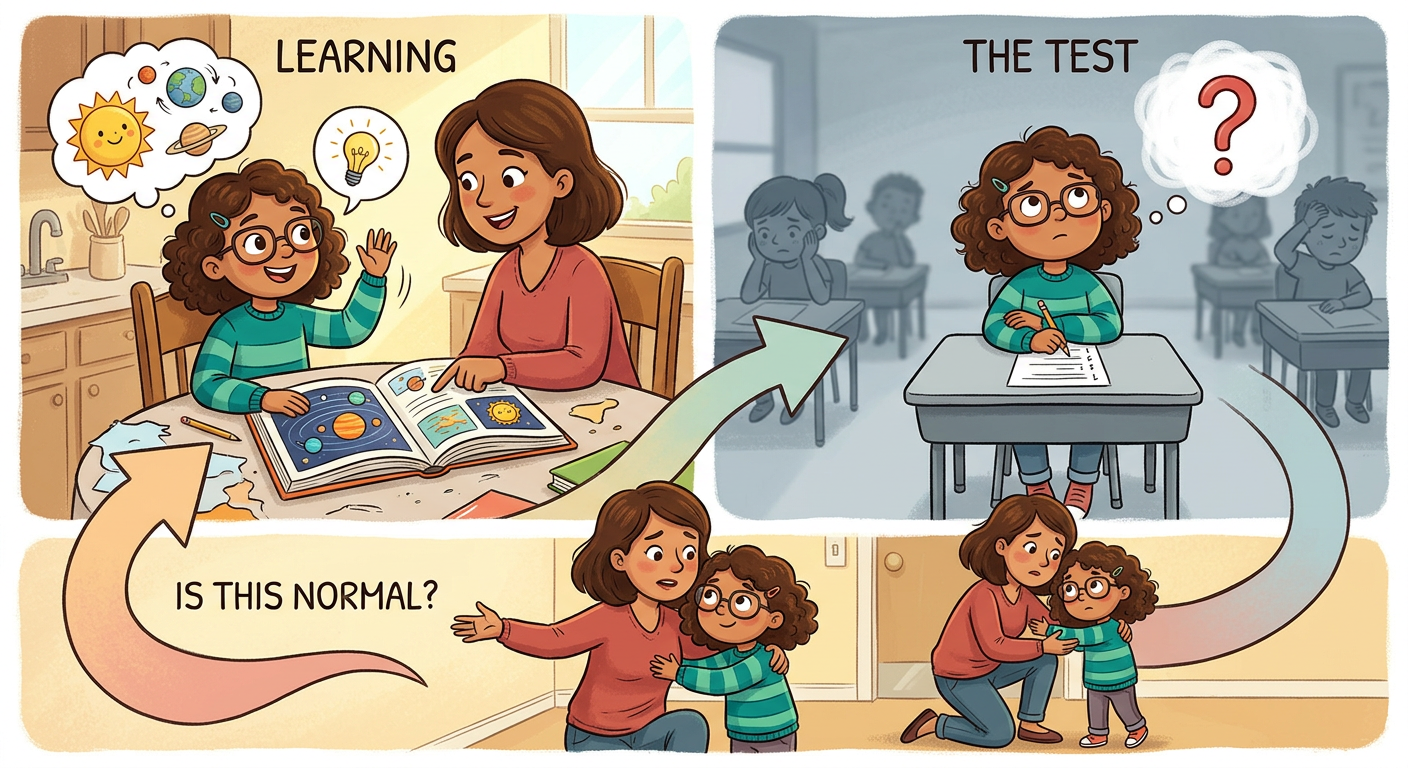
Knowing the answer and being able to produce it under pressure are two completely different skills.
Every great athlete knows what it feels like to perform perfectly in practice and then freeze in the moment that counts. LeBron James has spoken about the mental work required to perform under pressure, the deliberate practice of staying present when the stakes are highest. The difference between a player who delivers in the clutch and one who goes blank is not knowledge of the game. It is the ability to access that knowledge when the environment turns hostile.
Your child is dealing with exactly the same phenomenon. They know the material. They can answer your questions at home. They explain concepts back to you clearly. And then they sit down in front of the test, and the knowledge disappears. This is not a mystery. It is a documented psychological response with specific causes and specific solutions.
What Is Actually Happening When a Student Blanks on Tests
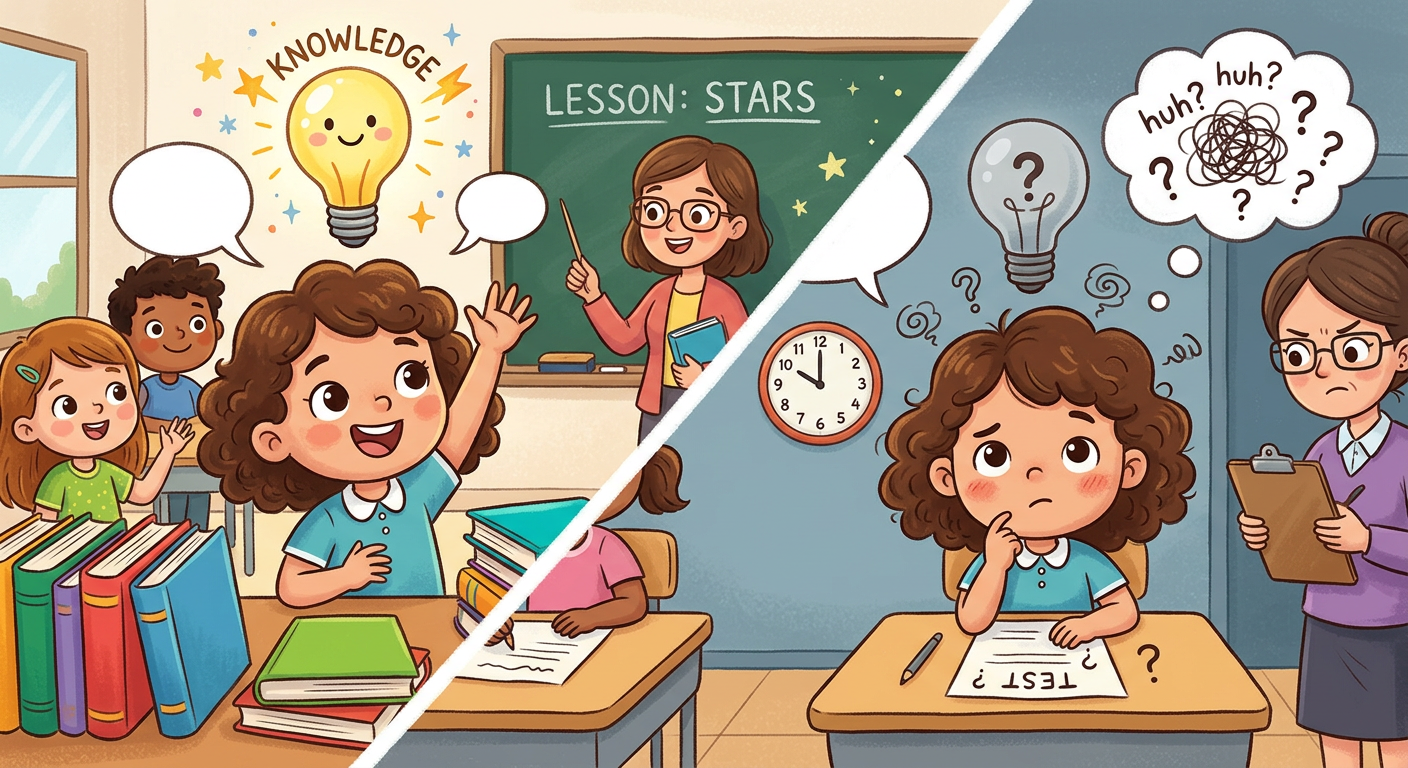
The scientific term is state-dependent memory retrieval failure. When a student is calm and in a low-stakes environment, their brain accesses stored information relatively easily. When anxiety spikes, the body enters a stress response that prioritizes threat detection over memory retrieval. The information is still there. The brain's access to it is temporarily blocked by the stress response itself.
This is why students can answer every question correctly at home and then struggle to recall the same information twenty-four hours later in an exam room. The knowledge did not disappear. The retrieval pathway did.
Research on test anxiety consistently shows that it is one of the most common academic challenges affecting K-12 students, with studies estimating that between fifteen and forty percent of students experience significant test anxiety at some point in their academic career. It is not a character flaw. It is a physiological response that can be addressed with the right preparation.
Why Standard Test Prep Often Does Not Fix This

The instinctive response to a student who is failing tests is to give them more practice tests. More exposure to the format. More review sessions. More repetition of the content.
This helps, but only partially. Additional content review addresses the knowledge side of the equation. It does not address the performance anxiety side. A student who has reviewed the material fifty times and can recite it perfectly in a calm environment will still blank if the stress response is not addressed directly.
Genuine test preparation addresses both dimensions simultaneously: the academic content and the mental performance skills required to access that content under pressure.
What the Teachertainment Approach Does Differently
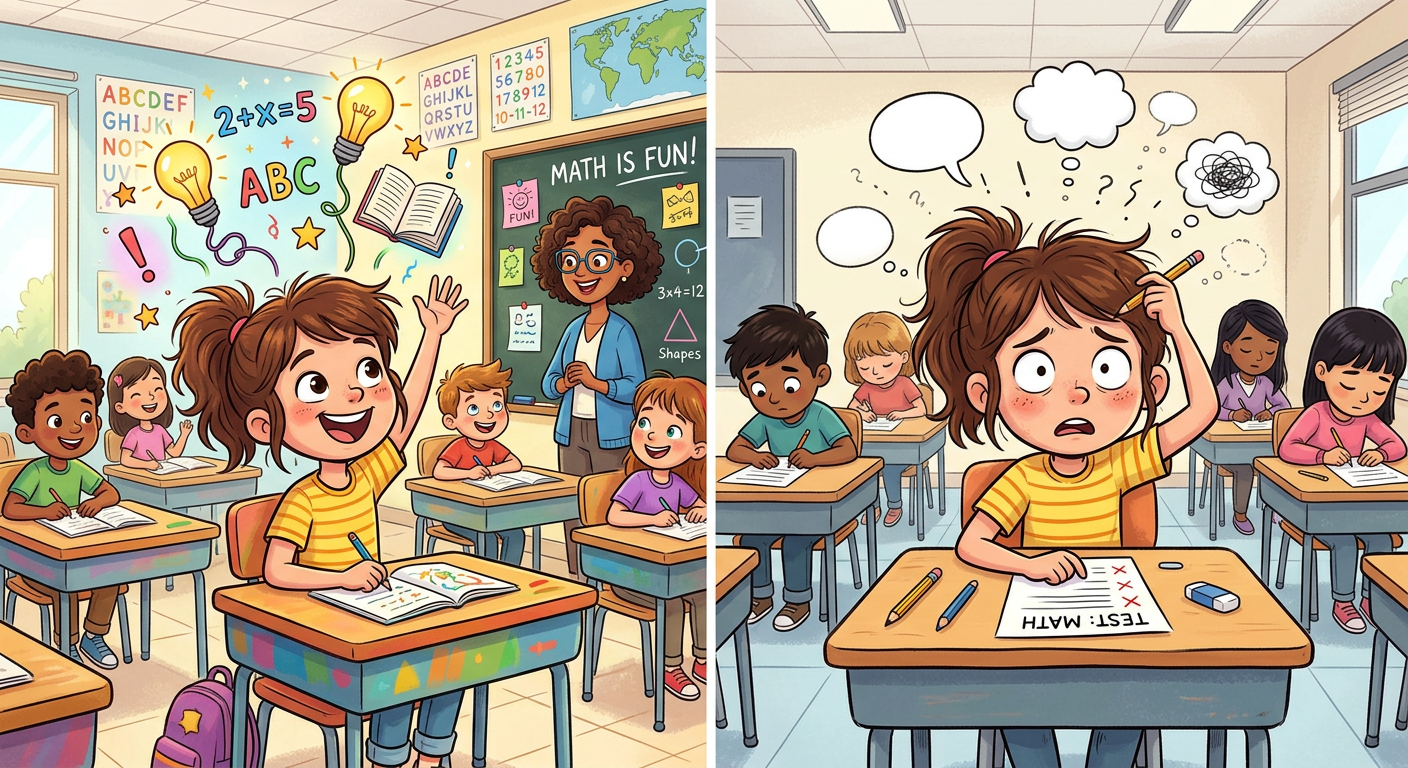
Jake Perlman's background in professional entertainment, including his work at Paramount Pictures, Showtime Networks, and Entertainment Weekly alongside his classroom teaching at Canfield Avenue Elementary, Brawerman Elementary, Crete Academy, and St. Timothy School, gave him a specific insight into performance pressure that most educators never develop: the skills required to perform under high-stakes conditions are learnable and trainable.
In the entertainment industry, performers practice not just their material but their performance of the material under simulated pressure conditions. Actors rehearse in front of audiences before the real audience arrives. Musicians perform for smaller crowds before the concert. The principle is identical for students preparing for exams.
Simulated Test Conditions
Teachertainment's test prep approach builds simulated test conditions into practice sessions gradually. We do not just drill content. We have students practice retrieving that content in increasingly realistic environments, with time limits, with distractions, with the physical setup of a real exam, until the retrieval pathway becomes robust enough to withstand the stress response.
Reframing the Stakes
We also work directly with students on how they interpret the test environment. A student who frames a test as a threat to their identity, this will prove whether I am smart or not, will experience a more intense stress response than a student who frames it as a performance opportunity, this is my chance to show what I know. That reframe is teachable. It takes practice. It makes a measurable difference.
Building the Performance Habit
Every Teachertainment session that involves test preparation ends with a brief performance reflection: what felt hard to retrieve today, what felt accessible, and what would make retrieval easier next time. This metacognitive practice builds the student's awareness of their own performance patterns and gives them tools to manage their stress response before and during the actual exam.
What Parents Can Do at Home
The most effective thing a parent can do for a child with test anxiety is to decouple the test result from the child's worth. Easier said than done, but the language you use in the days around a test matters more than most parents realize.
Avoid asking whether they feel ready. That question activates the evaluation frame. Instead, ask what they found most interesting about what they studied. Ask what they would explain to a younger student. Ask what they are most curious about. These questions activate retrieval in a low-stakes way and build confidence without raising the emotional temperature.
Also, sleep and physical activity in the days before a test are not soft variables. They are physiological prerequisites for effective memory retrieval. A student who is exhausted going into an exam is working with a compromised retrieval system regardless of how much they reviewed the material.
Frequently Asked Questions
Is it normal for a student to know the material but fail the test?
Completely normal and more common than most parents realize. Research estimates that between fifteen and forty percent of students experience significant test anxiety at some point. The gap between knowledge and test performance is a documented phenomenon with specific causes. It is not a sign that the student does not understand the material. It is a sign that their retrieval under pressure needs support.
How is test anxiety different from not being prepared?
An unprepared student typically struggles with the content both at home and on the test. A student with test anxiety can demonstrate solid knowledge in low-stakes settings but fails to access that knowledge in the exam environment. The clearest indicator is the gap between home performance and test performance. If your child can answer questions correctly when relaxed but blanks under test conditions, anxiety is almost certainly a significant factor.
Can a private tutor actually help with test anxiety?
Yes, particularly a tutor who builds simulated performance conditions into the preparation process. Content review alone is not sufficient. The student needs to practice retrieving information under increasingly realistic conditions so that the retrieval pathway becomes robust enough to function despite the stress response. Teachertainment's test prep approach integrates both content and performance preparation.
What should I do if my child has a test coming up in two weeks?
Two weeks is enough time to make a meaningful difference. Start by identifying the highest-priority content areas and conducting low-stakes retrieval practice at home. Introduce timed practice in small increments, starting with five-minute timed sections and building to full test-length timed practice. Work on the reframing language around the test. Make sure sleep and physical activity are protected in the week before the exam.
Does Teachertainment offer test preparation for specific standardized tests?
Yes. Teachertainment's test prep services cover a range of standardized tests relevant to K-12 students, including school admission tests and subject-specific assessments. All preparation integrates both content mastery and performance skills so students can access what they know when it matters most.
Can test anxiety affect my child's future academic opportunities?
If left unaddressed, yes. Standardized tests play a significant role in school admissions, placement decisions, and college applications. A student who consistently underperforms on tests relative to their actual knowledge is at a real disadvantage in those processes. Addressing test anxiety directly through structured preparation is one of the highest-return investments a family can make in a student's academic trajectory. Reach out at jake@teachertainment.com to discuss what that preparation looks like for your child.
Your Child Knows More Than the Test Is Showing. Let Us Close That Gap
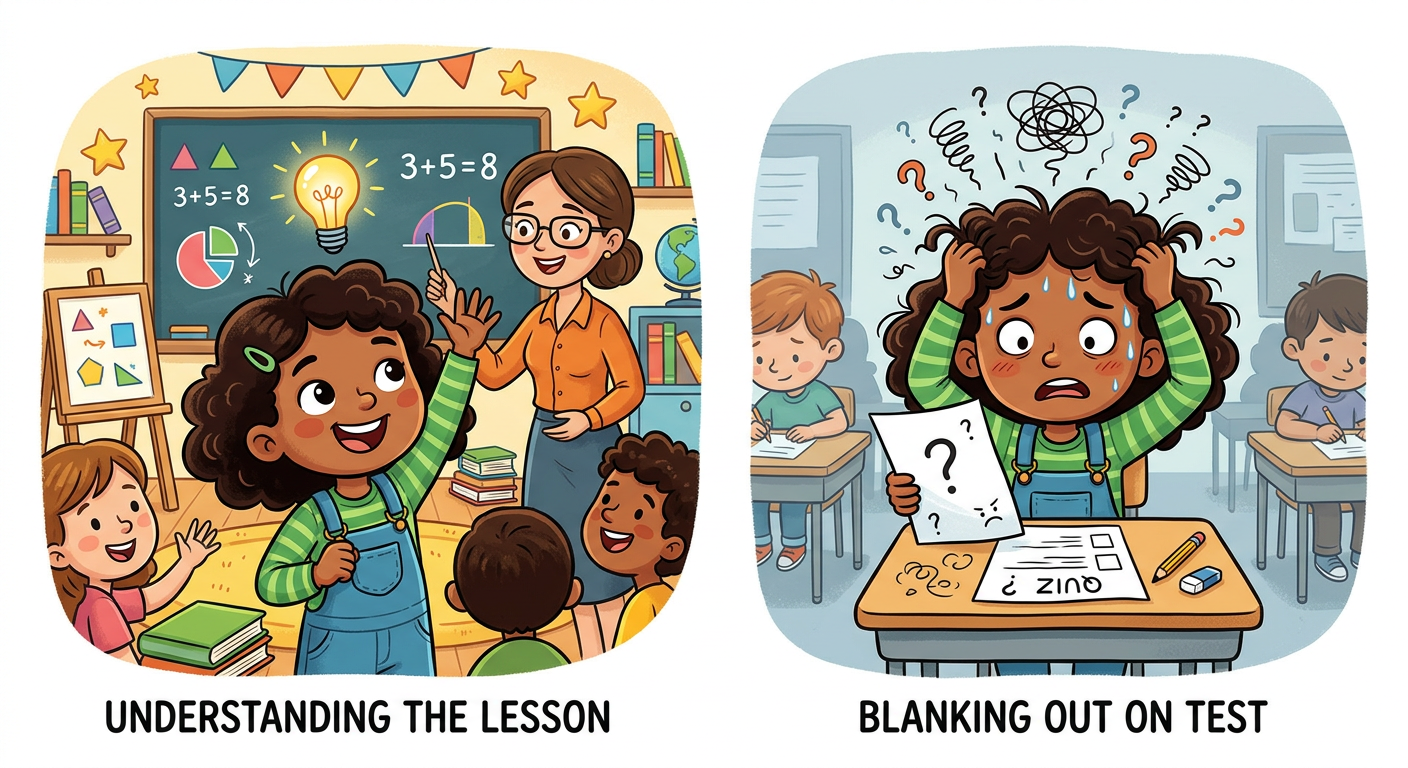
The score on the test is not the full picture of what your child knows. We know that. And we know how to build the bridge between what they know and what they can produce under pressure. If your child is consistently underperforming on tests relative to how they demonstrate knowledge at home, that gap is solvable. Email jake@teachertainment.com and tell us about the pattern you are seeing.
