
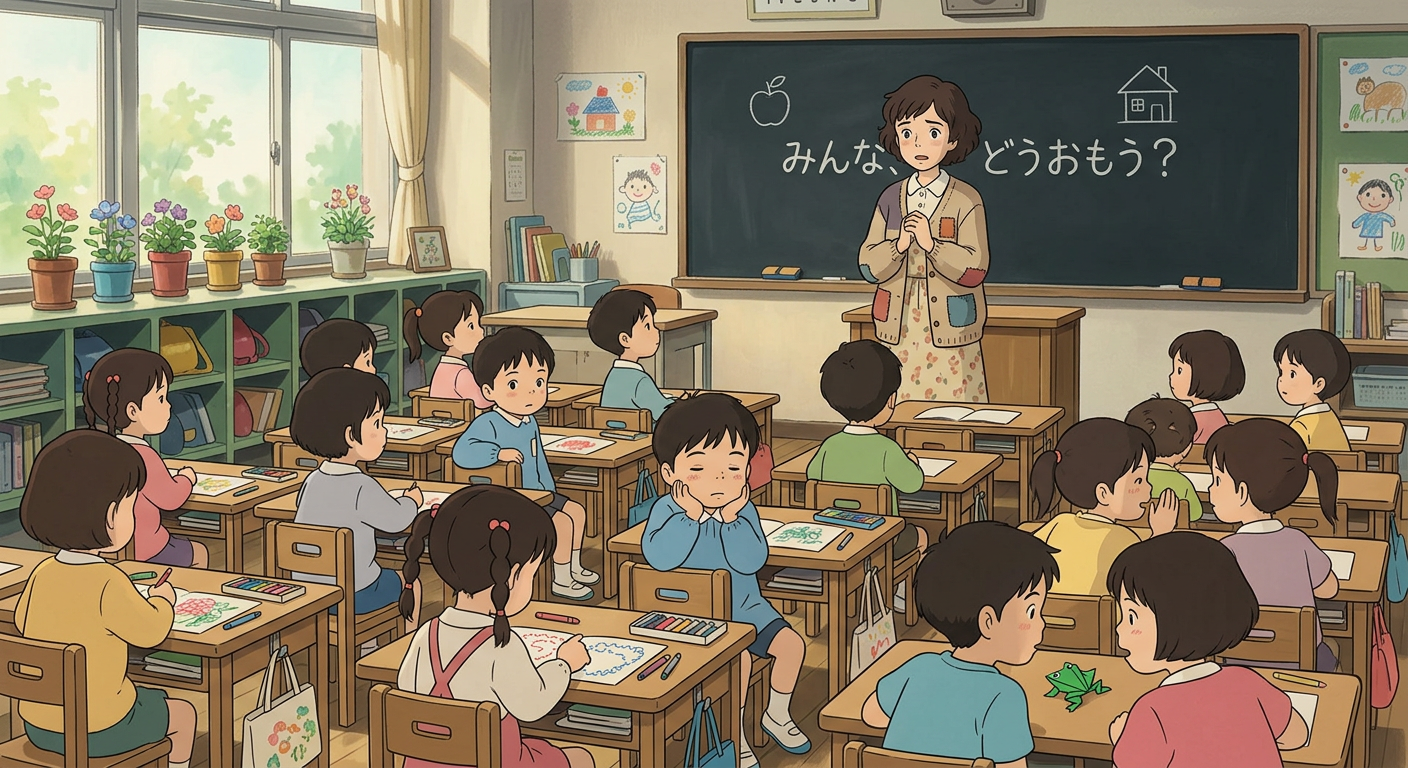
The silence is not apathy. It is almost always a risk calculation, and you can change the math.
Every improv performer knows the exact feeling of asking an audience for a suggestion and getting nothing back but silence. It is not that the audience has no ideas. It is that the first person to speak is taking on a small, public risk, and until someone decides that the risk is worth it, the room stays quiet. Experienced performers do not solve this by asking louder or waiting longer. They change the structure of the ask itself.
A classroom that goes silent after a question is running the exact same dynamic. Students are not blank. They are calculating risk. Being wrong out loud, in front of peers, carries a real social cost at every grade level, and a silent room is often a room full of students who have an answer but are not confident enough to be the first one to offer it.
Why Open Questions Produce Silence So Reliably

A question like what do you think this means invites an enormous range of possible responses and offers no clue about what counts as a reasonable answer. That openness, which feels generous from the teacher's side, often reads as risky from the student's side. There is no visible floor for what a safe answer looks like, so the safest move is to say nothing and wait to see what someone else offers first.
Research on classroom questioning consistently shows that the format of a question shapes participation as much as the content does. Broad, open-ended questions asked cold, with no lead-in and no lower-risk entry point, produce lower response rates than questions with a built-in structure that makes the first move feel safer.
Four Question Structures That Break the Silence
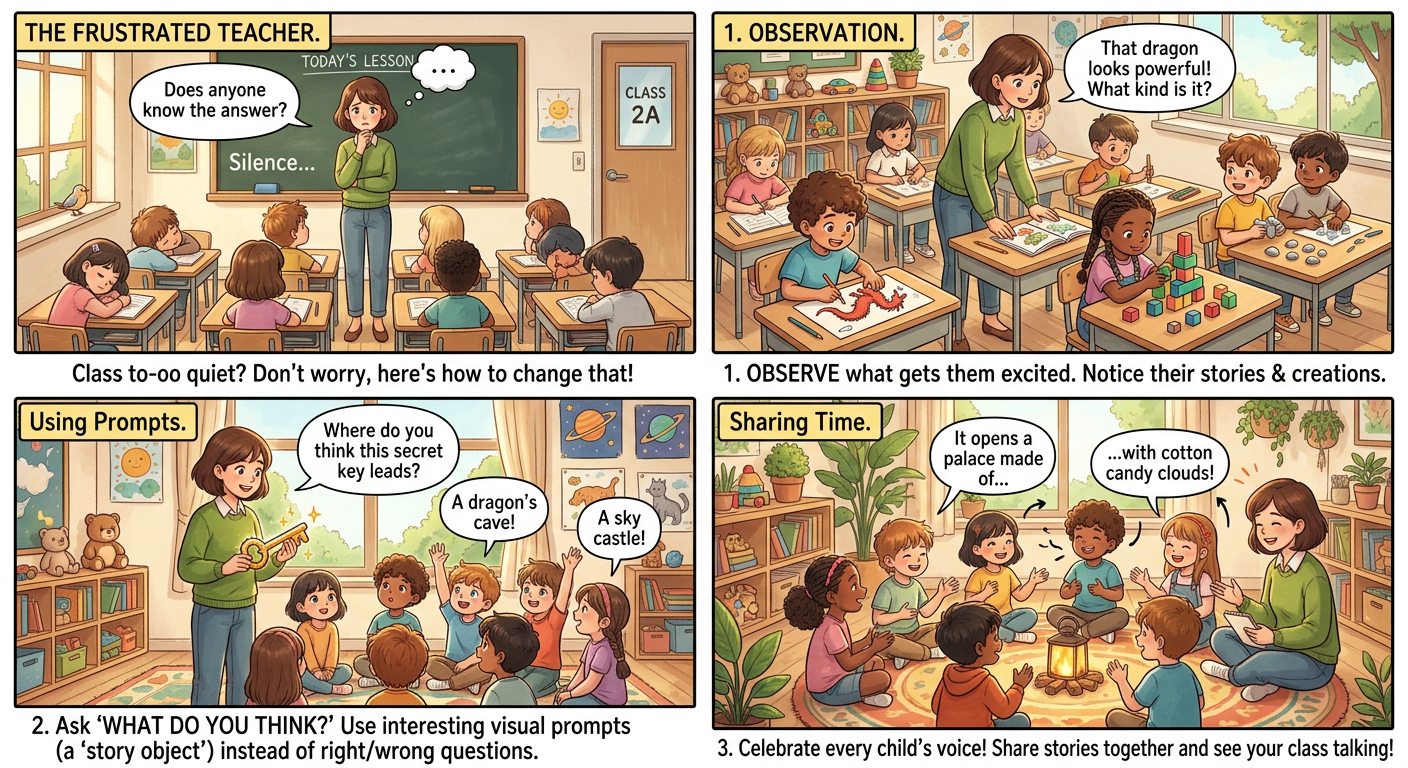
The Binary Starter
Before asking an open question, ask a binary version first. Instead of asking "What do you think caused this, start with do you think this was intentional or accidental. A yes-or-no or either-or question has a much lower risk profile, and once a student has committed to a side, following up with why do you think that becomes far easier to answer than the open version would have been.
The Written Rehearsal
Give students fifteen to thirty seconds to jot down a one-sentence answer before anyone speaks aloud. This removes the pressure of formulating an answer in real time in front of the room, and students who have already written something down are significantly more likely to share it verbally than students being asked to think and speak simultaneously.
The Partner Pass
Have students share their answers with a partner before the whole-class discussion. Hearing that a peer had a similar or reasonable answer reduces the perceived risk of being wrong, and students often volunteer their partner's idea more readily than they volunteer their own, which still gets the content into the room.
The Named Entry Point
Rather than asking the room broadly, direct the first version of a question to a specific, low-stakes response: give me one word that comes to mind, or point to one line in the text that stood out to you. These narrow, specific asks produce responses far more reliably than broad conceptual questions, and a room that has already spoken once is much more likely to continue speaking.
We have used all four of these structures across grade levels from elementary through middle school. Younger students respond especially well to the written rehearsal and the partner pass, since both remove the pressure of live, unrehearsed public speaking. Older students often respond most to the binary starter, since it gives them a low-risk way to stake a position before being asked to defend it.
What This Looks Like in a Real Lesson
Jake Perlman's background in live theatre, including improv-adjacent work and his theatrical experience at The Nederlander Organization, shaped a specific instinct that applies directly here: never ask a cold, open question of a room that has not been warmed up first. A skilled host or performer builds toward the big, open moment through a sequence of smaller, lower-risk exchanges. A classroom question sequence can be built the exact same way. Open with something binary or specific, let the room commit to something small, and only then move to the open, interpretive question that was the actual goal all along.
Teachertainment's Keynote Presentations for schools cover this exact sequencing structure as part of broader engagement training, giving staff a repeatable framework rather than a single trick that works for one lesson.
We also want to be honest here: some silence is not about question structure at all. If a specific student is consistently silent even with low-risk entry points, that may reflect something beyond classroom questioning technique, whether a language processing difference, an anxiety response, or a relational dynamic in the room that needs to be addressed directly and individually rather than through a whole-class structural fix.
Frequently Asked Questions
Why do my students go silent even when I know they understand the material?
Understanding the material and feeling confident enough to volunteer an answer out loud are different things. Silence is very often a risk calculation rather than a comprehension gap. Students who clearly understand content in written work or one-on-one conversation may still stay silent in a whole-class setting because the social risk of being the first to answer feels higher than the academic risk of getting it wrong on paper.
How much wait time should I give after asking a question before moving on?
Research on classroom wait time suggests that most teachers wait less than two seconds before either answering their own question or calling on someone, which is often not enough time for students to formulate a response. Extending wait time to five or more seconds, combined with a lower-risk question structure, meaningfully increases the number of students willing to respond.
Does calling on students directly instead of waiting for volunteers help with the silence problem?
It can help in the moment, but relying on it exclusively does not build a classroom culture where students volunteer for participation on their own. Cold-calling combined with a written rehearsal step, giving students a few seconds to jot down a response before being called on, tends to work better than cold-calling alone, since it removes the added pressure of real-time formulation.
What if the written rehearsal step takes too much time out of the lesson?
Fifteen to thirty seconds per question is a small time investment relative to the participation gain it typically produces. For lessons where multiple questions are being asked, this step can be reserved for the questions where genuine discussion is the goal, rather than applied to every single question asked during a lesson.
Can these structures help with a classroom that is generally quiet, not just quiet on specific questions?
Yes. A classroom culture where these lower-risk entry points are used consistently over time tends to build broader participation habits, not just better responses to individual questions. Students who experience repeated low-risk success with speaking up become more willing to take slightly higher risks over time.
Does Teachertainment offer training on classroom questioning techniques specifically?
Yes. Teachertainment's Keynote Presentations and Teacher Workshops both include sessions on questioning sequences and classroom discussion techniques, drawing on live performance principles for building audience participation.
Silence Has a Structure. So Does Breaking It

The quiet after a question is not a wall. It is a risk calculation you can change with the right sequence. If your classroom discussions keep stalling out, Teachertainment's Keynote Presentations build these questioning structures into a full staff training. Email jake@teachertainment.com to talk through what that would look like for your school, or bring us in for a session built around your specific classrooms.
