
How Do I Prepare a Neurodivergent Child for Back to School When Routine Changes Are Hard?

Back to school is a new season. Some children need the trailer before the premiere.
In Inside Out 2, one changing life stage crowds the control panel with emotions that do not wait their turn. Back to school can feel similar for a neurodivergent learner. A new wake-up time, classroom, teacher, route, lunchroom, sensory environment, and set of expectations may arrive in one enormous scene.
To prepare a neurodivergent child for back to school, Teachertainment begins with predictability, practice, and partnership. This guide gives you a visual rehearsal activity, a practical transition timeline, questions for the school, and clear signs that your child may need more individualized support.
Why Routine Changes Can Feel Bigger Than They Look

A routine is not merely a preference for many neurodivergent children. It can reduce the number of decisions, sensory surprises, and executive-function demands competing for attention. When several predictable cues disappear at once, the child's stress response may arrive before they can explain what feels wrong.
That response may look like arguing, freezing, crying, refusing, moving slowly, asking the same question repeatedly, or holding it together at school and unraveling at home. Treat the behavior as information before treating it as defiance. Ask which part of the sequence became uncertain: waking, dressing, leaving, separating, finding a room, eating, completing work, or returning home.
Neurodivergent is an umbrella term, not one learning profile. An autistic child, a child with ADHD, a dyslexic student, and a learner with sensory or anxiety-related needs may require very different supports. The plan should fit the child in front of you, not a checklist built around a label.
How to Prepare a Neurodivergent Child for Back to School With Predictability

Begin one to three weeks before school when possible. Adjust sleep and wake times gradually, practice the morning sequence, and preview only the details you know are accurate. If the school has not finalized a teacher or room, say so. A truthful blank is safer than a confident promise that later changes.
Use a countdown calendar and give transition warnings in the form your child understands. The CDC recommends extra warnings before transitions and routine changes for students with ADHD. The Autism Research Institute's back-to-school resources also highlight prepared schedules, visual supports, and thoughtful transitions for autistic students.
Then personalize the rehearsal. One child may need to walk the route and see the bathrooms. Another may need to test a uniform texture, hear the alarm, identify a quiet space, or practice opening lunch containers. Our Hollywood-inspired back-to-school ideas for families and teachers can add some playfulness, but the support plan should still honor sensory, communication, and pacing needs.
A Visual Rehearsal to Prepare a Neurodivergent Child for Back to School
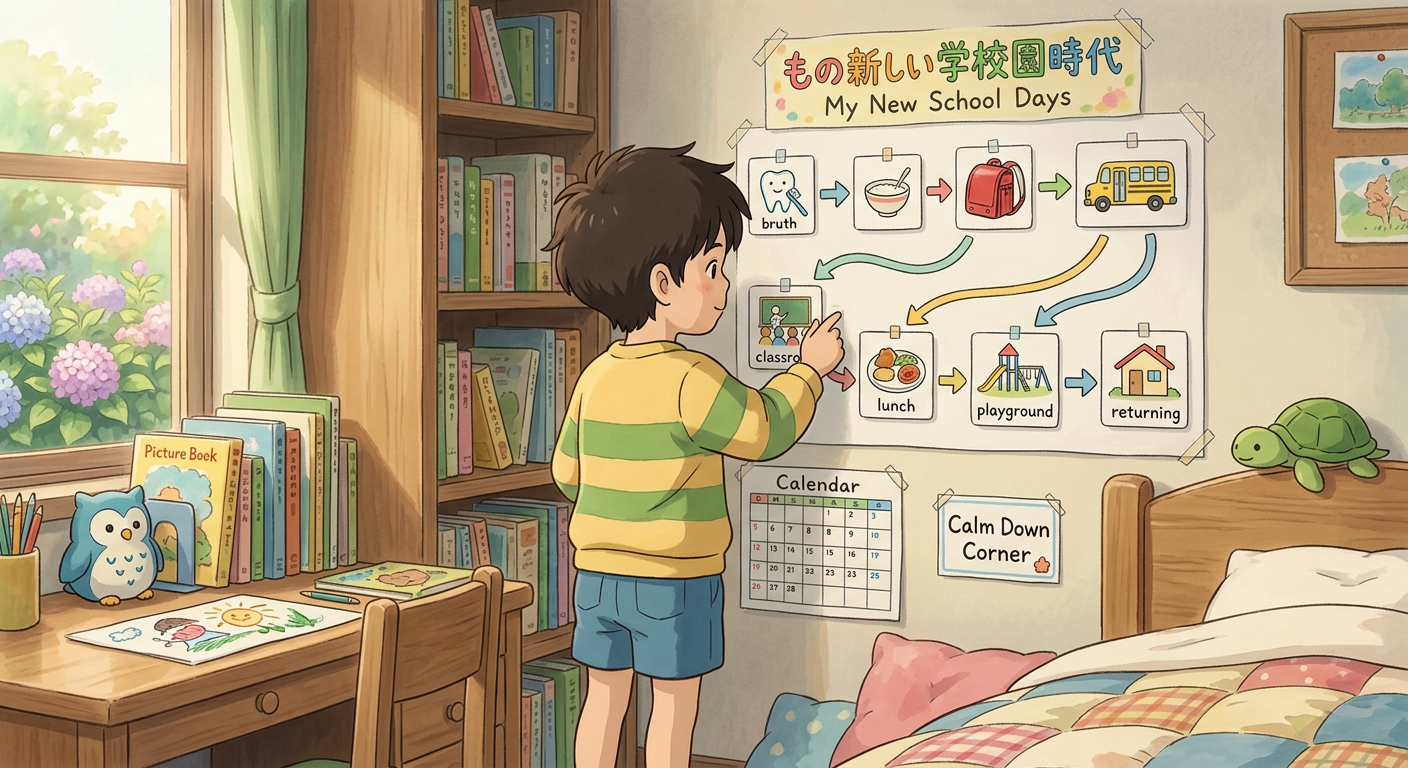
Create a Back-to-School Trailer together. This is a short preview of the day using pictures, words, objects, audio, or a combination your child can process easily. Keep it factual. The goal is not to promise a perfect school day. It is to make the sequence less mysterious.
Build the Six-Scene Storyboard
Choose six scenes: wake up, get ready, travel, enter school, complete one familiar school routine, and come home. Use photos of actual locations when permitted, simple drawings, or written cards. Add the names of adults your child can ask for help.
Add a Change Card
Place one card between scenes that says, “The plan may change.” Rehearse two possible changes, such as a different drop-off door or substitute teacher. Pair the change with a stable response: check the schedule, ask an adult, use a break card, or follow the class.
Film the Calm Version
Let your child narrate, act with objects, or simply point while you describe the sequence. Watch or review it once a day, then ask one concrete question: “Which scene needs more information?” This gives you formative assessment without demanding a long conversation about feelings.
Coordinate Support Before the First Difficult Morning
Share useful information with the teacher before school starts if the school allows it. Keep the message concise: what helps, what tends to overwhelm, how the child communicates distress, and which strategy works at home. Ask about arrival, schedule changes, sensory demands, breaks, homework, and the best communication channel.
Jake Perlman's experience across education and entertainment informs our approach at Teachertainment. A strong production does not wait for opening night to discover that the lighting cue, script, and entrance do not match. We rehearse the transition, identify pressure points, and coordinate the adults who can adjust the environment.
If your child has an IEP or 504 Plan, review whether current accommodations address transitions, sensory access, communication, and executive functioning. Family consultation and educational planning can help parents organize observations and questions, but it does not replace special education advocacy, therapy, or medical care. Contact the school team and your child's qualified healthcare professionals when distress is intense, persistent, or affects safety, sleep, eating, or daily functioning.
Frequently Asked Questions
When should I start preparing my neurodivergent child for school?
Start one to three weeks before the first day when possible, but follow your child's tolerance. Some children benefit from repeated previews. Others become more anxious when the countdown begins too early. Introduce one reliable detail at a time, practice the morning routine, and leave uncertain details visibly marked as unknown. Preparation should reduce surprises, not extend the worry across the entire summer.
Are visual schedules only for autistic children?
No. Visual schedules can support children who have difficulty with sequencing, working memory, language processing, attention, anxiety, or transitions. The format can be photographs, icons, written lists, color blocks, or objects. A visual tool is useful only if the child understands and can access it. Teach the schedule directly instead of posting it once and assuming it will work.
What should I tell my child's new teacher?
Share the smallest set of details that will help the teacher respond well: your child's strengths, common stress signals, effective calming or communication supports, sensory considerations, and one or two strategies that have worked. Ask how classroom transitions operate and how updates will be shared. Avoid sending a biography so long that the most actionable information disappears inside it.
Should we visit the school before the first day?
A brief visit can help when the school permits it and the child benefits from seeing the route, entrance, classroom, bathroom, lunch area, or quiet space. Bring the actual schedule if available and take approved photos for the visual plan. If a visit is impossible, request a map, teacher photo, short video, or written sequence. Do not promise access the school has not confirmed.
Can Teachertainment help us create a transition plan?
Teachertainment's individualized family consultation can help parents map routines, organize school questions, and create practical next steps around learning and home structure. The service can complement the child's existing school and care team. It is not a diagnostic evaluation, legal special education service, or substitute for advice from a pediatrician, therapist, or other licensed professional.
Are there workshops for families supporting learning routines at home?
Yes. Teachertainment's parent and family workshops cover practical routines, independence, home learning, and ways to reduce everyday academic stress. A workshop can give a family or school community shared language and tools. A child with significant sensory, behavioral, communication, or mental health needs may still require an individualized plan from the appropriate school and healthcare professionals.
To prepare a neurodivergent child for back to school, you do not need to predict every twist. Teachertainment can help your family rehearse the known scenes, name the pressure points, and build a plan through family consultation and educational planning. Email jake@teachertainment.com to share what changes are hardest. Give your child a useful preview, then let the first day arrive with fewer surprises.
