
Preposition Song "Simon Says": Combining Listening Skills with Prepositions
Research suggests that roughly 50% of students struggle to master spatial relationships through traditional textbook instruction alone. You likely see this every day in your classroom or home. A child can recite a list of words like under, over, and through, but they freeze when asked to physically demonstrate those concepts in real time. It is a disconnect between rote memorization and functional application.
The good news is that movement and melody bridge this gap. By using the Preposition Song "Simon Says": Combining Listening Skills with Prepositions, you can transform a static grammar lesson into a dynamic physical experience. I have found that when children use their bodies to anchor linguistic concepts, the retention rate skyrockets. This guide explores how to use rhythm and play to ensure those tricky spatial words finally stick. We will look at the mechanics of musical learning, the setup for a successful game, and how to measure true comprehension.
The Power of Musical Learning
Music acts as a mnemonic scaffolding for the brain. When we pair a melody with a list of prepositions, we are not just asking students to remember words; we are asking them to remember a pattern. In my experience, rhythm helps students predict what comes next. This predictability lowers the affective filter, making them more comfortable with difficult language structures. It is not just about fun. It is about cognitive efficiency.
The truth is: most traditional grammar lessons fail because they are too abstract. A preposition describes a relationship in space or time. If a student is sitting perfectly still in a plastic chair, they are not experiencing that relationship. They are just looking at ink on a page. By introducing a song, you engage the auditory cortex while the physical movements of Simon Says engage the motor cortex. This dual-coding approach makes the information much more likely to move from short-term to long-term memory.
Consider this:
Rhythm provides a steady beat that helps regulate student focus.
Melodic phrases create "hooks" that make word recall almost involuntary.
Songs allow for repetitive practice without the boredom of traditional drills.
Pitch changes can mirror the meaning of the words (higher pitch for "above," lower for "under").
Building on that foundation of sound, we can start to layer in the specific mechanics of the game. You want the music to be the heartbeat of the activity, not just background noise. When the music stops or transitions, that is when the Simon Says element takes center stage. This transition from passive listening to active physical response is where the real learning happens.
Setting Up the Simon Says Game
Success in any kinesthetic activity depends on the environment you create before the first note even plays. If the room is cluttered, the focus shifts from the prepositions to avoiding a tripped-over backpack. I recommend clearing a central space where every student has a three-foot "bubble" of personal territory. This allows for full range of motion without the distraction of physical contact.
Here is the thing: the song you choose serves as your primary instructional tool. You want a track that is catchy but not so fast that it outpaces the students' ability to react. Teachertainment offers resources that balance this tempo perfectly. Once the music is ready, establish the rules clearly. In this version, Simon only gives directions that involve spatial relationships. If the song mentions "on top of" and Simon says "Put your hand on top of your head," the students move. If Simon is silent, they remain still despite what the lyrics suggest.
To get the most out of your setup:
Use a high-quality speaker so the lyrics are crisp and intelligible.
Establish a "neutral position" (like hands on hips) for students to return to between commands.
Use a visual aid, like a poster of the song lyrics, for students who need extra support.
Define the boundaries of the play area clearly with floor tape or cones.
Armed with a clear space and a solid plan, you can avoid the chaos that often plagues movement-based lessons. You are not just playing a game; you are conducting a focused linguistic experiment. The structure of the game provides the safety net students need to take risks with their language use. This leads to the next piece of the puzzle: choosing the right words to emphasize.
Integrating Key Prepositional Phrases
Not all prepositions are created equal. Some, like "in" or "on," are grasped early by most learners. Others, such as "beside," "between," or "among," require more nuanced physical demonstration. When using the Preposition Song "Simon Says": Combining Listening Skills with Prepositions, you should strategically select phrases that challenge the students' current level of understanding. I have seen teachers make the mistake of trying to teach 30 prepositions at once. It is much better to master a core group of eight to ten.
Translation: quality over quantity. If you are working with younger learners, focus on the basics of height and depth. For older or more advanced students, introduce compound prepositions or those that describe more complex relationships. The song acts as the "rehearsal" for these words, while the Simon Says portion acts as the "performance." You are looking for an immediate, confident physical response that shows they aren't just guessing based on what their neighbor is doing.
Here is what this means for you:
Focus on pairs of opposites (up/down, in front of/behind) to create cognitive contrast.
Incorporate props like a single chair or a small box to provide a physical reference point.
Gradually increase the speed of the commands as students demonstrate mastery.
Vary the complexity by using "Simon says put your foot under the chair while your hand is above your head."
Taking this a step further, you can even let students take turns being "Simon." This forces them to produce the language, not just consume it. When a child has to formulate the sentence "Simon says stand beside your desk," they are engaging in high-level linguistic processing. But before they can lead, they must first master the art of listening, which is a skill in its own right.
Strengthening Active Listening Skills
We often assume that because a student is quiet, they are listening. That is rarely the case. Active listening requires the brain to filter out background noise, identify specific phonemes, and translate those sounds into meaning. The Simon Says format is the ultimate test of this process. If a student is merely following the crowd, they will eventually fail when Simon gives a "trick" command.
In my experience, the biggest hurdle for students is the "selective attention" required to distinguish between the song's lyrics and the teacher's voice. This is why the Preposition Song "Simon Says": Combining Listening Skills with Prepositions is so effective. It forces the brain to multitask. It has to process the rhythmic input of the music while staying alert for the specific "Simon says" trigger. You are essentially training their ears to pick out critical information from a stream of sound.
It gets better. This skill translates directly to other academic areas. A student who can listen for prepositions in a fast-paced game is much better equipped to listen for instructions in a science lab or key details in a history lecture. You are building the "listening muscles" that underpin all successful communication.
Consider these strategies for focus:
Use "false starts" where you say a preposition without the "Simon says" prefix.
Whisper some commands to force students to lean in and focus.
Change the volume of the music periodically to test their ability to adapt.
Reward students who stay still during "non-Simon" commands to emphasize the value of restraint.
The data shows that students who engage in regular auditory discrimination tasks perform significantly higher on standardized literacy assessments. They become more attuned to the nuances of language. Once you have established this high level of engagement, you need a way to track whether the lesson is actually working over the long term.
Measuring Student Progress and Retention
How do you know if they actually learned the prepositions or if they just got lucky during the game? Assessment in a kinesthetic classroom looks different than it does in a traditional one. You are looking for a reduction in "lag time." When you first start, there is often a two-second delay between the command and the action as students process the word. As they gain mastery, that delay disappears. The movement becomes instinctive.
I recommend keeping a simple checklist during the game. Note which prepositions cause the most frequent "outs" or hesitations. If 80% of the class misses the command for "between," you know exactly what you need to review tomorrow. This is real-time data that no worksheet can provide. It is honest, immediate, and actionable. Furthermore, you can follow up the game with a brief writing or drawing activity to see if the physical knowledge transfers to the page.
Bottom line? Documentation is key to proving the value of play-based learning to parents and administrators.
Here is how to track it:
Record a short video of the first session and the fifth session to compare reaction times.
Use a "preposition of the day" exit ticket where students must use the word in a sentence.
Conduct a "silent Simon Says" where you only use hand gestures to see if they associate the word with the action.
Track individual progress by noting which students are consistently the last ones standing.
Taking these measurements allows you to refine your approach. If the song is too fast, slow it down. If the prepositions are too easy, add more complex ones like "throughout" or "pertaining to." You are the conductor of this educational symphony, and the data is your sheet music.
Conclusion
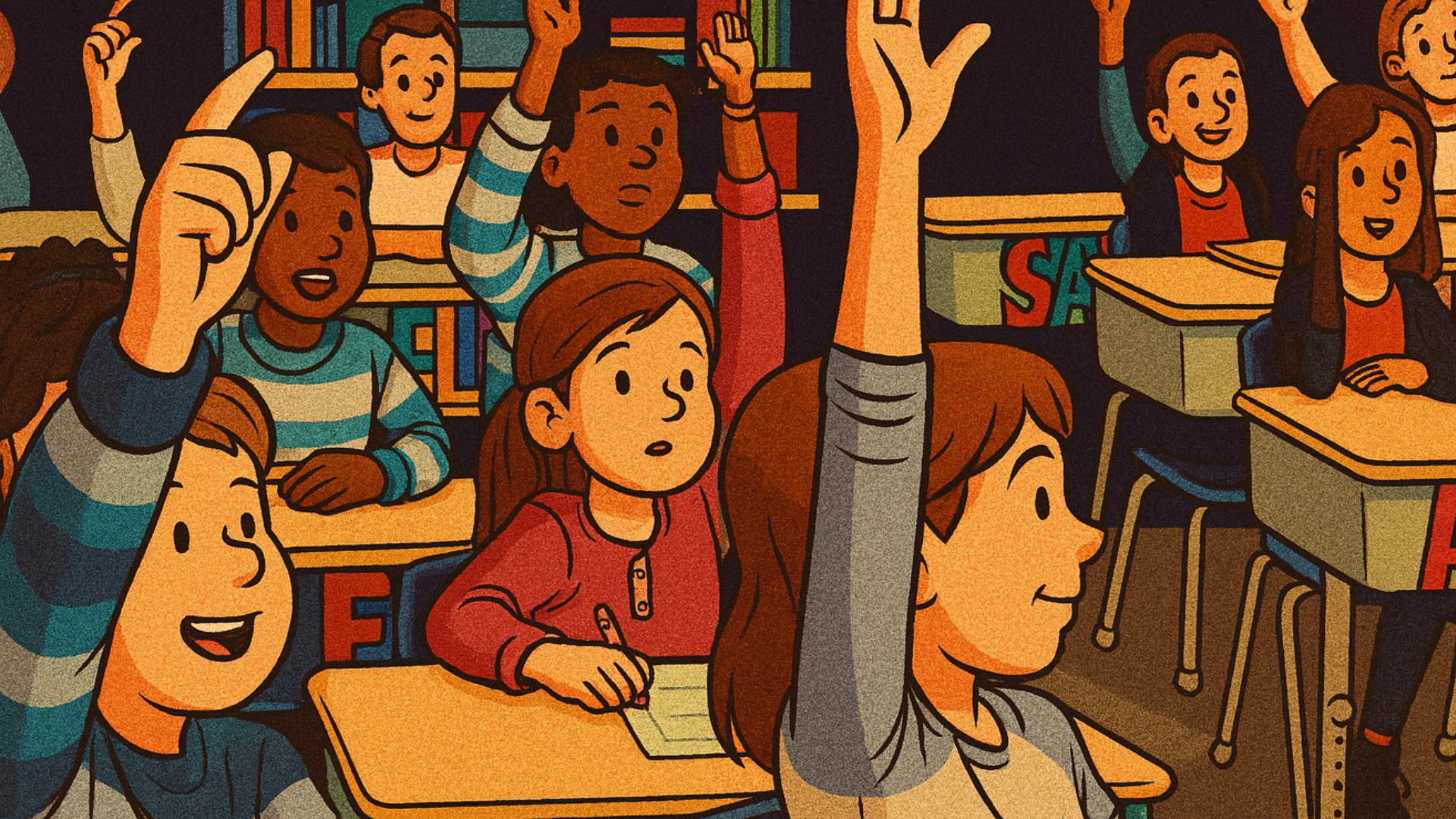
Mastering prepositions doesn't have to be a dry, academic chore. By integrating the Preposition Song "Simon Says": Combining Listening Skills with Prepositions, you turn a complex grammatical concept into an intuitive physical habit. We have seen how music anchors memory, how a structured environment prevents chaos, and how active listening builds foundational literacy skills. The transformation is clear: students move from confused observers to confident, active participants in their own learning.
Now it is time to put this into practice. Clear a space in your classroom, find a rhythm that works, and start playing. You will likely find that the students are so engaged they forget they are actually "studying" one of the most difficult parts of the English language.
If you're ready to bring more energy and effectiveness to your classroom, Teachertainment can help. We specialize in creating musical resources that make complex concepts easy to teach and impossible to forget. Our tools are designed by educators who understand that when students have fun, they learn more. Learn more about how we can help you transform your teaching today by visiting our resource library.
