
Counting to 100 by 10s: The "Big Kid" Milestone Routine

Research suggests that roughly 84% of children who master skip counting before first grade demonstrate significantly higher confidence when introduced to multiplication and division later on. Yet, many parents and educators struggle to move past the simple one-to-one rote memorization of basic numbers. You want your child to feel like a "big kid" who understands the logic of math, but the transition from counting single digits to grasping the base-ten system often feels like hitting a brick wall. This guide provides a clear roadmap for mastering Counting to 100 by 10s: The Big Kid Milestone Routine. We will look at why this specific skill acts as a mathematical bridge, how to build a sustainable daily habit, and the exact tools you need to make the process feel like play rather than a chore.
The truth is: most early math struggles aren't about a lack of intelligence. They're about a lack of pattern recognition. When a child learns to count by tens, they aren't just memorizing a sequence of words ending in "ty." They are internalizing the very structure of our decimal system. By the time you finish reading, you'll have a practical strategy to turn this abstract concept into a physical, audible, and visual reality for your learner.
Why Skip Counting Matters

Skip counting is the cornerstone of numeracy, yet it is frequently overlooked in favor of simple addition. In my experience, children who can fluently count by tens develop a much stronger sense of number magnitude. They stop seeing 70 as just a big number and start seeing it as seven distinct groups of ten. This shift in perspective is vital. It moves a child from counting on their fingers to mental math proficiency.
Consider this: our entire monetary system and time-tracking methods rely on groupings. If a child cannot comfortably skip count, they will eventually struggle with telling time or making change at a store. Learning to count by tens is the first time a child realizes they can take "shortcuts" in math. It is an empowering moment. It changes their identity from a toddler who counts blocks to a big kid who understands how numbers work together.
Building on that, skip counting serves as the literal foundation for the multiplication tables. If a child knows 10, 20, 30, 40, they already know their ten-times tables. They just don't know they know them yet. This early exposure reduces math anxiety because the patterns feel familiar when they reappear in higher grades.
To make this stick, try these focus areas:
Highlight the pattern of the zero at the end of every number.
Connect the count to physical groups of ten objects like pennies or beads.
Emphasize the rhythmic nature of the words (ten, twen-ty, thir-ty).
Use a 100-chart to show the vertical column of tens.
The takeaway: skip counting by tens is the most efficient way to teach place value without using complicated jargon. Once a child sees that 50 is just 5 with a 0, the "magic" of math starts to click.
Setting Your Learning Routine
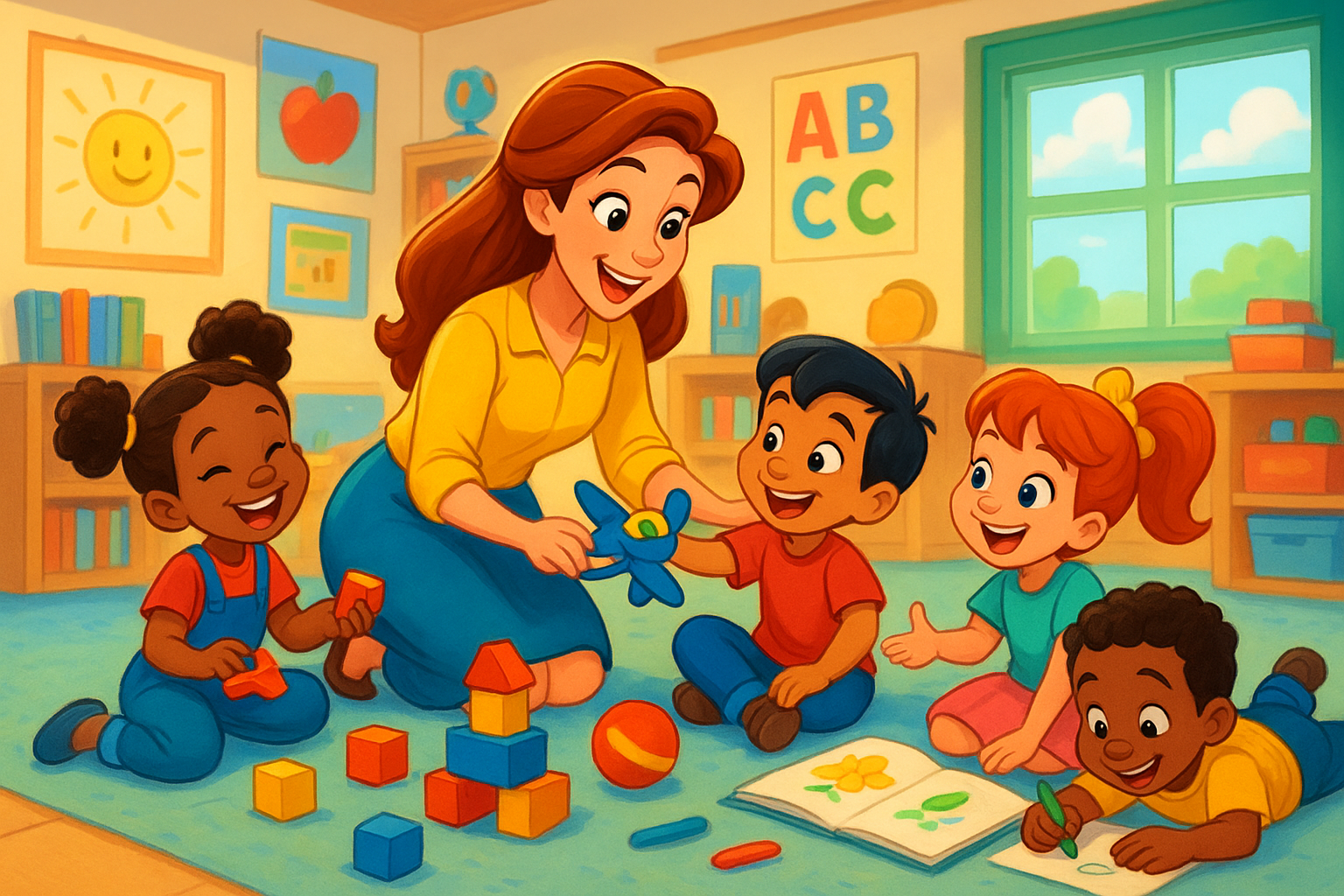
Consistency beats intensity every single time when it comes to early childhood education. I've found that a five-minute daily session is ten times more effective than a grueling one-hour lesson once a week. The Big Kid Milestone Routine thrives on predictability. If your child knows that we count by tens every morning while putting on shoes, the brain begins to prime itself for that specific pattern.
Look at it this way: you are building a neural pathway. Every time they repeat 10, 20, 30, 40, that pathway gets a little wider and a little smoother. But if you skip three days, the weeds start to grow back over the path. You don't need a classroom or a chalkboard to make this work. In fact, some of the best learning happens in the "in-between" moments of life.
But you might be wondering: how do I keep it from becoming boring? The key is to attach the routine to a physical movement. Movement helps anchor the information in the long-term memory. We call this kinesthetic learning, and it is a powerful tool for the five-to-seven-year-old age bracket.
Try incorporating these routine-builders:
Count by tens while climbing the stairs or jumping on a trampoline.
Use the "high-five" method where you give a high-five for every ten reached.
Set a specific "Ten-Time" trigger, such as right after brushing teeth.
Keep the sessions under seven minutes to avoid cognitive fatigue.
With that foundation, the routine becomes an effortless part of the day. It stops being a lesson and starts being a shared language between you and the child. This ease of access is what builds the "big kid" confidence we're looking for.
Visual Tools for Success
Numbers are abstract concepts that can be difficult for young minds to grasp without a visual anchor. You can say "sixty" a hundred times, but until a child sees six stacks of ten items, that word doesn't have a physical weight. Using visual tools is non-negotiable for mastering Counting to 100 by 10s: The Big Kid Milestone Routine. A standard 100-chart is the most common tool, and for good reason. It clearly shows the numbers 10, 20, 30, through 100 lined up in a perfect vertical column.
The truth is: visual learners make up about 65% of the population. If you aren't showing the numbers, you're missing the majority of the learning potential. I recommend using a color-coded chart where the tens column is highlighted in a bright, contrasting color. This draws the eye immediately to the pattern. It helps the child realize that while the first digit changes (1, 2, 3...), the second digit remains a constant, comforting zero.
Beyond the chart, physical manipulatives add a layer of tactile feedback. Think about using stacks of LEGO bricks or bundles of popsicle sticks held together by rubber bands. When a child holds a bundle of ten sticks, they feel the "bulk" of that number. They understand that 40 is physically heavier and larger than 10.
Consider using these visual aids:
A clear 100-square grid with the right-hand column highlighted.
Ten-frames, which are 2x5 grids that hold exactly ten items.
Base-ten blocks or "longs" that represent a solid unit of ten.
Digital counters or apps that visualize groups merging into one.
Which leads to an important question: how do we transition from looking at a chart to knowing it by heart? We do it by slowly removing the visual crutches. First, they read the numbers. Then, they look at a chart with some numbers missing. Finally, they close their eyes and see the chart in their mind.
Interactive Games and Activities
Repetition is the mother of all learning, but boring repetition is the enemy of engagement. To keep your big kid excited about their milestone, you have to gamify the process. This doesn't mean you need expensive software. It means you need to inject a sense of stakes or play into the counting. In my experience, kids will do almost anything if it's framed as a challenge or a race.
Look at it this way: if you ask a child to recite numbers, it feels like work. If you ask them to be a "human odometer" while you drive to the grocery store, it feels like a mission. Use the environment around you. Count the groups of ten apples in the produce section or the sets of ten windows on a building.
And here's the best part: games allow for safe failure. If a child misses "70" during a game, they just laugh and try again. If they miss it during a "test," they feel discouraged. We want to keep the stakes low but the energy high.
Here are some high-engagement activities:
The "Hidden Ten" scavenger hunt where you hide cards with 10, 20, 30 around the house.
Balloon Volley, where you must say the next ten every time you hit the balloon.
The "Secret Password" where the child must count to 100 by 10s to enter the kitchen.
Beat the Timer, where they try to recite the sequence faster than the day before.
The takeaway: when the body is moving and the mind is playing, the memory retains information much more effectively. Games bridge the gap between "I have to learn this" and "I know this." Once the child associates counting by tens with fun, they'll start doing it spontaneously.
Tracking Progress and Milestones
Mastery doesn't happen overnight. It happens in stages. One day they'll get to 40 and get stuck. The next week, they'll breeze past 80 but trip over 90. Tracking these small wins is essential for maintaining momentum. Children love to see their own growth documented. It proves to them that their effort is actually resulting in change.
Fair point. But consider this: tracking shouldn't feel like a grade book. It should feel like a trophy room. I recommend using a simple visual tracker, like a "Road to 100" map. Every time they master a new set of tens, they get to color in a section of the road or place a sticker. This provides a clear visual representation of how far they've come and how little is left to go.
In my experience, the jump from 80 to 100 is often the hardest. Many kids want to skip from 80 or 90 straight to 100 because "one hundred" is such an exciting word to say. By tracking the progress, you ensure they don't develop "gaps" in their sequence. You're looking for fluency, which means they can say the numbers without a long pause to think.
Use these tracking methods to celebrate success:
A sticker chart where each "ten" milestone earns a specific reward.
A "Big Kid Certificate" once they can count to 100 by 10s three times in a row.
Video recordings of their progress so they can watch themselves "get better."
A progress bar on the fridge that fills up as they master the sequence.
Taking this a step further, involve other family members. Let the child "perform" their counting for a grandparent or a sibling. The external validation of being recognized as a big kid is often a more powerful motivator than any sticker or treat.
The ultimate goal of the Counting to 100 by 10s: The Big Kid Milestone Routine is to foster a sense of mathematical agency. When a child masters this routine, they aren't just reciting numbers; they are proving to themselves that they can tackle complex patterns and win. This confidence spills over into other subjects, creating a positive feedback loop of learning and achievement. You've given them the keys to the decimal system, and more importantly, you've shown them that they have the discipline to reach a significant goal.
The Catchy & Fun Choice
If you're ready to turn these early math milestones into lasting academic success, Teachertainment can help. We specialize in creating engaging, research-backed strategies that make learning feel like the highlight of a child's day. Our approach focuses on blending play with purpose, ensuring that every "big kid" milestone is met with joy and confidence. Reach out today to see how we can support your child's educational journey.
