
Screen Time Is Hurting My Child's Grades. How Tutoring Adds the Structure They Need

You are not fighting the screen. You are competing with it. There is a difference.
The Social Dilemma did not introduce parents to the problem of screen time. It confirmed what most of them already felt in their gut: that the apps and platforms their children use are not neutral. They are engineered by teams of behavioral psychologists to be as compelling as possible. They are designed to win a competition for attention. And they are very good at it.
When a parent says that screen time is hurting their child's grades, they are usually describing something more specific than total hours on a device. They are describing a child who cannot transition from screens to homework without a fight. A child who is mentally somewhere else, even when physically sitting at a desk. A child whose attention span for schoolwork seems to shrink in direct proportion to the time they spend on their phone or tablet.
The solution is not to ban screens. It is to build the structures and habits that allow your child to compete with them. That is where targeted tutoring comes in.
What Screen Time Actually Does to a Student's Academic Focus

The mechanism is not mysterious. High-stimulation digital content, social media feeds, gaming, and short-form video deliver variable rewards at unpredictable intervals. This is the same reinforcement schedule that makes slot machines compelling. The brain learns to expect rapid stimulation and rapid reward, and adjusts its baseline expectations accordingly.
When that same brain then sits down to do homework, which delivers slow, delayed, and often uncertain rewards, the mismatch is physiological. The brain is not being difficult. It is operating according to what it has been trained to expect. Sustained focus on low-stimulation tasks becomes genuinely harder after extended periods of high-stimulation screen use.
Research on cognitive load and attention restoration consistently shows that the quality of attention available for academic work is affected by the nature of the activities immediately preceding it. This is not a moral argument about screens. It is a neurological one about attention as a finite resource that needs to be managed.
Why Willpower Is Not the Solution

The instinctive response to a child whose screen time is affecting their schoolwork is to impose willpower-based solutions: put down the phone, you need to focus, just get it done. This framing misunderstands the problem.
Willpower is a cognitive resource that is depleted by use. A student who has spent hours in a highly stimulating digital environment and then is asked to exercise willpower to focus on homework is being asked to draw on a resource that is already significantly depleted. The fight you are seeing is not defiance. It is depletion.
The solutions that work are structural rather than willpower-based. They remove the decision about whether to engage with academic work from the equation by creating an environment and a routine in which academic work simply happens, without requiring the student to choose it against the pull of something more immediately compelling.
What Tutoring Adds That Willpower Cannot
External Structure and Accountability
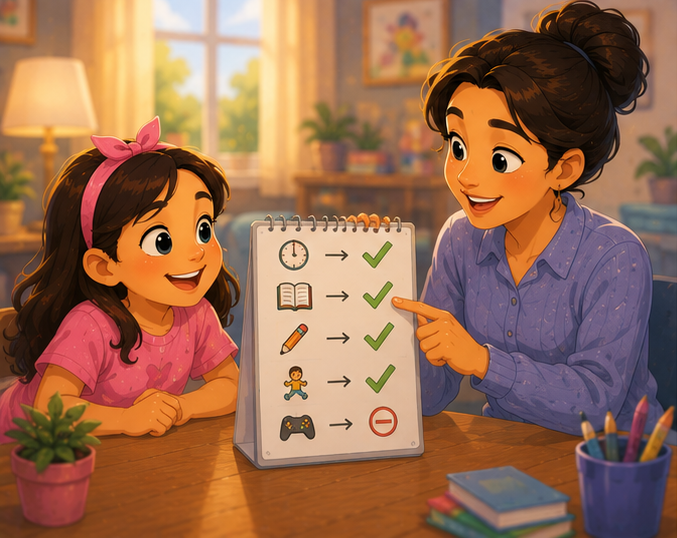
A tutoring session creates an external commitment that a student cannot opt out of in the moment. Unlike homework, which a student can avoid indefinitely because there is no immediate consequence, a tutoring session has a defined start time, a defined end time, and a real person waiting on the other end. That external structure removes the decision point that screen-dependent students most struggle with: the moment of choosing to start.
Genuine Engagement That Competes With Screens
Jake Perlman's approach at Teachertainment, shaped by his years in the entertainment industry at Paramount Pictures, Showtime Networks, and Entertainment Weekly alongside his classroom teaching at Canfield Avenue Elementary, Brawerman Elementary, Crete Academy, and St. Timothy School, is specifically designed to create academic engagement that feels genuinely interesting rather than like a punishing contrast to screen time. We do not ask students to choose between something boring and something exciting. We make the academic work exciting enough to hold its own.
Building the Transition Habit
Regular tutoring sessions at consistent times build the transition habit that makes academic engagement feel less effortful over time. A student who has a standing Tuesday session at four o'clock gradually stops experiencing the transition from leisure to academic work as a crisis and begins to experience it as a predictable part of their routine. Routine reduces the cognitive cost of transitions, which is one of the primary drivers of screen-related academic avoidance. Our private K-12 tutoring page explains how we structure sessions to build this kind of habit.
What Parents Can Do Alongside Tutoring
Tutoring works best when the home environment supports the same goals. There are specific structural changes that make a meaningful difference without requiring ongoing battles.
Designate a homework zone that is screen-free by default. Not as a punishment but as an environmental design choice. The absence of the device in the workspace removes the temptation rather than requiring the student to resist it.
Build a consistent transition routine between screen time and academic work. Even fifteen minutes of a non-screen activity, a snack, a brief walk, or a few minutes of music between the end of screen time and the start of homework reduces the cognitive jarring of the transition.
Separate screen time and homework completion at the schedule level rather than at the willpower level. A student who knows they get screen time after homework is done, as a structural reality rather than a negotiation, does not need to fight the decision in the moment.
And we want to be honest: for some families, screen time has become a deeply entrenched pattern that affects not just academic performance but sleep, mood, and family dynamics more broadly. In those situations, tutoring is one useful tool among several, and a broader family conversation about the role of screens in your household may be the more urgent starting point.
Frequently Asked Questions
How much screen time is too much for a K-12 student?
The American Academy of Pediatrics recommends consistent limits on screen time for children and teens, with particular attention to the timing and content of screen use rather than hours alone. Research consistently shows that screen use immediately before sleep and immediately before academic work produces the most significant negative effects on focus and academic performance. The total hours matter, but timing and content type matter just as much.
Is it the screens themselves or the content that affects my child's focus?
Primarily, the content type and the reinforcement pattern. High-stimulation variable-reward content, social media, short-form video, and gaming with reward loops produce the most significant attention effects. Lower-stimulation screen use, reading on a device, or watching a documentary, produces less pronounced effects. The problem is not the screen. It is what the screen is delivering and how it is delivering it.
My child says they can do homework and watch videos at the same time. Is that possible?
Research on multitasking consistently shows that the human brain does not truly multitask. It switches rapidly between tasks, with a cognitive cost each time it switches. A student who is switching attention between a video and homework is producing lower-quality work on the homework and getting less from the video than they would from either one alone. What feels like parallel processing is actually fragmented serial processing.
Can tutoring help my child develop better study habits around screen use?
Yes. One of the consistent outcomes of well-designed tutoring is the development of study habits that make academic work feel more manageable and less effortful over time. As the academic work becomes more engaging and the routine becomes more established, the gravitational pull of screens during homework time tends to diminish. Explore our private K-12 tutoring approach to see how we build these habits alongside academic content.
What if my child uses screens for legitimate educational purposes?
Educational screen use is genuinely different from entertainment screen use in its cognitive effects, though even educational content on screens can interfere with focus if it follows immediately before academic work requiring sustained attention. The key is intentional scheduling: educational screen use as part of the academic routine rather than as a transition between leisure and work.
Should I take away my child's devices to improve their grades?
Device removal can produce short-term compliance and rarely produces long-term habit change. A student who has their device taken away has not developed the internal habit of choosing academic engagement. They have simply had the competition removed. When the device returns, the same dynamic returns with it. Building sustainable habits around academic engagement is more effective than removing the competition. A family consultation can help you build a plan that addresses both the screen dynamics and the academic gaps simultaneously.
The Screen Is Not the Enemy. The Lack of Structure Is
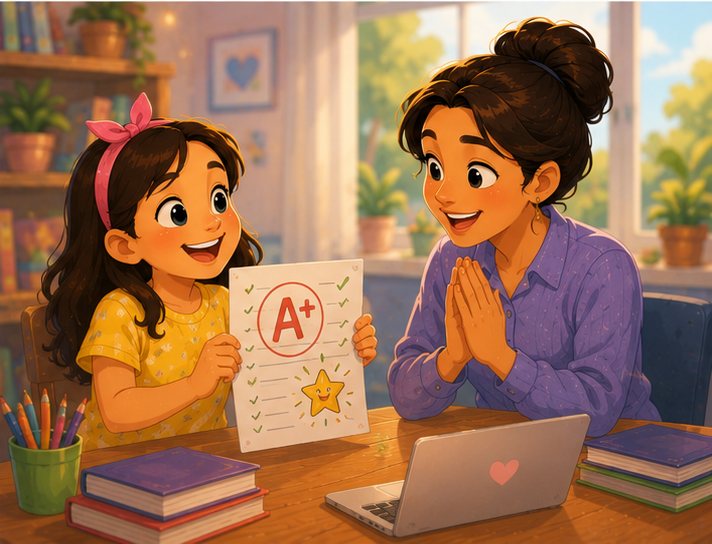
Screens are not going away and taking them away is not the long-term answer. Building the structure that allows your child to engage academically despite the pull of screens is. If you are ready to create that structure with the help of a tutor who makes academic work genuinely engaging, email jake@teachertainment.com. Tell us what the homework battle looks like in your house and which subjects are most affected.
