
There are some teachers who never assign homework, never give a test, and never step inside a classroom. They teach you the family recipe without measuring anything. They tell stories that somehow become slightly more dramatic every time. They remember what your neighborhood looked like before you were born. They know songs you've never heard, expressions nobody uses anymore, and exactly how much everything used to cost.
They’re grandparents.
National Grandparents Day, celebrated on the first Sunday after Labor Day in the United States, is more than an opportunity for cards and family photos. It can also be a doorway into history, storytelling, writing, math, entertainment, geography, and social-emotional learning. And, of course, families come in all shapes and sizes. These activities can celebrate grandparents, great-grandparents, older relatives, family friends, neighbors, mentors, or another older person who has played an important role in a child's life.
The real lesson is about generations and what we can learn from one another.
A Little Grandparents Day History
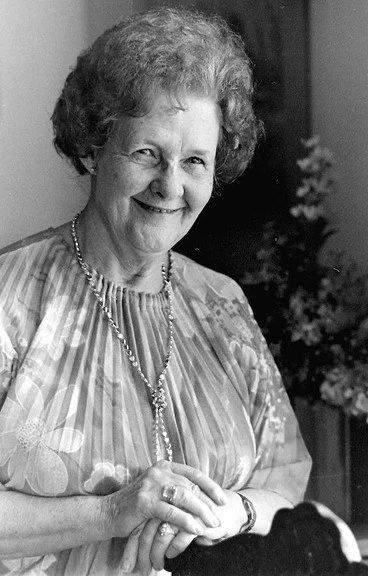
National Grandparents Day grew largely from the efforts of Marian McQuade, a West Virginia advocate for older adults who wanted younger generations to understand the contributions older people could make to their lives. In 1978, President Jimmy Carter signed legislation establishing National Grandparents Day, emphasizing the importance of the strength, knowledge, and guidance older generations can provide. That's also a pretty good lesson objective.
Grandparents in Movies and Television
Pop culture loves grandparents.
Sometimes they're the wisest person in the story. Sometimes they're comic relief. Sometimes they're keeping a family together. Sometimes they're the person who understands the main character when nobody else does.
And sometimes they're Grandpa Joe.
Entertainment gives students an interesting way to examine what grandparents and older generations contribute to families, because the grandparent often has a very specific storytelling job.
Grandma Tala, Moana
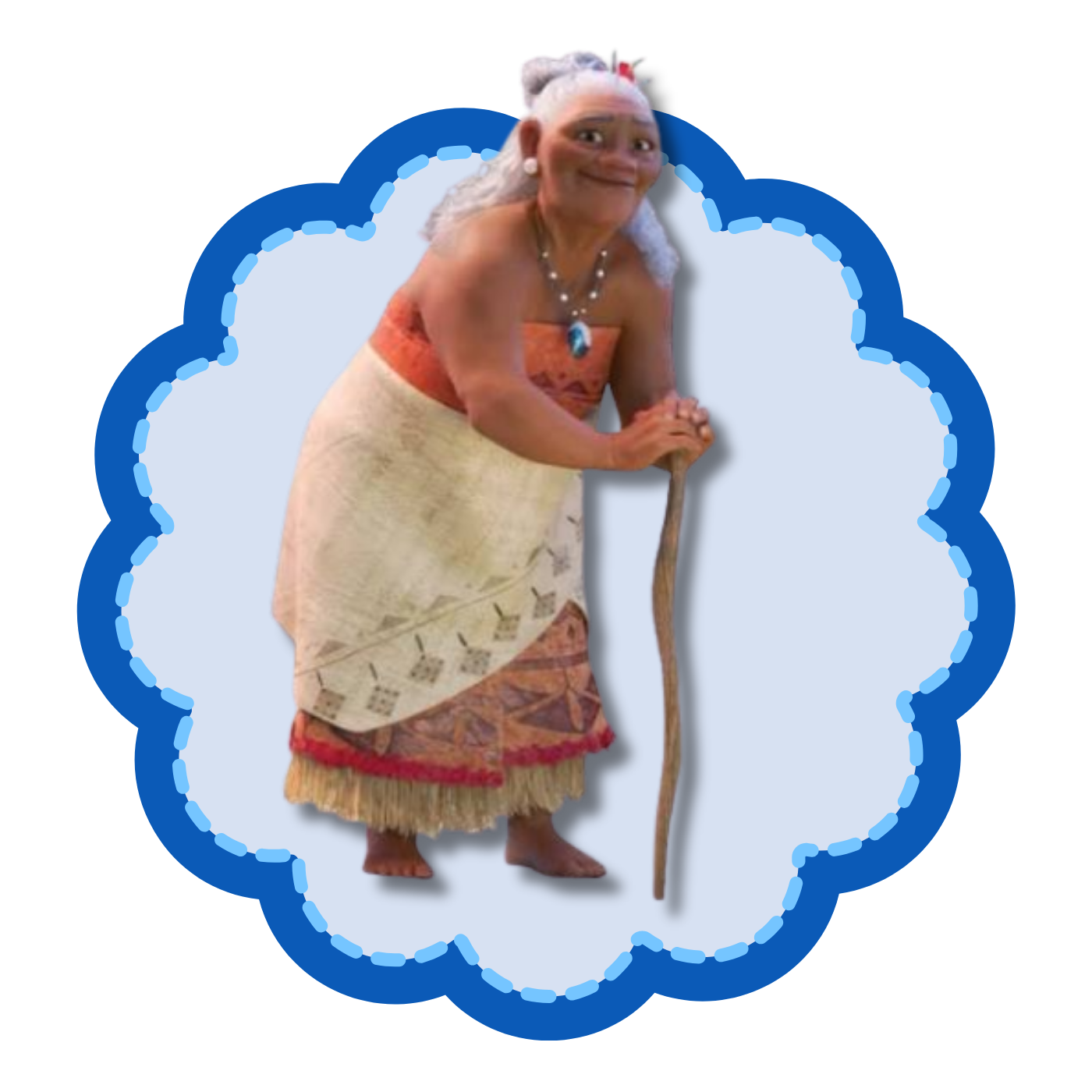
Grandma Tala isn't just Moana's grandmother. She's the keeper of her community's stories and the person who recognizes who Moana really is before Moana fully understands it herself. She connects Moana to her ancestors, reveals the hidden history of her people, and encourages her to venture beyond the reef. Take Tala out of the movie and Moana doesn't simply lose a beloved grandmother. She loses her connection to the past.
That's a powerful Grandparents Day question: What stories can older generations tell us that we couldn't learn anywhere else?
Mama Coco, Coco
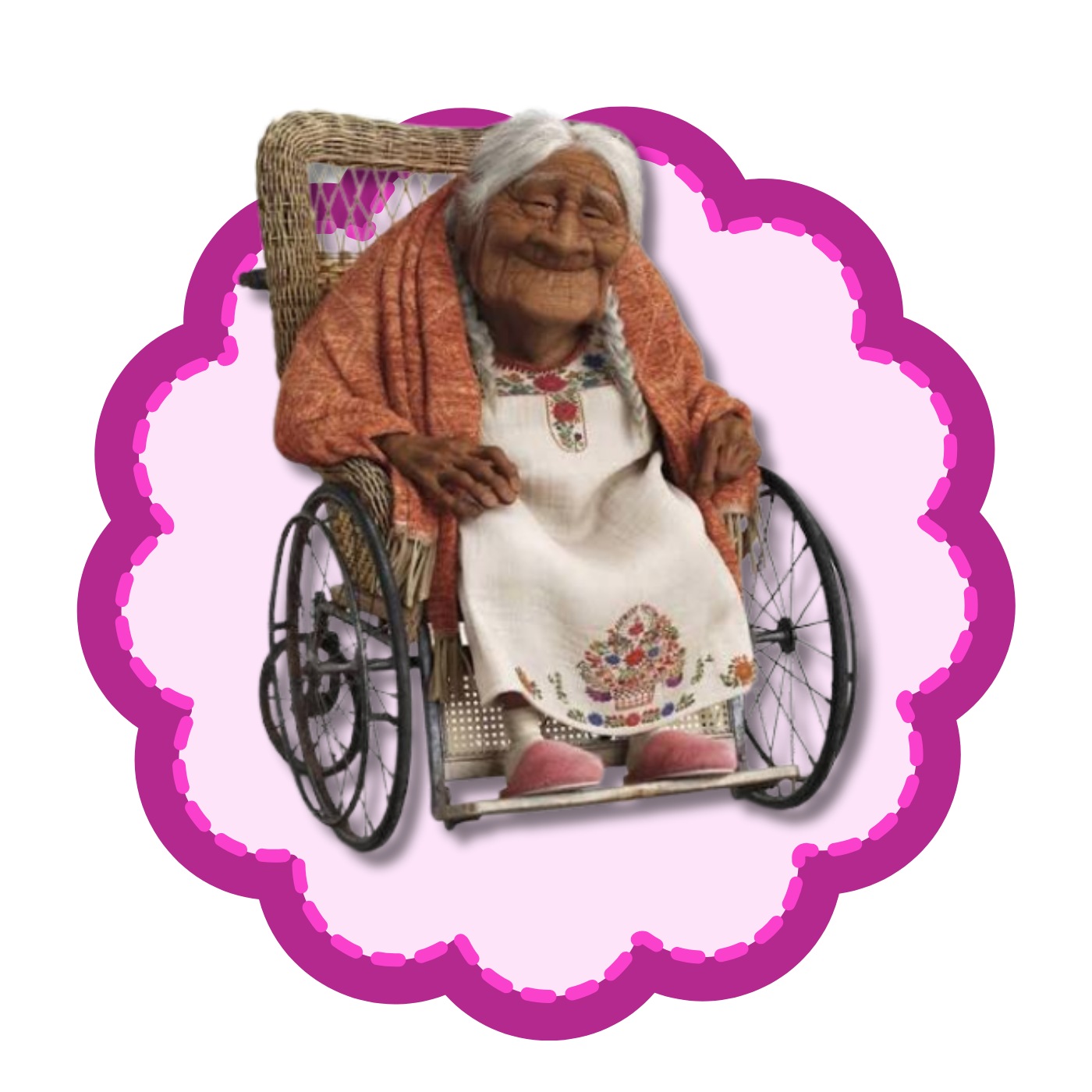
Few movies make the connection between grandparents and memory more literal than Coco. Mama Coco is Miguel's living connection to generations that came before him. Her memories become essential to understanding the family's history, and “Remember Me” transforms from a song into an exploration of how people continue to live through the stories and memories we preserve.
For students, that opens a beautiful conversation: Why do families tell stories about people who are no longer with us? It can also lead naturally into family histories, photographs, traditions, recipes, music, and oral storytelling.
Abuela Alma, Encanto
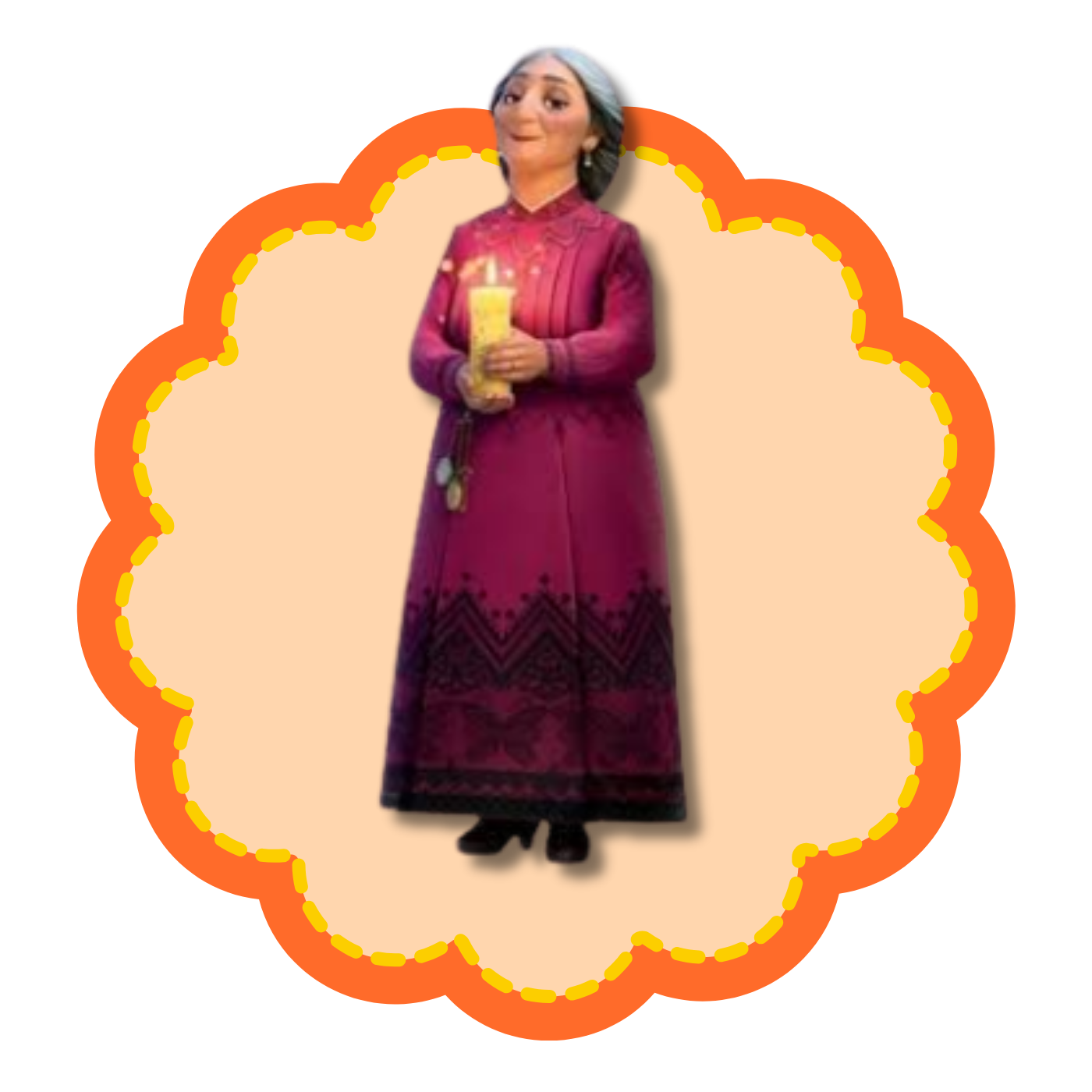
Abuela Alma gives students a very different kind of grandparent. She loves her family fiercely, but her expectations also create enormous pressure. That makes her particularly useful for character analysis because she isn't simply “good” or “bad.” Her behavior is shaped by her own history and experiences.
Students can ask: Can someone have good intentions and still make mistakes?
Even better, Encanto shows that learning across generations isn't one-directional. Mirabel has things to learn from Abuela, but Abuela also has something to learn from Mirabel. That's an important Grandparents Day message in itself.
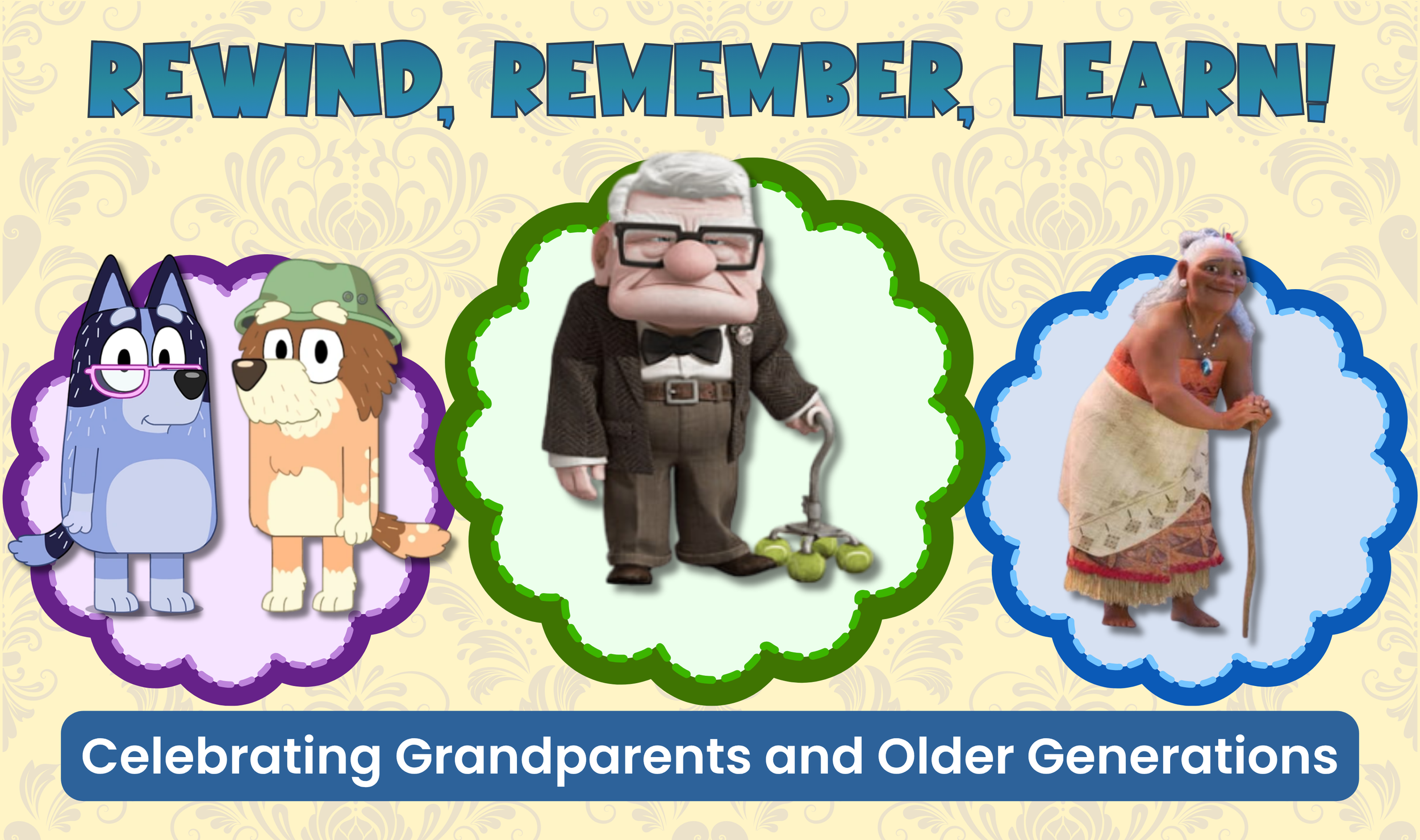
Carl Fredricksen, Up
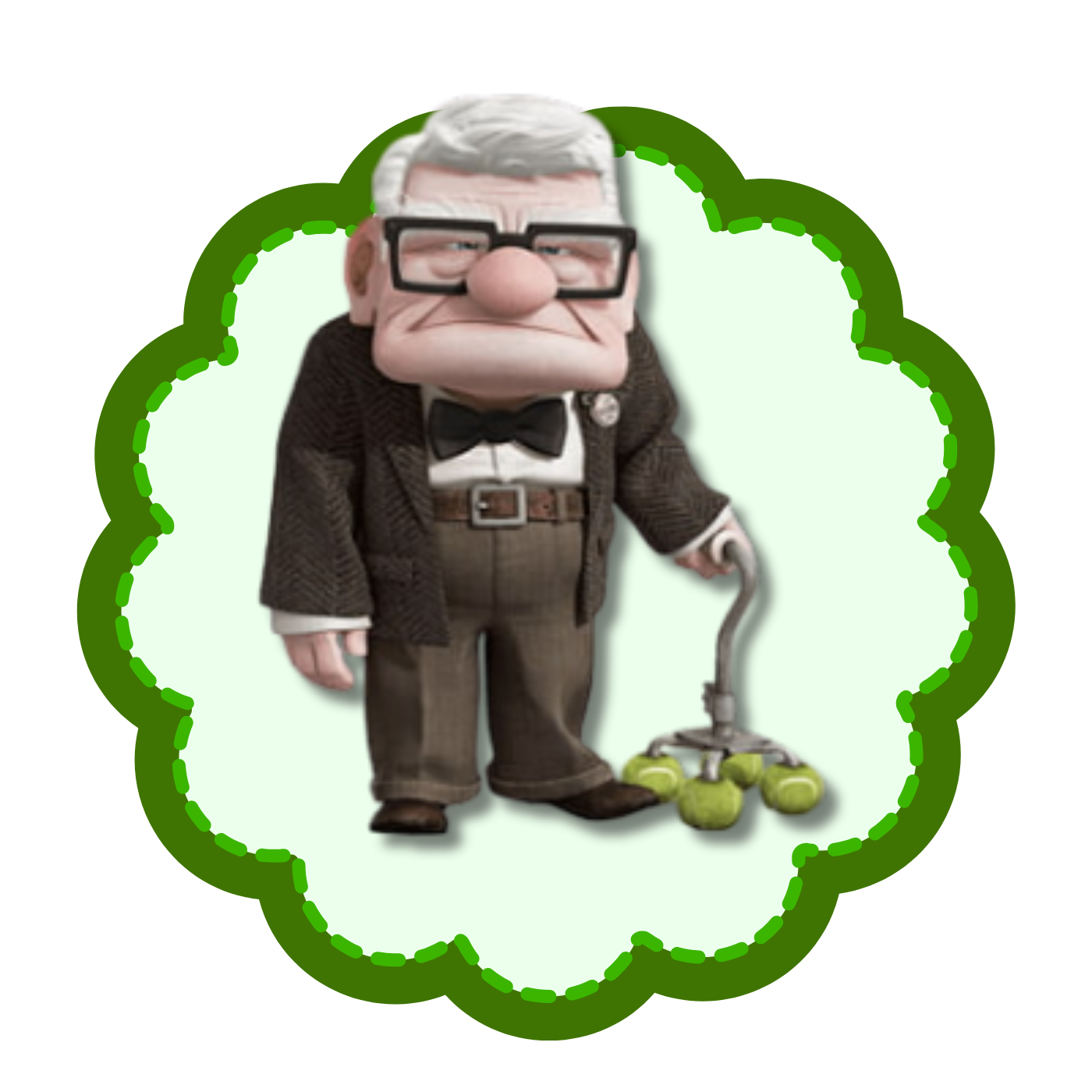
Carl isn't Russell's biological grandfather, which is precisely what makes him useful for this lesson. Their relationship demonstrates that meaningful intergenerational relationships don't have to fit neatly onto a family tree. At first, Carl sees Russell as an annoyance. Russell sees Carl as another opportunity to earn a badge. Over time, they become something closer to family.
It creates a broader question: What makes someone family?
It also makes Up a great doorway for students who don't have a grandparent in their lives but do have another older adult who matters to them.
The Grandparents of Bluey
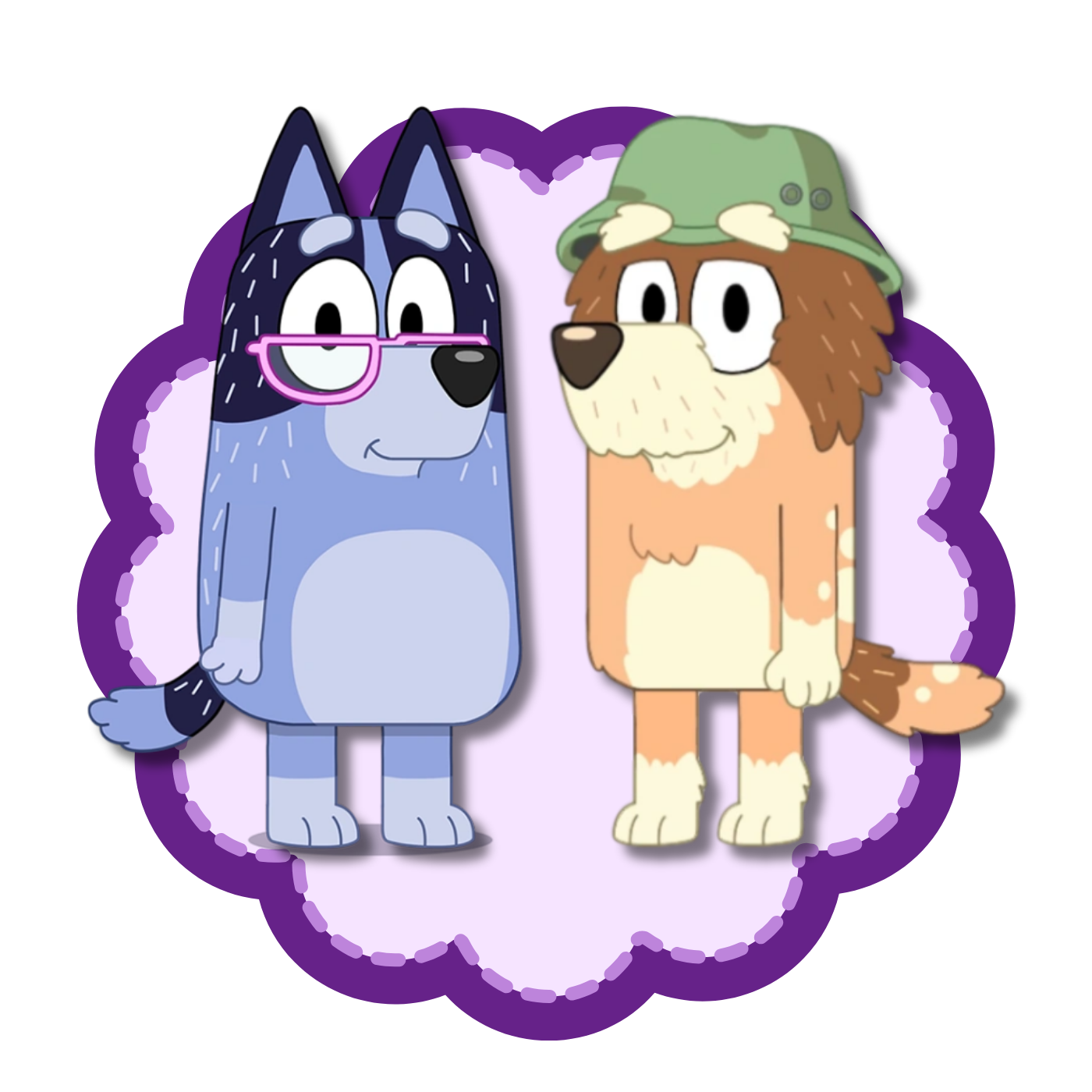
Bluey gives younger students several different grandparent relationships, including Nana and Grandad. Their appearances are especially useful because they show grandparents participating in ordinary family life rather than functioning solely as wise storytelling devices.
Students can compare: How is Bluey's relationship with her grandparents similar to or different from her relationship with her parents?
That's a surprisingly sophisticated character question hiding inside a children's show.
Grandpa Joe, Willy Wonka & the Chocolate Factory
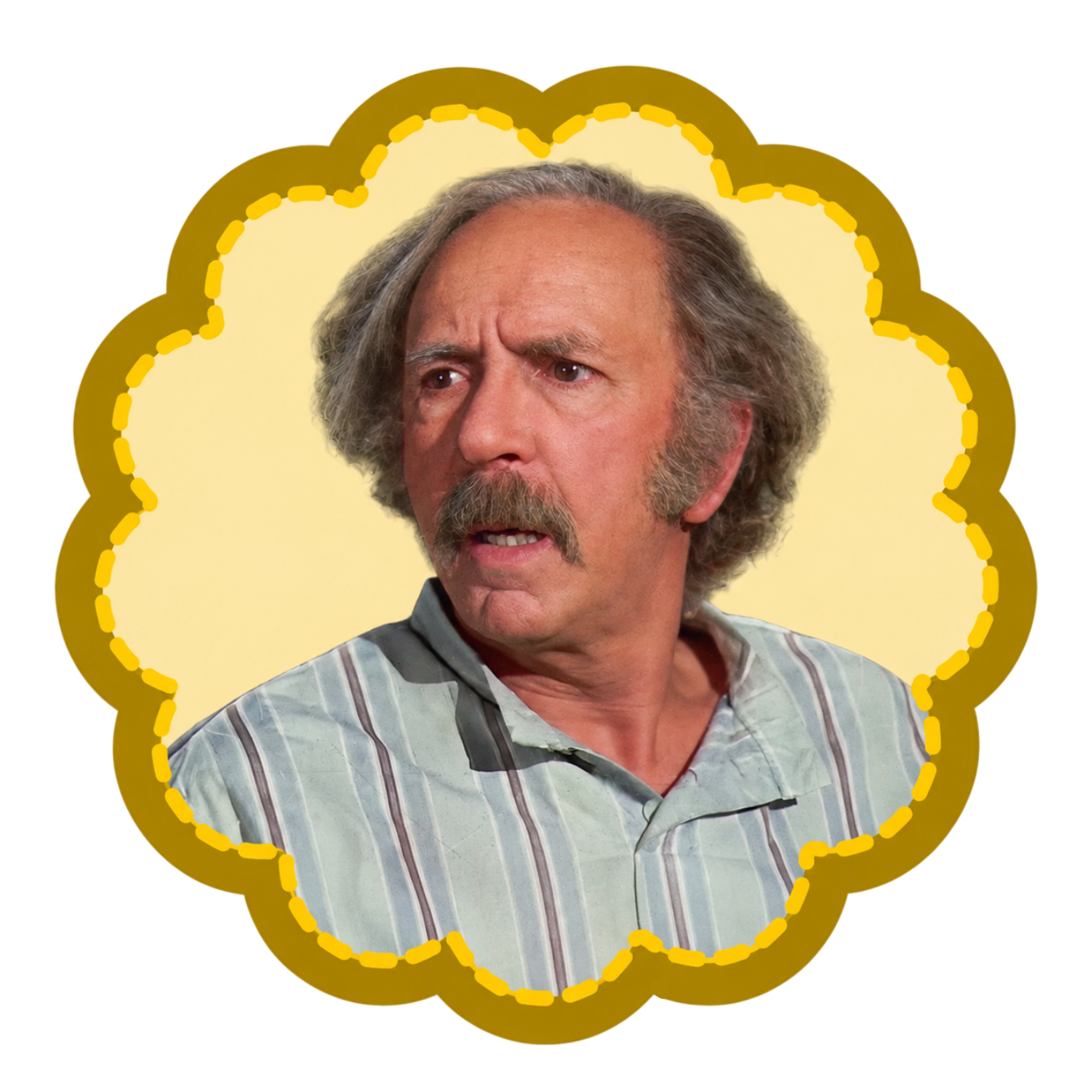
And then there's Grandpa Joe.
He encourages Charlie, accompanies him to the chocolate factory, and shares in his sense of wonder. He also spends years bedridden before suddenly discovering an astonishing amount of mobility the moment a Golden Ticket enters the equation.
The internet has...thoughts.
But that actually makes Grandpa Joe useful for a different kind of activity: Would you want this character as your grandparent? Why or why not?
Now students need to evaluate a character's actions and support their opinion with evidence.
Grandparent Detectives.
Once students have looked at several examples, ask them to become Grandparent Detectives. What jobs do grandparents often perform in stories?
They might discover:
The Storyteller: Keeps family history alive.
The Mentor: Gives the hero advice.
The Cheerleader: Believes in the main character.
The Keeper of Traditions: Connects younger characters to culture and family.
The Comic Relief: Brings humor and unpredictability.
The Rule Maker: Represents expectations or traditions the younger character questions.
The Second-Chance Grandparent: Learns and changes because of the younger generation.
Then ask: Which type is Grandma Tala? Mama Coco? Abuela Alma? Carl? Grandpa Joe?
Characters may fit more than one category, and students should have to explain their choices.
Take a Trip in the Entertainment Time Machine
But why stop with fictional grandparents?
For Grandparents Day, I wanted to create an activity that helps students discover something they may never have considered:
What was entertainment like when someone older than them was their age?
Movies streamed on Netflix? Music on Spotify? YouTube? Video games on an iPad?
Not always.
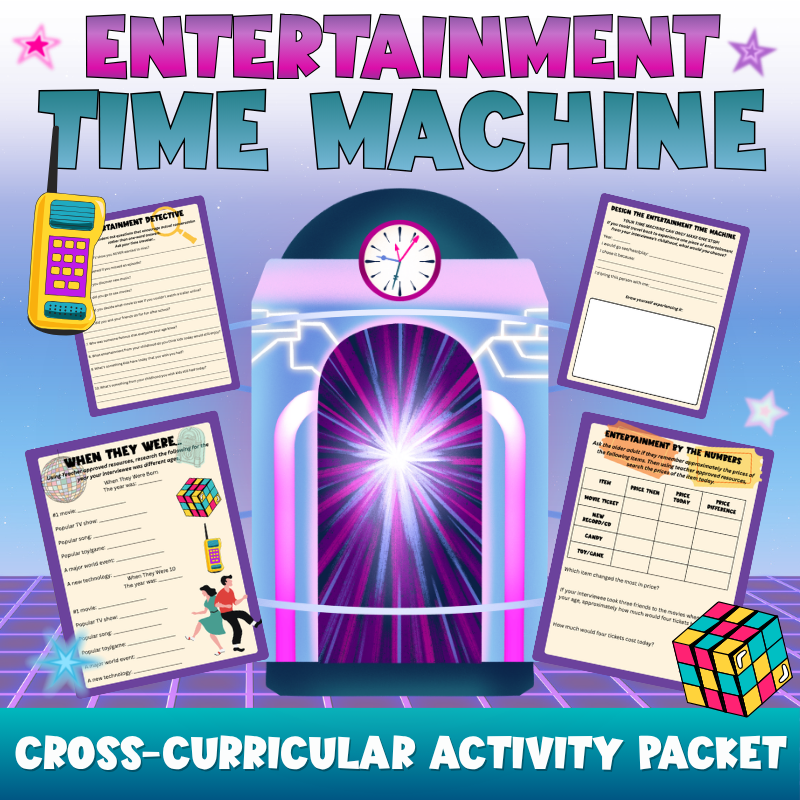
That’s the idea behind Teachertainment’s Entertainment Time Machine, a new interdisciplinary packet for Grades 3–5, adaptable for Grades 2–6. Students choose a grandparent, older relative, family friend, neighbor, mentor, or another trusted older adult to become their personal “Time Traveler.” Then they use conversation, research, and comparison to explore that person's entertainment world and compare it with their own.
Along the way, students investigate everything from movies, television, music, games, and celebrities to changing technology and prices. They practice interviewing and listening, explore an older adult as a primary source, use math to compare entertainment then and now, and ultimately consider a bigger question:
Entertainment has changed enormously. But how has it stayed the same?
The packet connects ELA, math, social studies, media literacy, and SEL, with skills including compare and contrast, research, informative writing, money, multi-step word problems, oral history, timelines, technology, and perspective-taking.
And because every Time Traveler has lived through a different entertainment era, no two students' journeys will be exactly alike.
Every Generation Has Something to Teach
Grandparents Day is ultimately an opportunity to show children that history is alive.
It's in photographs and recipes. Movies and music. Family traditions and old technology. It's in the way someone remembers their first day of school or the neighborhood where they grew up.
So encourage students to ask:
What was it like? What did you love? What has changed? What do you remember?
And then listen.
Because sometimes the best educational resource isn't something we need to download or put on a screen.
Sometimes it's sitting right across the table.
Teach what they need. Start with what they love.
Jake Perlman is the founder of Teachertainment, blending education, entertainment, and pop culture to turn learning into an unforgettable experience.
