
Labor Day: The Closing Credits for Summer
There’s something strange about Labor Day.
Technically, summer doesn’t end until late September. But culturally? Labor Day weekend is summer’s closing credits. The beach towels get one last performance. The barbecue gets a final encore. Pools begin emptying. And pumpkin-spice everything starts lurking around every corner.
Labor Day sits at a fascinating crossroads: part holiday, part history lesson, part farewell to summer, and part unofficial beginning of fall. It also happens to be a surprisingly perfect opportunity to bring a little entertainment into the classroom.
So, What Exactly Is Labor Day?
For many kids, Labor Day means one very important thing: no school.
But the reason behind that three-day weekend is worth exploring.
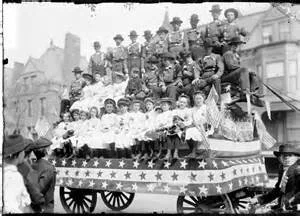
Labor Day celebrates the contributions American workers have made to the country. The holiday grew out of the labor movement of the late 19th century, when many Americans worked extraordinarily long hours, often under dangerous conditions and for very little pay. The first Labor Day celebration took place in New York City on September 5, 1882, when thousands of workers participated in a parade organized by the labor movement. In 1894, President Grover Cleveland signed legislation making the first Monday in September a federal holiday. Today, Labor Day gives us an opportunity to talk with students about something they encounter every single day but may rarely stop to consider:
Work.
Who built their school?
Who delivers their packages?
Who grows their food?
Who designed their favorite video game?
Who operates the camera on their favorite TV show?
Who keeps their neighborhood running?
Behind almost everything kids encounter is somebody doing a job.
And that's where things get interesting.
Roll the Credits
One of the easiest ways to connect Labor Day to entertainment is sitting right at the end of every movie.
The credits.
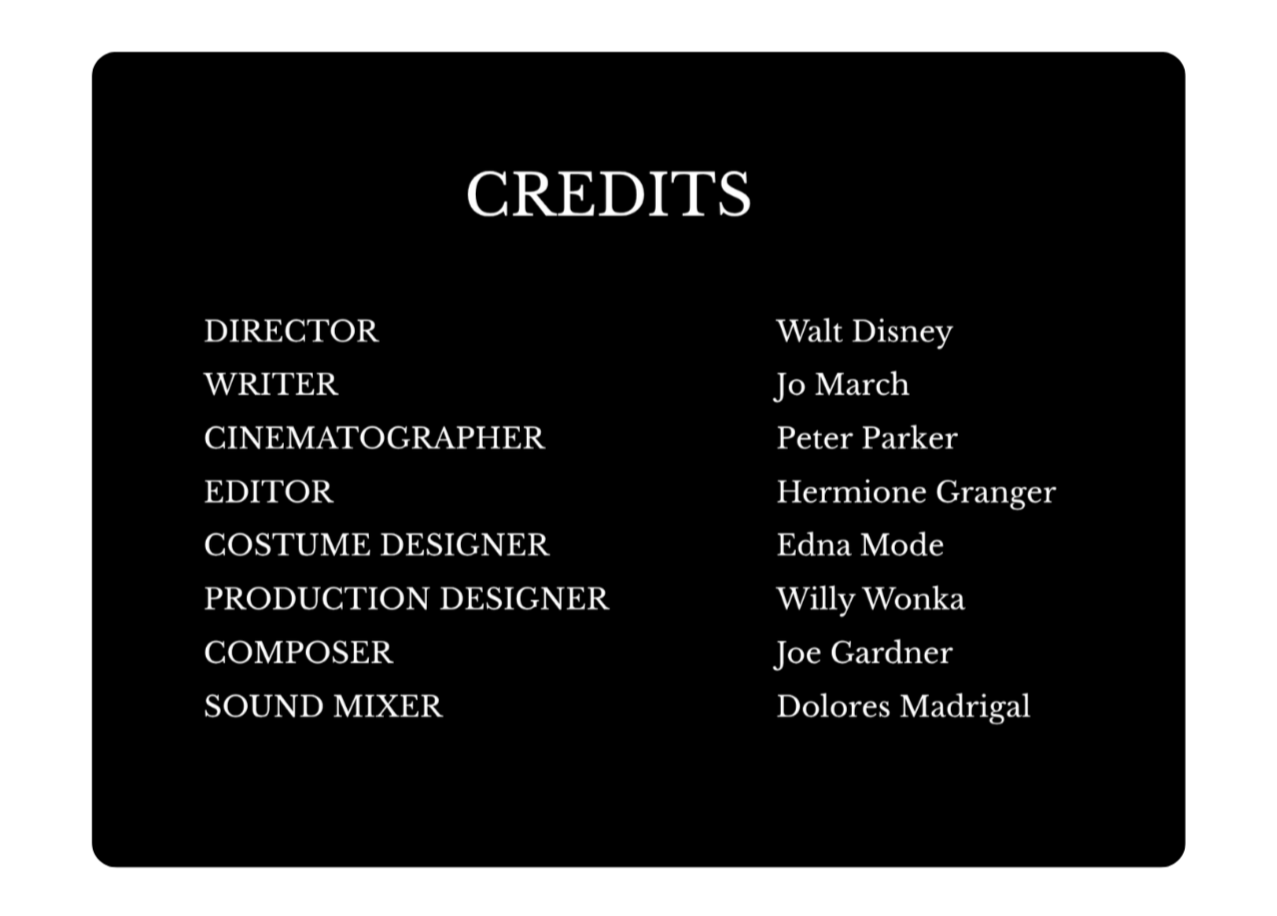
Kids might recognize the actors starring in a movie, but ask them who else helped make it and you'll probably get a much shorter list. A movie or television production can involve writers, costume designers, electricians, carpenters, animators, editors, camera operators, composers, choreographers, stunt performers, set decorators, sound mixers, makeup artists, and hundreds of other workers.
So this Labor Day, try something different:
Don't skip the credits. Study them.
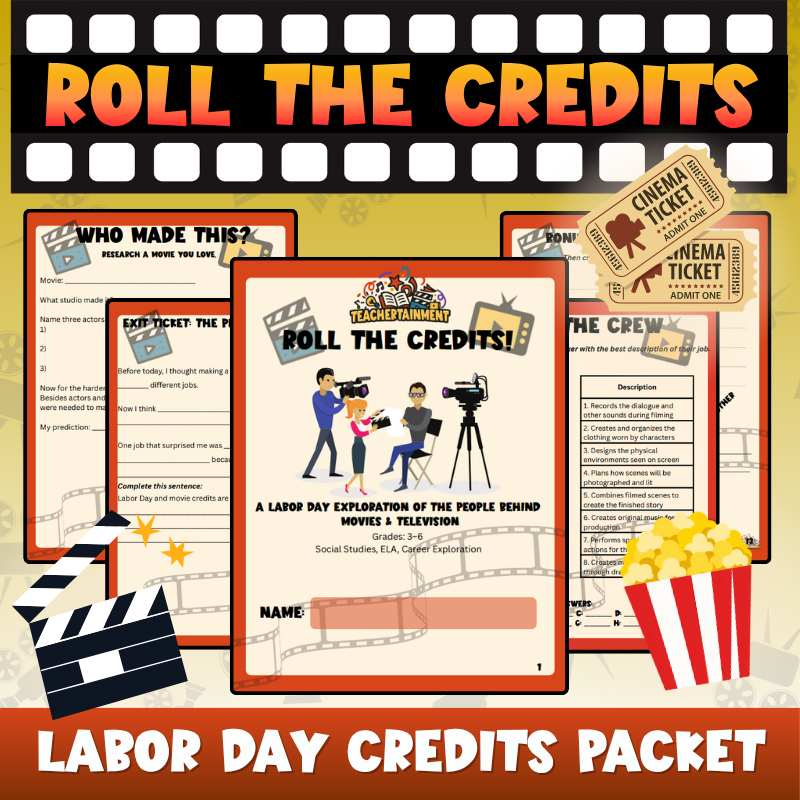
That idea inspired Teachertainment's Roll the Credits! Labor Day Exploration of the People Behind Movies & Television, a complete interdisciplinary activity packet for grades 3–6.
Students begin with a movie they already love and consider a deceptively simple question: besides the actors and director, how many different jobs were needed to make it?
From there, they meet some of the workers behind the screen, including costume designers, cinematographers, film editors, composers, production designers, sound mixers, stunt performers, and animators. Suddenly those endless names scrolling past aren't background noise. They're a lesson about labor. Here’s a preview of what’s inside:
Meet the Crew
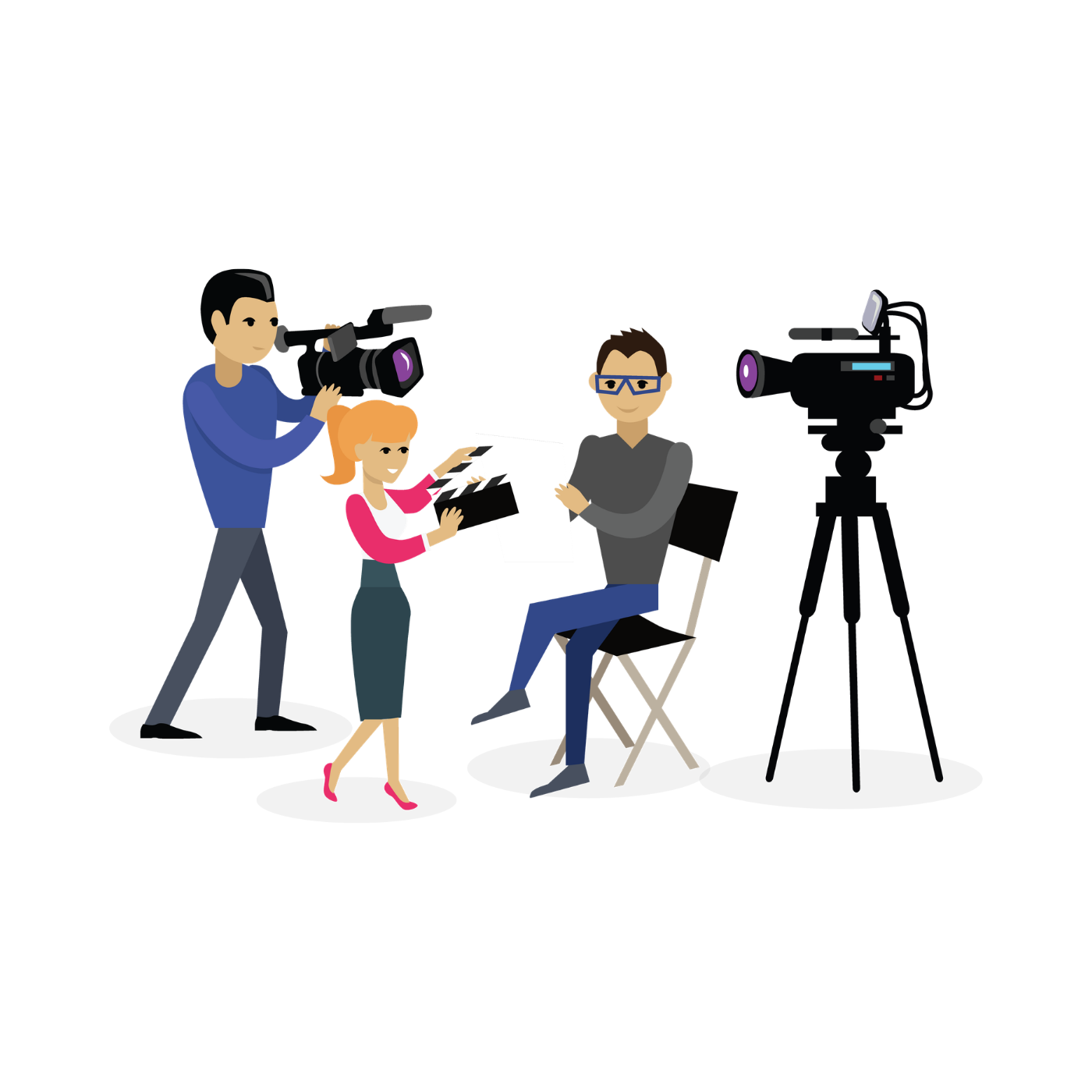
The packet turns movie credits into a career scavenger hunt.
Students watch or examine the credits of a teacher-approved movie or television episode and hunt for five jobs they didn't know existed. Then they choose one to investigate.
What does this worker actually do?
What skills does the job require?
What school subjects might help someone prepare for the career?
What tools or technology might they use?
And perhaps most importantly:
Why is this person's work important to the finished movie?
That last question gets to the heart of Labor Day. Students aren't simply memorizing unusual Hollywood job titles. They're examining how individual workers contribute to something much larger than themselves.
Build Your Dream Movie Crew
Next, put your students in charge.
They're producing a movie, but there's a catch:
They can only hire five people.
Students choose the five jobs they consider absolutely essential and explain their reasoning.
Director? Cinematographer? Costume designer? Composer? Editor?
Choose carefully. Because then comes the plot twist:
The budget has been cut. One position has to go.
Students must decide which worker to eliminate and predict the problems that decision could create. Now career exploration has become critical thinking, persuasive writing, economics, and problem solving.
All because we didn't turn off the movie when the credits started.
Lights, Camera...Math?
The movie credits can even become a math lesson.
The Bonus: Credit Count Math activity challenges students to select a section of movie credits and count 50 workers.

They sort those workers into categories such as:
Creative
Technical
Performance
Music/Sound
Production
Other
Students tally their findings, create a bar graph, identify the category containing the most workers, and then represent their results using fractions and percentages. A list of movie credits has suddenly become a dataset.
The complete packet incorporates ELA, social studies, math, career exploration, and SEL, with curriculum connections including informational text, research, explanatory writing, economics, workers and careers, division of labor, fractions, ratios, percentages, data collection, collaboration, and appreciating the contributions of others.
Same curriculum. Better doorway.
Even Superheroes Have Day Jobs

Of course, you don't have to stay behind the scenes to explore careers through entertainment.
Fictional characters have jobs too.
Clark Kent is a journalist.
Peter Parker has worked as a photographer.
Tiana is an entrepreneur and restaurateur.
Mario and Luigi are plumbers.
Barbie has had approximately 47 billion careers.
Okay, maybe that last number isn't quite accurate.
But fictional careers provide another great entry point for conversations about real ones.
Have students choose a favorite fictional character and identify the skills that character uses. Then ask them to connect those abilities to real-world careers. A superhero who solves problems might make a great engineer. A character who loves animals might pursue veterinary medicine. Someone obsessed with telling stories might become a writer, filmmaker, or journalist.
It's career exploration disguised as fandom.
Create Your Own Credits
Labor Day can also be a natural introduction to classroom community.
A classroom works because everyone contributes.
Teachers teach, certainly. But students organize materials, clean up, collaborate, solve problems, help classmates, and contribute ideas.
The Roll the Credits! packet takes that concept one step further by asking students to imagine that their classroom is producing a movie called: THE FIRST DAY
Who would be the director?
The writer?
The production designer?
The camera operator?
The sound mixer?
The lead performer?
Students can even invent a movie-industry job that doesn't exist but absolutely should.
It's silly on the surface, but underneath is an important idea:
Successful communities depend on people making different contributions.
That's true on a movie set.
It's true in a classroom.
And it's at the heart of what Labor Day asks us to recognize.
One Season Ends. Another Begins.

There's a reason the end of summer feels bigger when you're a kid.
A new school year is one of the rare moments when life gives you a remarkably clear reset button.
New teacher. New classmates. New subjects. New routines. New opportunities to discover that someone has already peeled the eraser completely out of a brand-new pencil.
Labor Day gives teachers an opportunity to acknowledge that transition rather than racing past it.
Ask students:
What are you leaving behind from this summer?
What do you want to bring with you into this school year?
What is one thing you want to learn, try, or accomplish before next summer arrives?
Those questions can become journal prompts, classroom discussions, goal-setting activities, or letters students reopen on the final day of school.
Because Labor Day isn't only about saying goodbye to summer.
It's also about looking at what's next.
And...Cue the School Year
The best back-to-school activities don't have to choose between being fun and being meaningful.
A movie can become career exploration.
Movie credits can become a math problem.
A Hollywood crew can teach collaboration.
And a three-day weekend can become a conversation about the millions of people whose work keeps our communities, schools, businesses, and entertainment running.
That's the idea behind Teachertainment: use the world students already care about as the doorway to somewhere academically meaningful.

The Roll the Credits! Labor Day Exploration of the People Behind Movies & Television packet is designed for grades 3–6 and brings together Social Studies, ELA, Career Exploration, SEL, and optional math activities in one ready-to-use resource.
So this Labor Day, give summer its proper curtain call.
Then pick a favorite movie, stay in your seat a little longer, and pay attention to all those names after "The End."
There might just be an entire lesson hiding in the credits.
Jake Perlman is the founder of Teachertainment, blending education, entertainment, and pop culture to turn learning into an unforgettable experience.
