
How Do I Support My Child's Learning at Home Without a Perfect System?

Your family does not need matching planners. It needs a system everyone can actually use.
In The Incredibles, family teamwork does not happen because everyone has the same power. It happens because each person knows the mission, the handoff, and when the plan needs to change. Real homes have fewer capes and more permission slips, but the principle holds.
If you keep thinking, “I should know how to support my child's learning at home,” Teachertainment wants to remove the imaginary audition. You will build a minimum viable system with one place, one cue, clear ownership, and one weekly review. It will not look perfect online. It can still make Monday much easier.
How Can I Support My Child's Learning at Home?

Begin with the friction, not the furniture. What repeatedly breaks down? Perhaps assignments are invisible, materials migrate, adults give conflicting reminders, or your child cannot tell what “done” means. Choose one bottleneck for the first week.
A useful system reduces decisions at the moment everyone is tired. It answers four questions: Where do school items land? What signals the start of a learning task? Which parts belong to the child? When does the family check whether the system worked?
Do not buy containers before naming the problem. A beautiful command center cannot fix unclear expectations, and a color-coded planner is not accessible to every learner. The Institute of Education Sciences' family engagement resources for supporting learning at home show the value of practical activities and school-family connections. Your version should match your child's age, skills, and current school demands.
A Four-Part System to Support My Child's Learning at Home
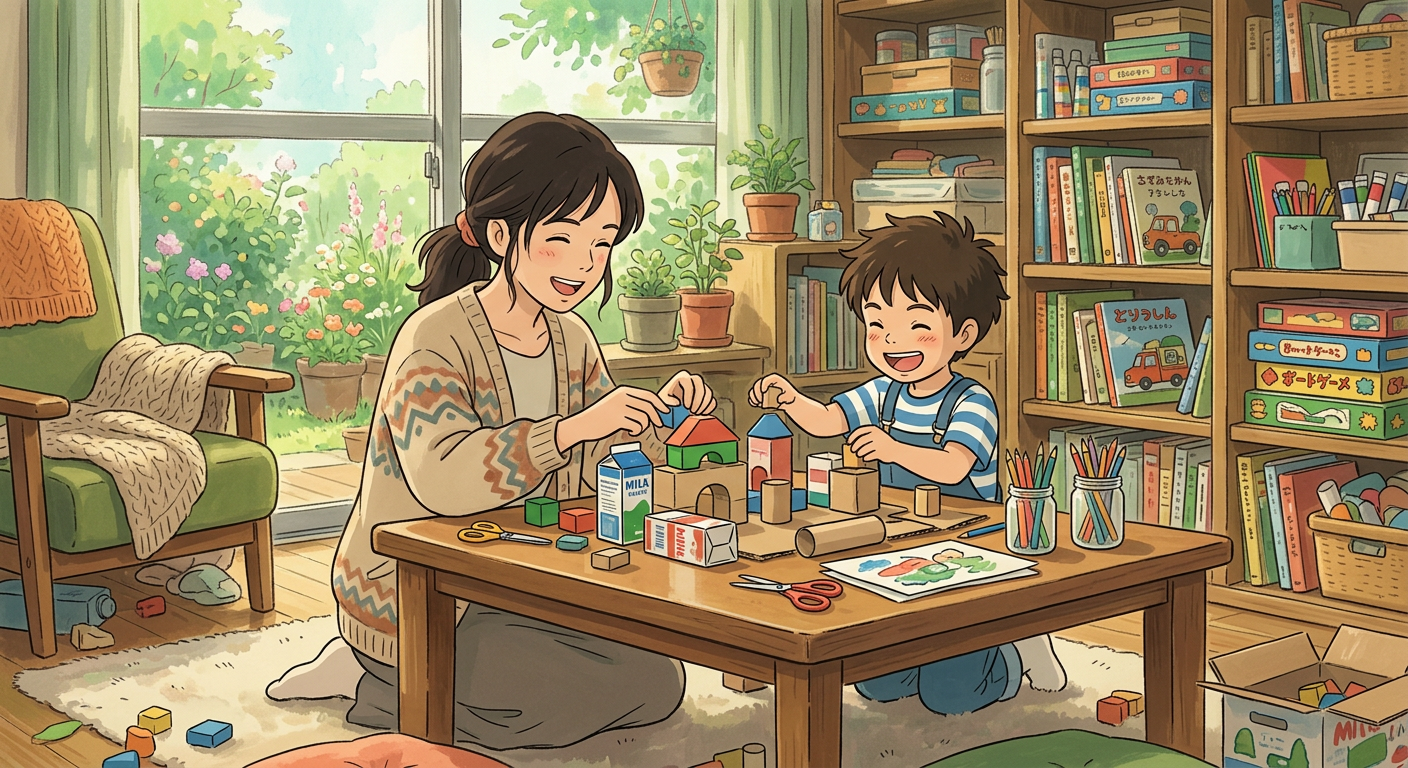
First, choose one landing place for school materials. It may be a basket, shelf, backpack hook, or clear section of the table. Second, choose one start cue: after snack, when a playlist begins, or when a visual timer is set. The cue should be easy to repeat, not dependent on an adult shouting from another room.
Third, write the ownership split. A younger child might unpack and place papers in the basket while an adult checks the school portal. An older student might review assignments, choose an order, and ask for help on one item. Adults can provide scaffolding, then fade it as skills grow.
Fourth, hold a ten-minute weekly review. Ask what worked, what got lost, and which one part needs adjustment. That review is formative assessment for the household. Change one feature at a time so you can tell what helped. A system is a working draft, not a family constitution carved into the refrigerator.
Make the System Build Independence Instead of Adult Vigilance
The goal is not to become your child's external hard drive forever. Use prompts that return ownership: “What is your first step?” “Where will you check?” and “What help are you asking for?” If you routinely open every portal, find every paper, and rescue every deadline, the system may lower tonight's conflict while blocking tomorrow's independence.
Jake Perlman's work across classrooms, performing arts programs, and entertainment shapes our Teachertainment approach. A production needs cues, roles, and backups, but one person should not perform the whole show. We have seen students grow more confident when the adult support is visible, predictable, and gradually reduced.
Use a simple help signal, such as placing a sticky note on the task or writing one question on a shared pad. The child identifies the snag before the adult enters. Some learners will need more explicit modeling, visual supports, or sustained assistance. Independence means appropriate control, not being left alone with work they cannot yet access.
Review Your Home Learning System Without Comparing Families
Measure the system against your household, not another parent's photograph. Is it easier to locate materials? Are reminders decreasing? Can your child name the next step? Does the routine protect sleep and family connection? Those outcomes matter more than matching labels.
Teachertainment's parent and family workshops help communities build routines, reduce homework stress, encourage independence, and turn everyday moments into learning opportunities. Workshops provide practical tools, but families may still need individualized school, clinical, or special education support.
Our post on parents supporting the story behind the scenes offers a useful reminder: good production is often invisible. If the basket, cue, ownership split, and weekly review make the week calmer, the system is doing its job. No cape rack required.
Frequently Asked Questions
What is the first thing I should organize for learning at home?
Organize the point where materials or information most often disappear. For many families, that is one landing place for backpacks, papers, devices, and charging cords. For others, it is a single way to check assignments. Pick the repeated breakdown, create the smallest fix, and test it for one week. Starting with every room and every subject usually creates more work than clarity.
How do I support my child's learning without doing the work for them?
Clarify the goal, model one step when needed, and ask the child to choose or explain the next step. Give help at the point of confusion, then reduce it. You can read directions, organize materials, or ask questions without supplying the answer. The appropriate amount of support depends on age, skill, disability, language, and the demands of the task.
Do we need the same routine every day?
No. Consistency helps when it makes the next action predictable, but rigid sameness can fail on activity nights, shared-custody transitions, illness, or heavy assignment days. Keep one or two anchors, such as the landing place and weekly review, while allowing the time or task order to change. A flexible backup plan is part of the system, not evidence that the system failed.
What if my child ignores the new home learning system?
Check whether the system is visible, simple, taught, and realistically within the child's control. Practice it during a calm moment instead of introducing it during a conflict. Ask which part feels confusing or annoying, then offer a limited choice. If the child lacks the underlying planning, reading, attention, or regulation skill, reminders alone will not solve the problem.
Can Teachertainment show parents how to build learning routines?
Yes. Teachertainment's workshops for parents and families include practical strategies for home routines, study habits, independence, homework stress, curiosity, and learning beyond assignments. Sessions can give a school or community shared, usable tools. They are educational workshops, not individualized therapy, legal advice, or a substitute for formal special education planning.
Where can I get help for my family's specific learning situation?
Collect examples of the breakdown, your child's strengths, teacher feedback, and strategies already tried. Teachertainment's family consultation service can help families organize educational priorities and practical next steps. For concerns involving disability rights, mental health, medical needs, or safety, include the appropriate school personnel and qualified professionals from the start.
You can support my child's learning at home without running a miniature school or copying someone else's command center. Start with one place, one cue, an ownership split, and one weekly review. Teachertainment's parent and family workshops can help your community build routines that survive real life. Email jake@teachertainment.com to discuss a session. Assemble the system your actual family can use.
