
Twenty Minutes to Help My Child Learn: Is That Really Enough?

A short episode can still have a beginning, a middle, and a useful ending.
A Bluey episode can deliver a family joke, an emotional turn, and a parenting lesson in about seven minutes. Meanwhile, your household has twenty minutes between dinner and bedtime, two missing pencils, and a child who suddenly remembers tomorrow's assignment.
If you are asking whether twenty minutes to help my child learn is enough, Teachertainment's answer is yes, when the goal is small and the routine has a clear shape. You will get a four-part plan that protects connection, focuses practice, and ends before everyone feels trapped in an after-school director's cut.
Why Twenty Minutes to Help My Child Learn Can Be Enough
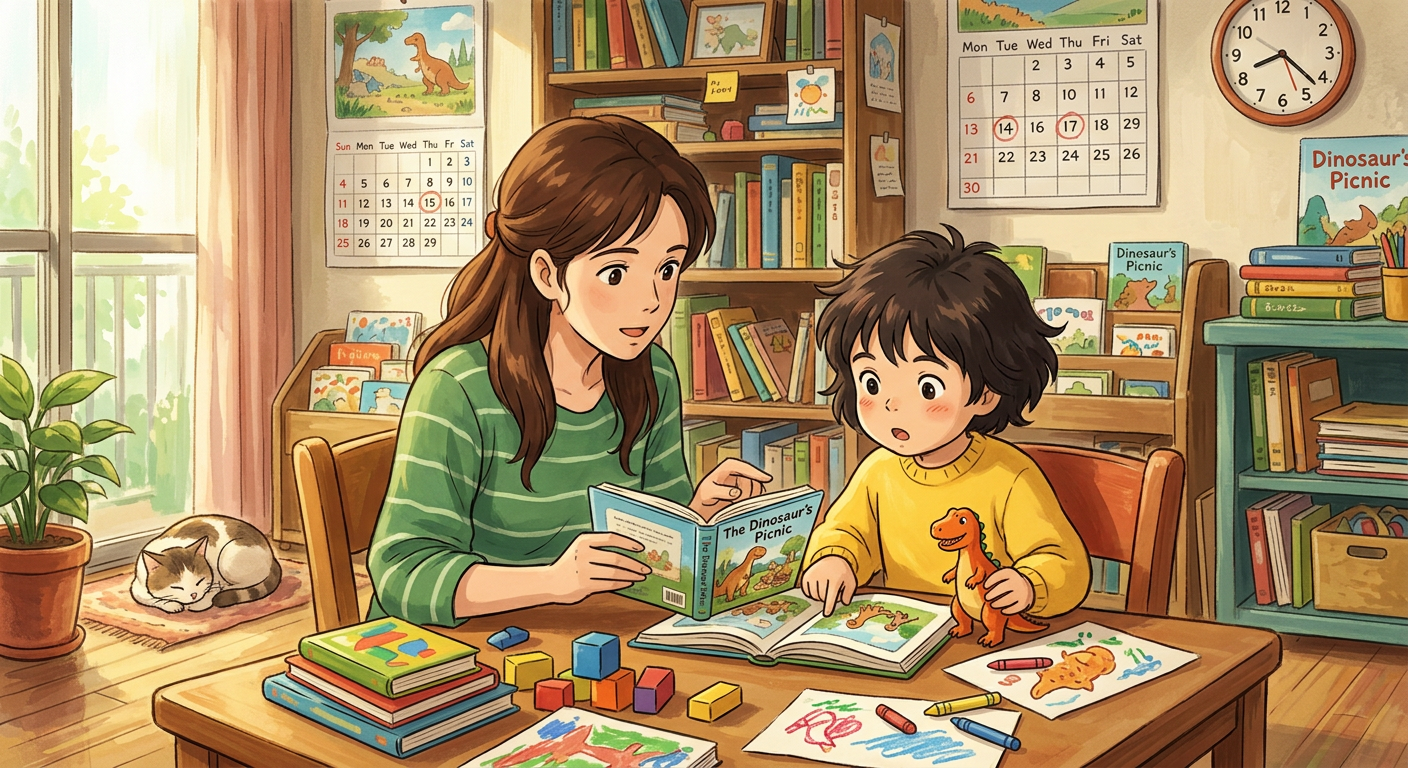
Twenty minutes is enough for one learning target, not an entire academic rescue mission. Choose the smallest useful goal: practice five multiplication facts, revise one paragraph, review one vocabulary set, or explain one science idea. A narrow target lowers cognitive load and gives your child a visible finish line.
Short practice also makes it easier to notice what your child can do independently and where scaffolding is needed. That observation is formative assessment in family clothes. You are gathering information for the next step, not squeezing a semester into the space before pajamas.
The limit matters. If twenty minutes consistently cannot contain the assigned work, contact the teacher and ask about expectations, accommodations, missing foundations, or workload. Do not quietly extend the routine until bedtime disappears. Sleep, movement, family connection, and unstructured play also support learning. A focused block should make the evening more workable, not consume it.
How to Use Twenty Minutes to Help My Child Learn
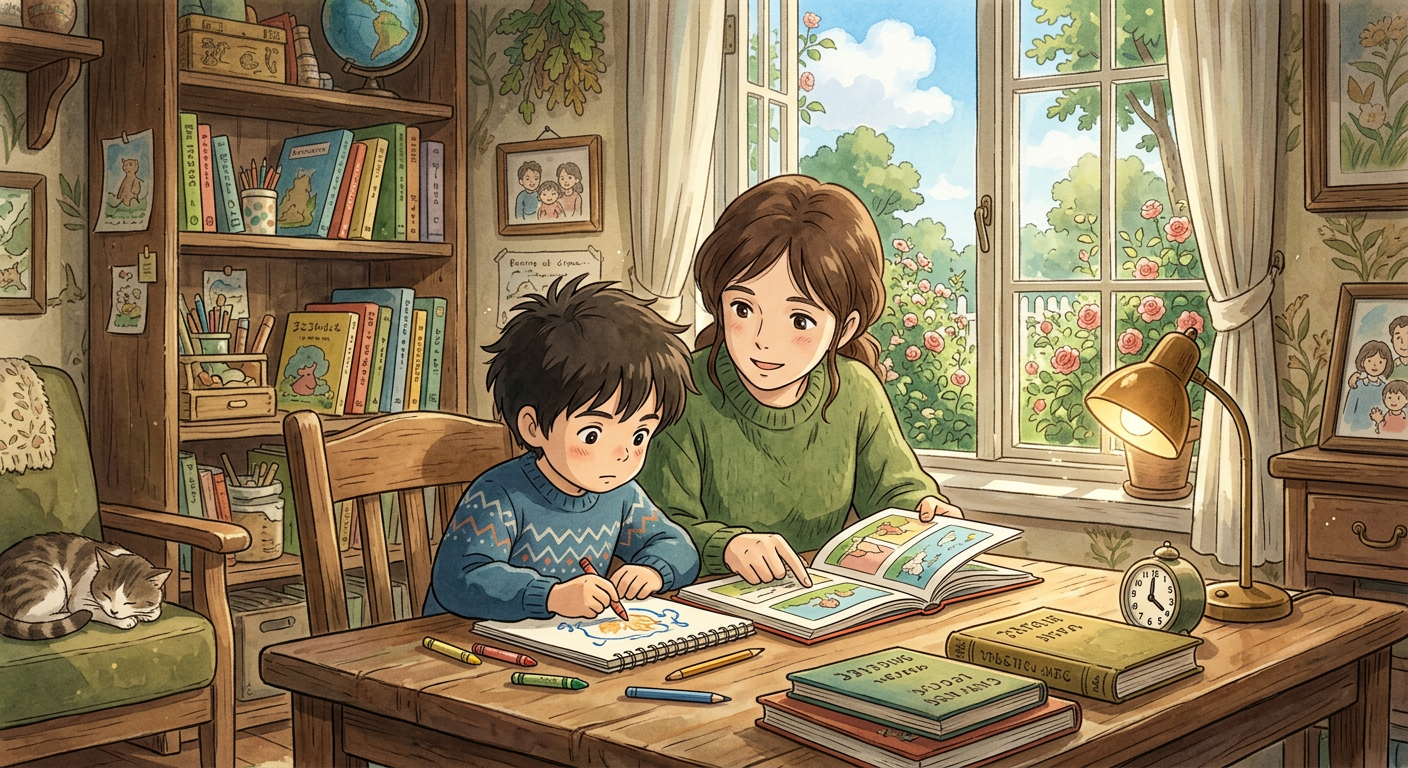
Give the block an episode structure. First, spend three minutes reconnecting. Ask for the day's “best scene” and “most confusing scene.” Second, use ten minutes on one selected task. Set a visible timer and remove extra materials that do not belong to that goal.
Third, spend five minutes asking your child to explain, show, sort, draw, or teach what they practiced. Retrieval and explanation reveal more than another round of copying. If they cannot explain it yet, that is useful evidence, not a failed finale. Model one example and let them try a similar one.
Finally, use two minutes for a preview: name what is finished, place tomorrow's material where it belongs, and choose the next tiny step. Let your child pick between two reasonable options when possible. That bit of autonomy can improve buy-in without turning the routine into a negotiation over whether learning happens at all.
Make Twenty Minutes Feel Like Attention, Not Surveillance
Sit beside your child as a coach, not across from them as a disappointed panel of judges. Ask, “Show me where it stopped making sense,” instead of “Why did you get this wrong?” Read directions aloud only if needed, then return the thinking to the learner.
Jake Perlman's classroom and entertainment experience informs our Teachertainment pacing. A scene works because it has an objective, a limited amount of time, and no filler. We have also seen students become less independent when an adult narrates every move. Support should fade as the child gains control.
The Institute of Education Sciences offers family resources built around practical learning support at home. Teachertainment's free songs, worksheets, books, and learning activities can supply a ready-made prompt for your short block. Choose one resource, not seven tabs. The routine needs a lead actor.
Decide What Belongs in the Twenty Minutes and What Does Not
Use the block for practice, conversation, planning, or a quick check of understanding. Do not use it to relitigate every missing assignment, compare siblings, deliver a lecture about the future, and complete tomorrow's project for your child. Those are four different programs fighting for one time slot.
If the child is exhausted, dysregulated, or genuinely ill, connection may be the best use of the time. Read together, organize the backpack, or send the teacher a concise note. Flexibility is not the same as abandoning consistency.
Our post celebrating parents as the original executive producers offers the larger perspective: your role is to support the story, not perform every part. End the twenty minutes while the plan still feels credible. A reliable small routine usually beats an occasional ninety-minute spectacular followed by three nights of avoidance.
Frequently Asked Questions
Is twenty minutes enough for homework every night?
It depends on the child's age, school expectations, learning needs, and the assignment. Twenty minutes can be enough for one focused target or a useful portion of the work. If required homework regularly takes far longer than expected, document the pattern and contact the teacher. The right response may involve clearer directions, a smaller chunk, different scaffolding, or a formal support process.
What is the best subject to practice during a short learning block?
Choose the subject with the clearest immediate need and the smallest achievable goal. A quiz tomorrow may make vocabulary the priority. A recurring reading gap may call for a short fluency or comprehension activity. Rotate subjects across the week instead of touching everything every night. Teachertainment recommends ending with evidence of understanding, not simply the number of questions completed.
Should the twenty minutes happen right after dinner?
Only if that timing works for your family and your child can engage then. Some children need movement or a transition first. Others lose momentum if the block starts too late. Test one schedule for a week, notice energy and conflict, then adjust. A consistent cue matters more than copying another family's clock. Protect enough time afterward for a calm bedtime routine.
Where can I find a quick activity for learning at home?
Teachertainment's free educational resources include songs, worksheets, books, videos, and activity ideas that families can adapt for short practice. Pick one item that matches the current goal and grade level. Preview it first, especially if it links to outside media. Free does not automatically mean appropriate for every learner or every night's objective.
What if my child refuses to start the twenty-minute routine?
Reduce the entry demand. Offer two task choices, begin with a three-minute connection, or ask the child to show you the easiest item first. Keep the boundary calm and the target small. If refusal is frequent, investigate confusion, fatigue, anxiety, attention, workload, and recent changes rather than assuming laziness. Persistent distress deserves coordination with the teacher and appropriate specialists.
Can Teachertainment help my family create a manageable home routine?
Yes. Teachertainment's parent and family workshops offer practical strategies for routines, independence, homework stress, conversation, and learning beyond school assignments. Workshops can give families shared tools and language. They can complement school support. They do not replace individualized clinical, legal, or special education guidance when a child needs those services.

Use twenty minutes to help my child learn by choosing one focused target and giving the block a clean ending. Teachertainment's free educational resources can put a ready-to-use activity in tomorrow's episode. Email jake@teachertainment.com if your family or school community wants more support. Set the timer, choose the scene, and let one clear win be enough for tonight.
